

Curve Studios have garnered themselves quite a good reputation in recent times, working as a powerhouse of sorts behind Sony’s recent push to bring indie titles to the PlayStation. In some ways, this has come to define them, with last week’s release of Titan Attacks! and incoming releases of Mousecraft and The Swapper, marking another wave of indie games to reach Sony’s consoles that might not otherwise have happened.
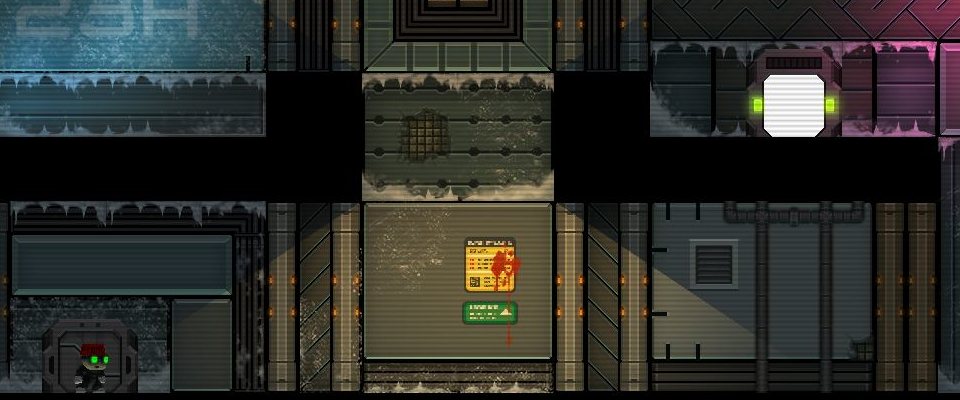
However, their recent announcement of Stealth Inc. 2 for the Wii U serves as a reminder that they are still a developer of games as well. We sat down with Curve Studios Managing Director Jason Perkins, Design Director Jonathan “Bidds” Biddle, and PR and Marketing Manager Rob Clarke a fortnight ago to discuss that game’s reveal, and you can all about the direction that sequel is taking here.
However, this flowed into a discussion of Curve as a whole, offering some insight into the inner workings of the company and the challenges of the work that they do.
We start, as with any good story, at the beginning. Well, near it anyway.
Jason Perkins: Do you know much about us and what we do? I know we touched on the Nintendo stuff, but we’re a developer who have been making video games for 10 years, in addition to working with Sony on some games. Basically we realised that the model of going to a publisher and pitching an original idea or going to a publisher and taking work for hire has kind of disappeared. That was our whole business, so we were like “Oh, no!”
We’ve known Shahid [Ahmad] for a long time and he got in contact a couple years ago, just saying that he’s heading up Strategic Content – you could kind of say Vita – and said he would love to have Stealth Bastard on the console… with perhaps a name change. [laughs]
TSA: [laughs] I hope he put that in brackets at the end of an email, or something!
Jason: Yeah, just snuck it in right at the end. “So we’re almost done… name change!”
So, we agreed terms with Shahid, we got some funding, which really helped us out, and rolled into that.

Jason: But additionally, Shahid was also saying about some other titles that he’d like to get onto Vita, and that some of these guys maybe haven’t got the experience or the resources to be able to do a console version. While Sony are reaching out and hugging indies at the front, at the back, not a lot of changes are really happening. You still need to go and get age ratings, they’d still like you to localise it into many languages…
Rob Clarke: All of those are reasonable, though, and I think developers will expect some of them, but they don’t expect some of the other issues that come back. I remember once that we had a debug screen that had “PSP” on it rather than “PS Vita”, and that was sent back to us.
Jason: Yeah, and we’ve had some submissions come back because of spacing; you need to put the registered trademark logo after PlayStation, but you can’t put a space between them. So we’ve had stuff come back like that.
They kind of categorise bugs nowadays, with A, B, C, but then you’ve got MF bugs, which are Must Fix, and we’ve had MF bugs come through on paperwork issues, where you didn’t tick the right box or gave the wrong version number. So then you have to cancel your slot, rebook your slot a few days ahead…
TSA: You guys must now be experts in all of these kinds of details?
Jason: Yes! We’ve got a 6-man production QA team who really do know that stuff inside-out.
TSA: Like a kind of pre-QA, almost?
Jason: Yeah. We had, and I think I’m right in saying that with The Swapper, we passed first time!
But there were some little changes that we wanted to make, so we kind of went back to them and said, “Actually, could we have another go?” [laughs]
Bidds [Jonathan Biddle] knows a few of those indie guys like Mike Bithell [Thomas Was Alone], Jasper Byrne [Lone Survivor] and Ed Key [Proteus], so we were speaking to them and saying that there was an opportunity here. Sony were offering the funding, we’ve got the development capacity and can take a successful game from PC and do all the horrible background work and release that on PlayStation.
Then we launched Thomas Was Alone on Vita and PS3 in April of last year, followed that up with Stealth Inc, then Lone Survivor and Proteus. So it was a good range of titles and after we launched those four games, we obviously got a pretty good reputation, so we’ve had people actually get in contact.

TSA: It must have almost got to the point where some people have forgotten that you do your own games as well. How important is it for you to be talking about Stealth Inc. 2 and having both sides of this business going?
Jason: It is really important…
Jonathan “Bidds” Biddle: We’re a developer first really, aren’t we?
Jason: Yeah, that’s what we do, and I think we took that away with doing all this publishing.
It’s also really important for the guys working in the studio, because it’s not the most glamorous work to be porting someone else’s code. Particularly because we want the indie guys to be happy with what we’re delivering, so those guys have got final say on everything and they want to make sure we do the best possible port.
I can see that the whole studio could disappear if we announced that’s all we’re ever going to do, so it’s important that we keep doing original stuff.
TSA: I guess it’s a kind of creative release, where you’re working away, but there’s also this idea whirring around in the back of your brain.
Jason: Yeah, definitely.
So, just to finish up our story, it’s now that developers are actually contacting us, but there’s also different kinds of deals. Instead of us looking for a successful PC game and porting that across to console, we’re also getting contacted by developers who’ve got console games, like for Futurlab with Velocity Ultra. They had it out on Vita but wanted to get it onto Steam and they don’t have the time to do it themselves, so we did that and the PS3 version for them.
We’ve also got guys with PC games that they haven’t quite released yet, that are not really suitable for consoles and are definitely more of a PC offering, but they want help on the publishing side.
Then there’s stuff like Mousecraft, where we’re working to launch simultaneously on PC and PlayStation. So we love that concept, where we’re not just the guys that get to the games after they’ve been out on PC for a while.
TSA: That is something the Vita’s seen a lot of, where it has a lot of indie games on it, but there’s been an imbalance where it’s often older games coming across.
Jason: Yeah, and we’re trying to address that where it makes sense, and Mousecraft will be the first.
It does change things, though, working with a development group that hasn’t finished the game. With the best will in the world, they think they might finish by a date, but as developers we know that it doesn’t always work out like that!
Rob: It’s definitely more complicated on the development side, but it’s easier on the marketing side, because you don’t have to worry about doing two different things with the PC press and the PC launch, and then doing it all again. It makes my life easier, it just makes their lives harder!
TSA: I remember before I had consoles, trying to play on Mac, where Aspyr or Feral would get the rights to the game six months down the line before they even got to porting it across. It was pretty rare to get a day and date release, but that must’ve been a completely different process to bring it across?
Jason: Well, from the development point where you could release on Steam, that’s the point where you would submit it to Sony, and we allow 6-8 weeks for that whole process to happen. So immediately, the console version is adding 8 weeks.
Rob: Which can be a long time if you’re an indie developer working on a budget and wanting to eat for that month and pay the rent! That 8 weeks becomes a tricky thing when you can normally throw something out on Steam, although you don’t get onto Steam instantly either.
Bidds: Steam being what it is, when you release it on there, you’ve got a release window of about a month afterwards where people will report bugs and you go, “Great, thanks!” and you can fix it. You can update a game so quickly.
I did it myself with Stealth Bastard, where someone would report a bug and I could just put a new build up, no problem. So in a normal port you can already have those fixed, but we’re going to get a build to port that’s from earlier than that, before all those bugs are fixed and they’ve found them via the community. We have to make sure that by the time it gets to console it’s going to be solid.

TSA: Is that a point at which things branch off from one another, and where you would take over?
Bidds: We have our own in house QA, so we’re constantly testing the games. Basically, the developers who release on PC get the benefit of us helping them QA their game, which they might not otherwise have. They would release on the same time, but they’ll have had another pass on it at that point.
Jason: Yeah, so with Mousecraft, we’ve shared a database in terms of source code and then also with bugs.
TSA: Well, with Mousecraft, that’s also been on Steam Early Access, so you’ve had that helping as well?
Jason: That’s right, yes. I think this whole arrangement of doing the work for consoles wouldn’t have worked without Early Access, because Crunching Koalas wouldn’t have been able to fund themselves, and then for us it would have been a very different prospect if we were looking to put, I don’t know, 20 to 30 thousand in, at which point it’s, “ooh!”, and it gets kind of scary!
So yeah, Early Access made all that possible. It’s the good guys at Steam making these console versions possible! [laughs]
It’s at that point that we had to wrap things up, but we’d like to thank Jason, Bidds and Rob for taking the time to talk to us about all things Stealthy and Curvy.
bunimomike
Lovely read, guys. Especially about the Early Access and, even though it has its detractors, good things can come from it.
A bit tangential to the conversation but even with the folk that cry “stop with the indie games already!”… this is only ever a wonderful thing. A digital platform (such as the PS4) can truly cater to everyone if they’re smart. In a couple of years time, we won’t see this divide between AAA and indie titles, hopefully. We’ll just see this awesome spectrum of titles running the full gamut from the tiniest of tempting tomfoolery to the titanic and testosterone-fuelled top drawer titles.
*removes letter “t” from alphabet* :-)