
Game localisation is a funny old business. Japanese companies often have to make a decision on whether or not their game is worth translating for foreign markets based on factors such as whether it’s a popular property, how much the translation will cost, and ultimately whether they think it’ll sell enough to the rest of the world.
You’d think that that decision would be made pretty early on, at best within the first year or so if it was a surprise hit. So quite why the Inazuma Eleven series is three years behind Japan is anyone’s guess, particularly when it’s a well-known franchise that not only spawned its own cartoon series but also features the world’s most popular sport. However, when it’s a game by Ni No Kuni developer Level-5, it’s still worth paying attention, no matter how long it’s taken.
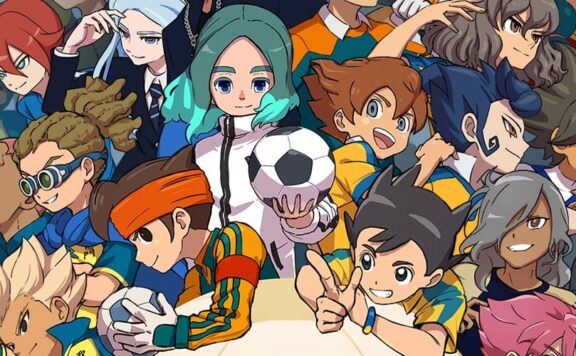
The Inazuma Eleven series follows the exploits of goalkeeper Mark Evans and his friends as they strive to become truly great footballers. With this, the third game in the series, they’re chosen for the Japanese national youth team as it takes part in the first ever Football Frontier International tournament.
As a member of the national side Mark suddenly finds himself teamed up with rivals from the previous two games, including former ‘alien’ team members from the last game. You’re introduced early on to a number of these players through short anime cut-scenes which help tie the game in with the TV series, and which give all of the characters a real sense of life. The cut scenes continue to pop up throughout the game, and with each section being introduced as chapters it often feels like an interactive outing of the anime series, rather than simply a game. It’s all the better for it, even if the story itself isn’t incredibly captivating.
If there’s one downside to the cut-scenes, it’s that they’re displayed on the touchscreen, so they’re neither 3D nor the highest resolution and they really could have made more of them, particularly when they add so much to the title. The localisation also includes all of the English voices from the TV series, and though “mockney” accents are everywhere, they’re delivered with humour and feeling that helps to break up reading page after page of dialogue.

If you’re fresh to the series, Inazuma Eleven may surprise you. It’s a true RPG with its own unique battle system, as opposed to a straightforward FIFA or PES style action game with an overworld and storyline tacked onto it, and comes in two variants, Lightning Bolt and Bomb Blast, a little like a Pokémon game.
Using the stylus, you draw the route you want your player to take, tapping the screen to pass the ball and to shoot. Shooting and tackling causes a battle screen to pop up, with both standard and special moves available with the players stats, alignment and decisions deciding the ultimate outcome of the meeting. It’s a fun system that only occasionally doesn’t live up to its purpose, sometimes failing to recognise when you’ve selected a player, or the direction that you actually meant to go.
However, it’s the special moves that really make the game, with crazy magical shots such as the Legendary Wolf and Tsunami Boost meeting the goalkeeper’s Fist Of Justice or Mujen Hand in spectacular fashion. One of this games primary selling points was that these moves now appear in glorious 3D following their transition from the old DS, but in practice, with the majority of the game playing out in 2D on the touchscreen, all it did was give me a headache switching so often between the two.


As with many 3DS titles I swiftly turned the effect off. The move to the 3DS hasn’t really brought a huge improvement in graphical fidelity over the DS, which is a shame when the system is capable of so much more, but it’s still bright and colourful and serves the purpose it’s intended for. If they make a further sequel it would be nice to see 3D models used in-game, like we have in Inazuma Eleven: Strikers titles on the Wii.
There are two different forms of football games, full team games and four-a-side random encounters. The random battles are written into the game as being people who want your place on the national team, and they can actually join up due to some convenient tournament rules. In previous Inazuma titles finding new players was a key part of the game, in a “gotta catch ‘em all” fashion, but here the feature feels a little stretched given the storyline.
The random battles are like walking up to Frank Lampard in the street and challenging him to a kickabout as a way of getting onto the England team, but on the other hand, I’m probably over-thinking a game where the ball is often on fire.

As with many RPG’s the random battles can happen at decidedly inopportune moments, but are vital for improving your player’s levels. At no point though did I have to particularly grind to progress, though I probably did so a little bit purely out of habit.
Inazuma Eleven 3 is a very enjoyable game, but there has been so little improvement or expansion from the original that I can’t help but feel short-changed. The first title worked so well that Level-5 perhaps felt that they didn’t need to do too much beyond making a few refinements, but with this third title, I believe that they’ve exhausted the current formula. Future games will need to make some drastic changes, particularly when the quality of 3DS software in the last year has been so high, and Inazuma Eleven 3 is really starting to show its age in comparison.
What’s Good:
- Enjoyable battle system.
- Funny and well made cut-scenes.
- Hundreds of players to recruit.
What’s Bad:
- Essentially the same as previous games in the series.
- Occasional control issues.
Inazuma Eleven still stands as the only football series for people that don’t like football, and if you’re an RPG fan, or more specifically a Pokémon fan, you’ll find a lot to enjoy here, even with Pokémon X or Y on the horizon. It’s as well made as you would expect from Level-5, but if you’ve played previous titles in the series don’t expect to find very much here that’s new.