

One thing I’ve noticed on a few occasions over the past few weeks is developers being asked to keep their personal politics and views out of video games. It gave me pause each time, because it’s one of the dumbest things I can think of asking someone to do.
It’s just such a bafflingly asinine notion, right up there with the concept of an “objective” review that reared its head a couple years ago. There simply is no such thing in the world of video games. An objective review of FIFA 18 wouldn’t tell you if it’s better than 17, it would be a list of features. An objective review of The Last of Us couldn’t tell you the emotional impact of Joel and Ellie’s journey.
I bring up The Last of Us, because Neil Druckmann’s response to such a request perhaps the most notable of those I’ve seen. He replied to a now deleted tweet that read “TLoU is my favorite game of all time. Please try to keep your personal politics out of Part 2. Thank you very much.”
No can do. Writers work off of their views of the world. For example, the ending of TLoU is very much inspired by my "personal politics." https://t.co/nuhF318yxj
— Neil Druckmann (@Neil_Druckmann) January 23, 2017
Of course, you also have to look at what people mean when they say politics. Is The Last of Us: Part II going to be a game with a political agenda if Ellie has grown from a somewhat naive, rebellious teen into a strong, bitterly defiant woman fighting against whoever has done her wrong? For that matter, is Horizon: Zero Dawn a political game for having Aloy bucking the status quo of having generic macho male leads?
Those stories were absolutely influenced and defined by the personal experiences and beliefs of their creators, and there’s just no way to really get around that.
Certainly, there are games and stories that are more overtly political than others, but even then, they can often simply be placing characters into a certain setting and asking how they would react. Watch Dogs is a particular example, as Ubisoft spotted the tendrils of technology entering our lives in an ever more invasive manner. It created a backdrop for Aiden Pierce’s tale of revenge, but Ubisoft built upon that greatly for the sequel.
Simply having Marcus be a young African American allowed Ubisoft to play the race card. The game starts with him infiltrating Blume’s server farm, eventually reaching his records within the system, only to discover that he’d been wrongly targeted and tarnished with a fake criminal record. The irony is that once you take control of him, you can do much, much worse than he was ever on the hook for in a matter of seconds.

It’s certainly riding on the coat tails of the Black Lives Matter movement that brought the racial fractures within American society to the fore, but it wasn’t just a game about that. It carries some of those sentiments, but they’re there to add to the rich collage of inspirations that make up the game’s world and help to make it more believable.
If anything, I think we need more politics in video games: we need more points of view, and more characters that have vastly different backgrounds to my own. That doesn’t mean we lose those games that are defined by dumb fun, it means that developers are using the medium to its fullest. It means we get The Stanley Parable’s nonsense and we get That Dragon, Cancer’s powerful story.
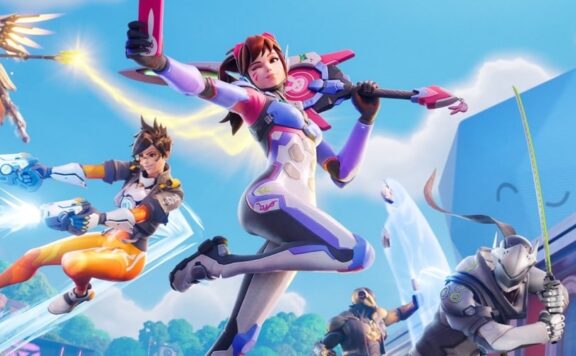
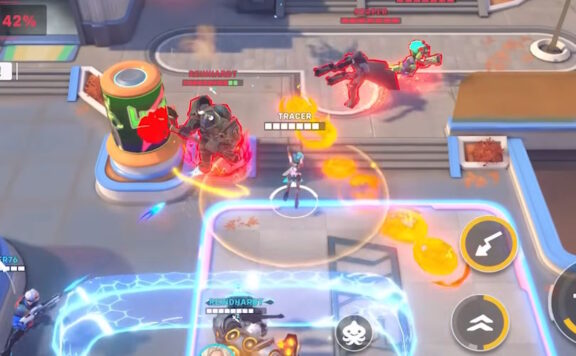
At the same time, many of the biggest and most popular games out there can easily be played without paying attention to their subtexts. Remember the fuss that was made when Blizzard’s Christmas comic revealed Tracer as an LGBT character? It certainly doesn’t change how fast she is and the fun of planting her Pulse Bomb before rewinding your position, taking you well out of harm’s way.

In fact, Blizzard’s shooter has a fantastically diverse cast of characters that are simply fun to use without context, but empowering and offer points of relatability for so many different people. D.Va is another example of a seemingly innocuous trait that adds depth, with her position in the South Korean military impossible for modern day women to achieve (and yes, she’s also a ludicrously cutesy anime fan girl). It’s no surprise that the bunny symbol that adorns her mech suit appeared on banners and stickers in the Women’s Rights March in Seoul last month.
Games can and should mean something, just as much as books, films, music, and comics with Captain America punching a Nazi can.



Andrewww
Fully agree with your article, which I only got around to read and comment on now. Thank you for bringing up ‘deeper’ topics like it, besides all the lighter stuff on here, there’s definitely room for both.
As we recently got prove of in the US, by people electing a paranoid, delusional, narcissistic, emotionally unstable git as president, roughly about half of the general population are morons. Of course, I’m oversimplifying a little here, but probably just a little. (And it may not be as much better in Europe as we would like to think. And I hope upcoming elections in France and the Netherlands won’t prove it’s just as bad.)
Now, gamers are no better or worse. But, for some odd reason, many of them seem to feel something like entitlement to games the way they want them to be. A strong female character? Well, that must be unrealistic. An LGBT character even? They must really be pushing an agenda. A specific ending of Mass Effect we don’t like? Let’s make them change it, they’re clearly not allowed to do that (to us).
We will need an awful lot more people like Sarkeesian, to educate us and make us aware of how our minds are twisted, and it’ll take a lot more politics in games to advance the awareness in the general population for all those important topics. And I’d expect exactly those calling for ‘less politics’ in games are most in need of it. Let’s give it to them..!