
Nearly 10 years on, the Playback series returns to revisit games from years past.
In 2011, Housemarque released Outland, its unique and only 2D platformer. It tends to be overlooked within the company’s impressive catalogue of games, overshadowed by hits like Resogun, Super Stardust Delta, and Returnal. Nevertheless, Outland emerged during a phase of experimentation for Housemarque, and its impact is noticeable in many later titles, from the particle-like graphics that distinguished Resogun to the varied enemy styles that may have inspired those in Returnal.
Outland has also been in my Steam library for years, languishing with zero minutes of play, so I decided to finally sit down and give it a go. You play as a nameless Hero who has visions of a battle from 30,000 years ago which sees another nameless hero fight the Sisters of Light & Dark, before imprisoning them. The Sisters are nearing their escape, and your character, a descendant of the original Hero, is charged with the task of preventing their escape and thwarting their plans to destroy the world. To be honest, while it’s narrated well enough, Outland’s story is not particularly engrossing or interesting, playing into all-too-familiar story beats.
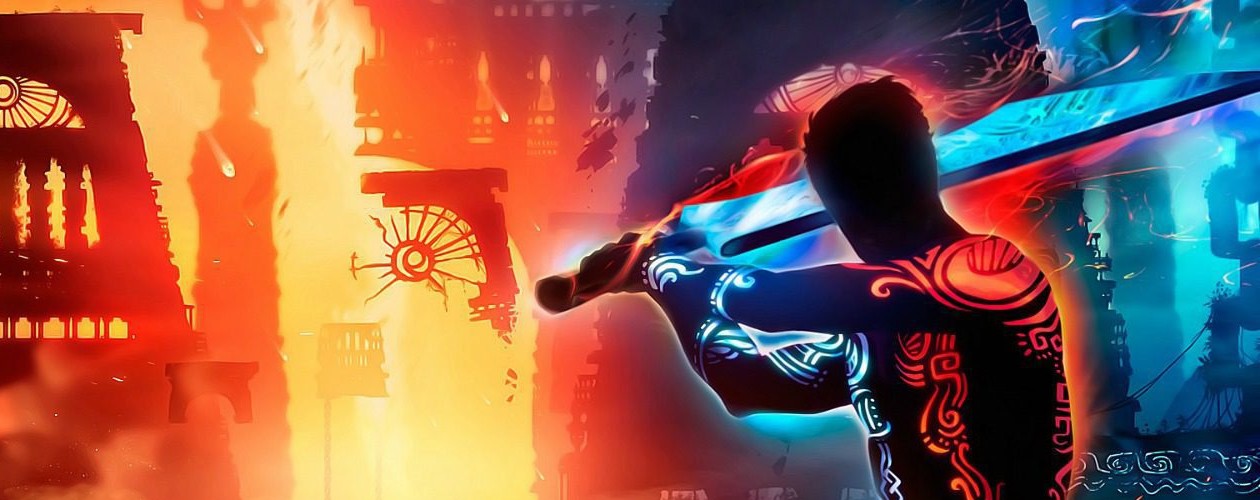
What Outland did do when it released was play on the dual identity of the Hero, who can switch between red and blue forms. These forms correspond to the light and dark forms of the Sisters and plays into the gameplay too. The different zones have enemies and puzzles that are colour-coded red and blue, so your character’s colour matters. In Outland, the red form can combat blue enemies and navigate through red traps with minimal damage, and the blue form has the same capabilities. The game gradually introduces this mechanic, increasing the difficulty level as you progress. Initially, you get accustomed to the basic controls, but soon you will be leaping across colour-coded platforms, needing to switch between red and blue forms swiftly. While the combat is relatively basic, even with the colour-switching element, and the variety of enemies is decent, the game’s boss fights are less compelling, ranging from tedious, like the golem encounters, to frustrating, such as a dragon battle.
Abilities are unlocked progressively in the game, from granting players a charge attack to moving up to a beam attack capable of eliminating multiple enemies or inflicting significant damage on bosses. Additionally, you can unlock environmental features such as teleporters, which provide access to previously visited levels, and leap pads that allow exploration of new world areas. Earning coins by exploring and defeating enemies enables you to enhance the hero’s health and increase the hero’s abilities’ charge capacity. However, obtaining these upgrades in Outland is not straightforward; it’s not merely a matter of accessing a menu and allocating points. Players must venture through Outland to discover upgrade statues, which are often hidden away from the main paths.
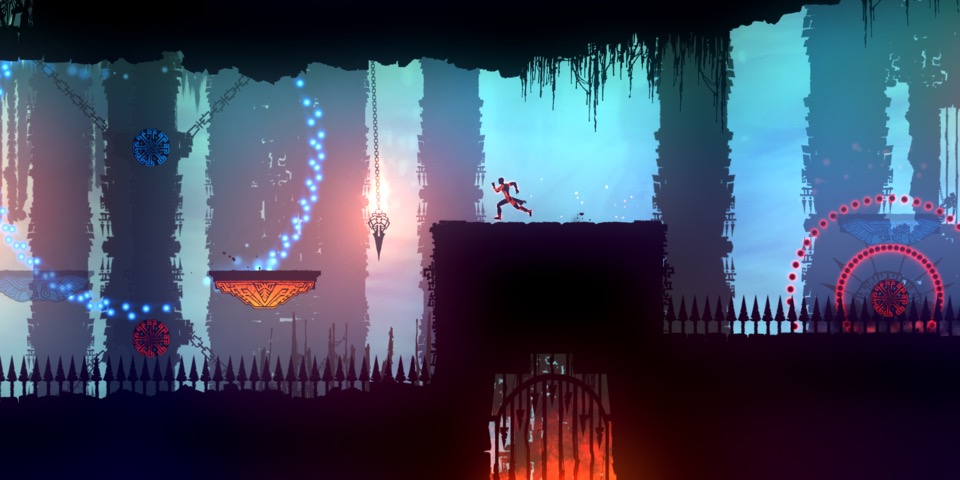
Outland’s visual design still holds up today, and there are moments where you see how the decisions made in Outland have influenced the future games, as well as building on the Housemarque games that came before. The final boss has designs elements that would not look out of place from Resogun or Returnal, and you cna see the developer’s trademark style starting to form. The music also deserves a special mention, elevating even those boring fights into something more frantic and engaging. It just sets up that some of these battles are meant to be epic in scale, and the final boss theme is incredible, even if the fight itself is basic.
Outland has become one of those games that’s increasingly difficult to add to your games library. It’s no longer available on Steam or the PlayStation Network, but you can still purchase it on the Xbox Store. Alternatively, you can obtain a physical Xbox 360 copy through the Ubisoft Triple Pack, which includes Outland, From Dust, and Beyond Good & Evil HD, which has backward compatibility.


