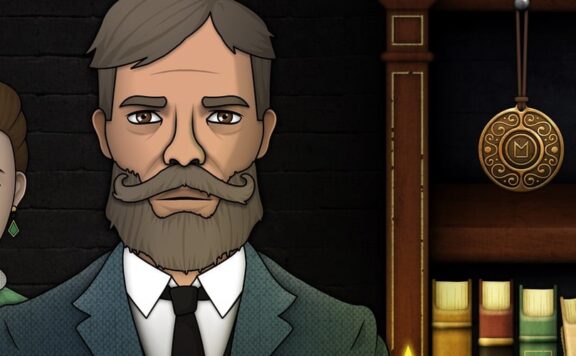
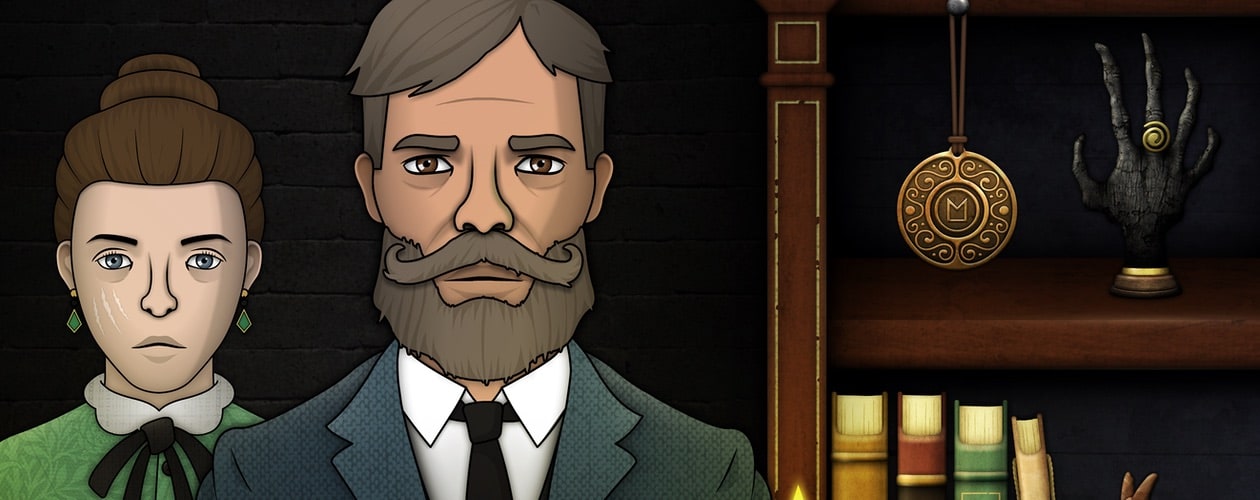
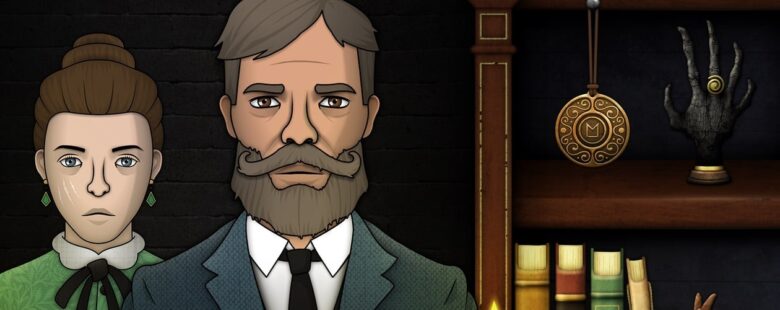
As the nights start to draw in, the wind picks up and the rain start to hammer down at this time of year, you might be looking for something to match the changing seasons to occupy your time. Something a bit cosy, but with some spooky vibes, perhaps? Following on from the success of Strange Horticulture, the focus of Bad Viking’s sequel is shifting from providing distinctive flora to your customers to now trying to provide them with amulets, artefacts and gemstones as Strange Antiquities launches today.
As John and Rob Donkin tell it – the two brothers that make up Bad Viking – there was a heavy degree of what might be described as kismet to creating Strange Horticulture. “We never set out to make a cosy game,” John said, “Rob came home from a dog walk and he’d seen an advert for a gardening company and the word ‘horticulture’ written on it or something. He came home and said, ‘I’ve got something to pitch to you: Strange Horticulture. It’s about running a sort of occult plant shop.’ I was like, ‘Yeah, let’s make that!’ And we dropped everything and was like, how do we make that? What do we do with our budget?”
Those other ideas they were working on, however, provided the basis for this new setting. John explained, “So we were working on a board game like concept and we were working on a point and click adventure game set in our world called Undermere. We were like, ‘Oh, let’s borrow the map idea that we had in our board game, let’s take the setting from the point & click adventure,’ and it all kind of came together. We were just like, ‘Okay, we haven’t wasted the last six months of just kind of creative prototyping and ideas!'”
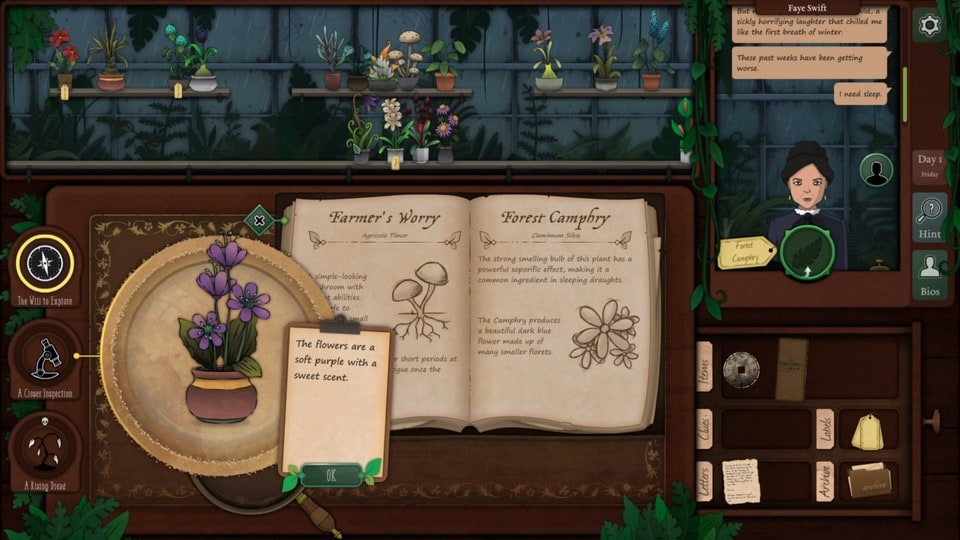
Strange Horticulture
For many a gardener, a big part of the joy is seeing their garden in full bloom during the summer, of bursts of colour in thick borders, but Strange Horticulture got a little spooky with it. “I guess we liked the idea of your plants being quite sinister,” Rob said, “and they have, you know, unusual properties, but also quite dark properties.”
From there, Nicholas Culpeper’s Complete Herbal as a source inspiration, the 15th century botanist’s book already containing some mysticism and supernatural ideas, and the atmosphere of having the rain pattering on windows, and adding a cat to snooze on the counter – “Which seems like an obvious thing to put in with hindsight,” Rob said, “but it took us a long time to realise that this game needs a cat in it!”
Rob continued, “We knew we wanted to make a relaxed game because obviously it’s kind of like Papers, Please – that’s what we were heavily inspired by – but we find that game extremely stressful and like we were like, okay, let’s go the other way with it. […] Let’s make it relaxed; no timers ever, you go at your own pace.”
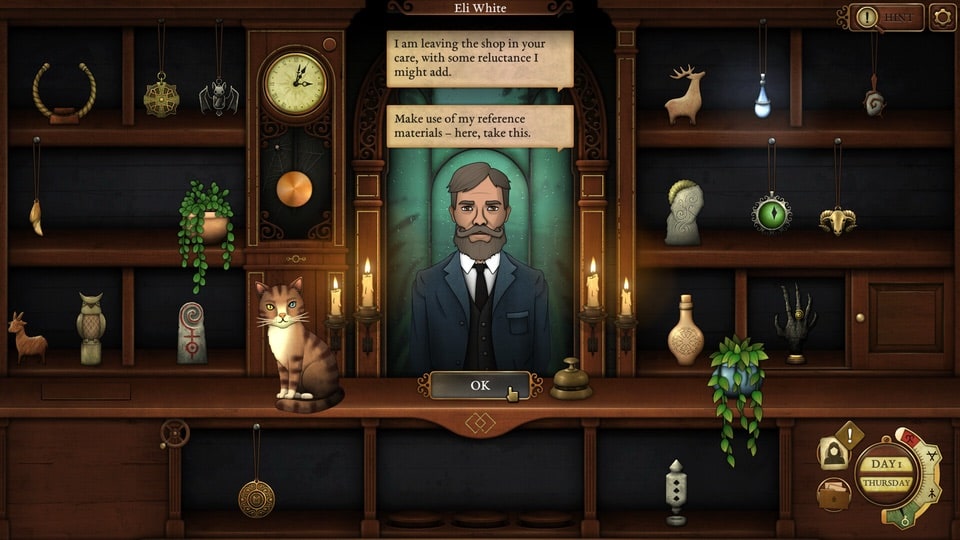
Shifting to Strange Antiquities, and there’s a shared tone, but the source material is shifting from to more overtly occult objects and mysticism. John revealed, “When we were researching the game [Antiquities], we went to the Pitt Rivers Museum in Oxford, which is like this anthropological collection that’s, I’d say, loosely curated, because you go in there andthe glass glass cabinets are full of stuff and they’re all handwritten labels on them, and it’s it’s just really cool. And there’s a whole witchcraft section with drawers to pull out.”
Rob quipped, “It’s basically Strange Antiquities: The Museum, so it’s like the perfect place to go research!”
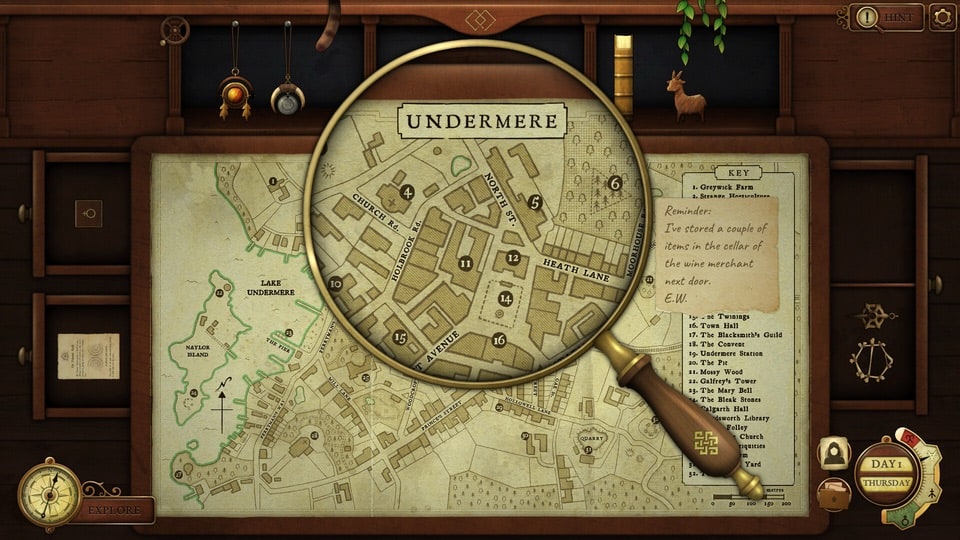
Strange Antiquities has also been a chance for John and Rob to learn how to present their game better. The customer is now front and centre, while you can browse the shelves that you stuff with artefacts, and the investigation desk now out of view when you’re not using it. Of the quality of life improvements, Rob said, “One of the main things about the game is that there’s quite a lot of text and some of it can be a little bit small. So you can zoom in on every item and then you’ve got this magnifying glass as well that can zoom in, so people shouldn’t struggle too much with that.”

John added, “It’s less cluttered, I think. We put the desk in a section at the bottom, it’s got its whole own screen, so everything’s just a bit bigger. But, I mean, for us, the quality of life improvements are in the gameplay.
“We’ve taken our formula from Strange Horticulture and just added more depth to it. So there’s more detective work, more reference materials, and things like adding an index to the book so you can cross search terms. So sometimes a customer will come in and ask for an item, but they don’t what it’s called or you’re not given what it’s called. Where Strange Horticulture would always give you the name and you would look it up in your book, here they’ll say, “I need it for this” and you can kind of go in your index, look up something and it’ll come back and sometimes you have to even cross reference a couple of times. It’s just like adding to like that detective [feel] where we’ve put breadcrumbs all over the place and you have to try and follow the clues to the right answer.
“The clues are scattered, so some sometimes the clue will be in the text of the book, sometimes it will be in the sketch, in the book, sometimes it will be in your gemstone book, sometimes it will be a symbol.”
Rob chipped in, “And there’s layers for the clues as well. Sometimes there’ll be four or five different things that could point you to an item and, you know, you might only notice two of them, but you’ll still get to the answer.”
Providing the background to these games, helping to lend it a relaxing tone is the soundtrack. For the first game, the brothers leant on buying royalty-free tracks to easily slot in, but that’s changed for the sequel.
Rob said, “We’ve got a composer this time around around. It’s a guy called Ben Young, and we’ve been super happy working with him. He’s great. I mean, he seems to love the creative process and he’s got kind of really into designing the sound and we think he’s done a great job.”
Digging into that process a little, John said, “He gave us like a bunch of existing material that he kind of thought would fit and we kind of found ones that we liked for sort of a sound guide, I guess, and then he went out and he put a few themes together and then we kind of had a collaborative discussion on what we liked, what we didn’t like, if we could go a bit more mysterious, this felt a bit like, I don’t know, too jolly or whatever. And he was super receptive to all our feedback and yeah, eventually we just it just sort of like came together and we were just super happy with it and we wouldn’t have too many notes for him.”
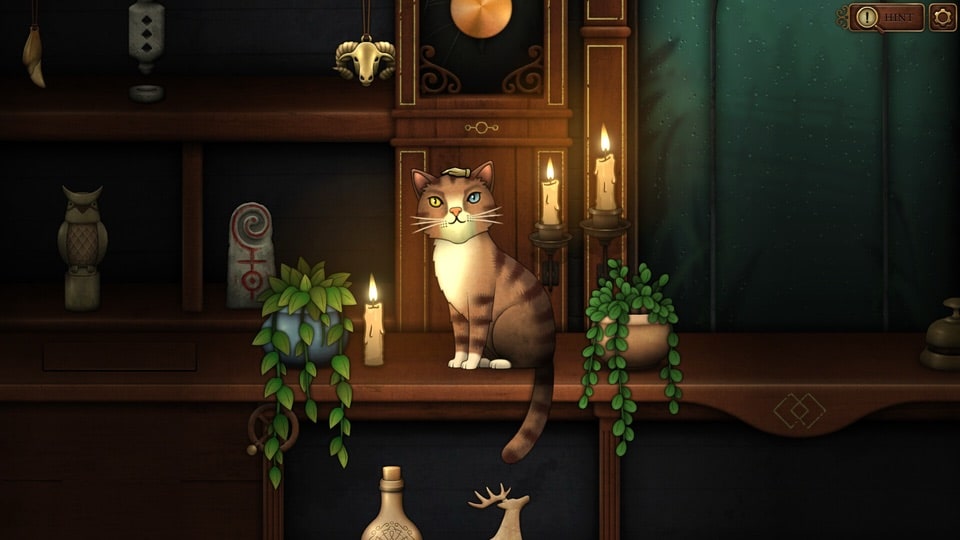
Oh, and of course there’s the all important cat. Jupiter, the moggy with the heterochromatic eyes, provides a suitably unusual fluffy companion to sit on your counter and receive regular petting as your mouse cursor passes them by. Once again, it was Rob’s
Rob told us, “His name, Jupiter, comes from Robin Jarvis’s The Deptford Mice, if you’re familiar with that. We read them as kids and they’re kind of, I mean, they’re really dark for kids books.” Jupiter was the alchemist’s cat in that tale, but John recalled that “Rob went into a shop in Italy and there was a cat on the counter. It was like a tabby cat.” But, as Rob noted, “We also gave him heterochromia – that’s the key feature.”
Strange Antiquities is out today for PC and Nintendo Switch, with a demo available on Steam, if that piques your interest.