

Reus is a reasonably relaxed game. You are generally managing your planet at a slower pace, and the game encourages that. The giants, which you must use to interact with the world, walk at a snail’s pace towards their task while you wait or go and do something else. This isn’t necessarily a complaint, as personally I am a fan of the relaxed nature of the game but when time is of the essence, I still feel a little twinge of frustration that the giants can’t move more quickly.
You are a planet and you can interact with your surface by using four giants, each of which can alter the planet in different ways. They can spawn biomes on your planet, which begins as a dry wasteland that can’t support life. The rock giant, for example, can place mountains while the forest giant can place – yes – forests. Swamps and forests need to be placed in the wet wasteland that appears around oceans when you place them, while mountains spread desert outwards on dry wasteland until it either meets another biome or reaches its maximum size.
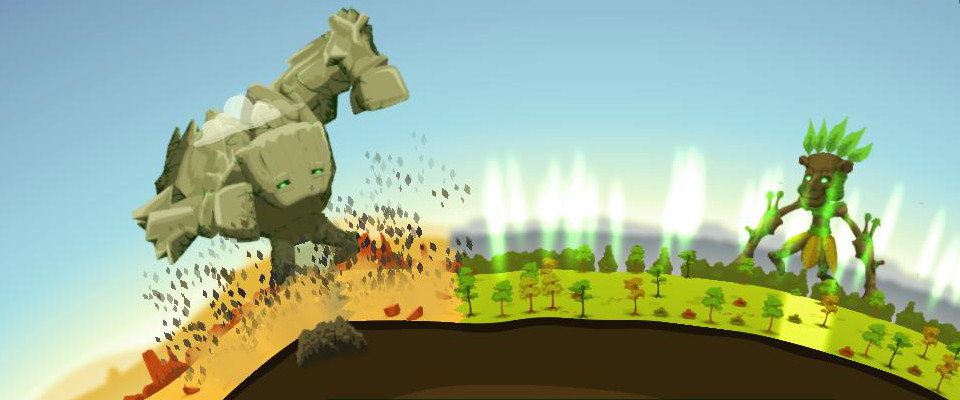
Once you place a resource in a biome human colonists will make their way there and start a village. Using your giants, you must place resources such as animals, plants, and minerals around for them to use. As they grow, villages will attempt to build a project which will be completed when its requirements are complete, or failed if its time limit runs out. Once one of these projects is complete that biome will produce an ambassador who you can assign to a giant to unlock an additional ability for that giant – you can even see the ambassadors stood on the giants’ shoulders which is a nice touch. Projects also provide random bonuses (called specialisations) for completing certain prerequisites, like a large bonus to food for every animal in the village’s borders.
You can also unlock new species and minerals that you can then use in all your future games. This is done by completing developments, which are essentially achievements. The things they unlock are very helpful for dealing with the slower pace in future games giving you new elements to incorporate. Developments are really crucial to getting the most out of the game due to the unlock system and should be what you are aiming for while playing.
Being a god game, Reus involves a lot of strategy and planning and the depths of the game only really become clear once you’ve played for a while already. The way resources that you place improve each other – called symbioses in the game – can make for a surprisingly complicated experience as there are plenty of combinations for you to discover. Blueberries generate 10 extra food when next to an apple tree, dandelion or strawberry for example, while strawberries generate +3 food when next to blueberries, so they work well together. There are a lot of combinations for you to use to supply your villages with resources.
Those resources come in three main forms: food, wealth and tech. Villages in different biomes tend to pursue projects that require a certain resource, the forest biome prefers food, the desert prefers wealth and swamps prefer tech, so it’s best to specialise your villages in a way that fits. There is also another resource called awe which is used to stop your village becoming greedy. When a village is growing too quickly (it has 20 more of a resource available than is being used) it will begin to get greedy, for every point of awe you have the gap can be larger.
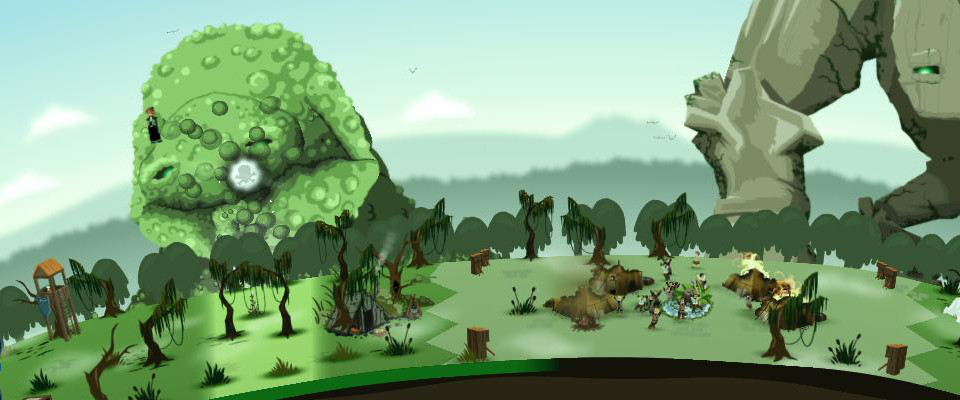
A greedy village is likely to attack nearby villages to compete for their resources, or even to attack the giants. In addition to the awe, there are a few things you can do about this. You can increase danger around the village by upgrading animals with hunt or predator aspects to turn them into more dangerous animals. If the villagers are too preoccupied defending their village they certainly won’t be attacking anyone else’s. You can also just use a giant to attack the village or kill their army, which can be an effective way of calming them down (or, you know, crushing them horrifically).
As you get further into a game your prosperity – the total of all the resources in use in villages – increases and at certain increments, a settler will appear on the planet and look for a place to live. If it can’t find anywhere it will eventually settle near another village, which brings the possibility of them fighting over resources. This is generally how a game comes to an end if you see it all the way through, your villages begin battling each other. The game usually works in “eras” however, which last a certain amount of time with the intention that you will complete developments like having 150 prosperity in one village using only plants and minerals by the era’s end.
If you are a fan of god games and want something a little different, and can put up with or even enjoy the pace of the game, then Reus is a good experience and one that I intend to return to as soon as I’m done writing. It’s certainly slow and that will turn some people away but its bright, cartoon aesthetic and its many depths present an attractive package.
bunimomike
The missus (Hannypoppie) enjoyed this. No bias to the devs being Dutch either. Saying that, I’ve lost her to Guild Wars 2 and have just picked up a copy for myself so I can see her again. Sure, she’s 3ft away from me on her PC but the mind’s totally gone. ;-)