

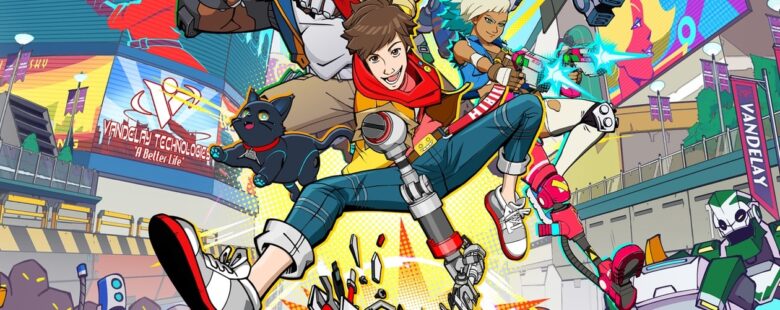
There’s something pretty magical about discovering a new game that you’ve never heard about – looking at the box art, turning it over to see some screenshots, and then being swept up in the excitement of a batch of new possibilities and experiences when you get it home. Oh, wait. This does not happen anymore! Thanks to long development cycles, the need to build hype, and the push for a community before a title’s even launched, this kind of immediate, spontaneous interaction with a game only comes once every blue moon. Hi-Fi Rush is one of the rare games to pull this off, shadow-dropping into existence during a Microsoft showcase. It’s turned out to be one hell of a game.
You can’t escape from Hi-Fi Rush’s clear selling point; the animation and cel shaded visuals are absolutely stunning. Hi-Fi Rush looks like a cartoon, and that’s whether you’re watching the cutscenes or you’re playing in-game. The quality of production that Tango Gameworks has brought to bear is spectacular, iterating and expanding on the timeless design brief of creating a playable cartoon a la Jet Set Radio and Viewtiful Joe.
That cartoon aesthetic extends into the Saturday morning vibes of the narrative, played out by an array of colourful characters on both sides of the divide. You meet our protagonist Chai at the outset, and while he’s in the lead role, he is also quite clearly the protagonist in his own fantasies as he proudly puts rock star under ‘occupation’. He’s got bags of attitude and an arm in a sling, and it turns out that future-tech firm Vandelay Technologies are giving out robotic enhancements to specially selected candidates just like him.
The boss of this megacorp tears his underlings a new one though, as he’s certain the candidates he’s been presented with are not so much ‘special’ as they are absolute losers. In a fit of apoplexy, he tosses Chai’s aging MP3 player over a railing where it bounces, quite unexpectedly, onto Chai’s torso, just as he’s about to have his arm repaired. This causes, without a doubt, a defect.
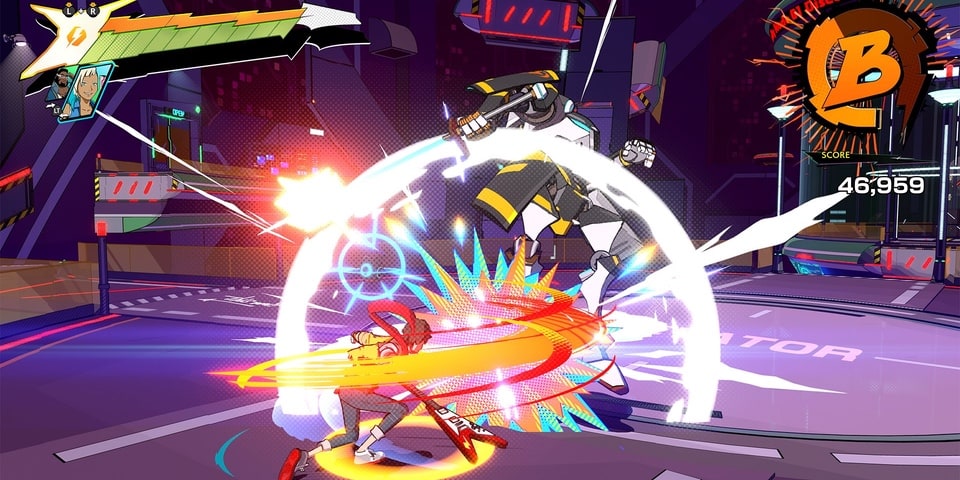
While he gets his all-new robot arm, that MP3 player has also been surgically attached to Chai’s chest, and it’s powering his new metal appendage while it’s at it. In some further twist of fate, Chai’s attacks now sync up with the MP3 player’s music, and if you hit the attack button in time you’ll earn extra damage and points.
Things start simple enough: light attacks take one beat and heavy ones two, and while it’s easy enough to follow along with the music there’s the world and gauges that pulse and move in time as well to help you keep on the beat. If you’re still struggling you can bring up a rhythm assist gauge too, which feels like it should manage to keep anyone in line. There’s also Beat Hits, which are a powerful finishing move that you gain by teaming up with a robotic cat companion. As you’d expect, these have to land on the beat to be effective.
Chai’s set list of moves continues to grow, with discarded pieces of tech and those you smash out of your robotic enemies allowing you to expand your moveset and upgrade things like your health and your special attacks. You’re also joined on your journey by a couple of compadres that you can call into action, helping to break through enemy shielding and armour or allow you to progress through the platforming sections of the game.

That’s the basic setup for the whole game; smash some robots to bits, try to stay in time, explore, jump and zip-line through a variety of hazardous locations, all the while endeavouring to take down Kale and his cohort. There’s not a heap of variety across Hi-Fi Rush’s runtime, but thanks to your ever-increasing arsenal and the score-attack flavour of each encounter, you’ll find yourself glued to your controller anyway.
The tone here is genuinely funny, and the steady stream of downtrodden facility robots, sarcastic data pads, and over-the-top villains make a great counterpoint to Chai’s lackadaisical rocker. There’s a good dose of silliness to the whole thing, and it’s great that Hi-Fi Rush doesn’t take itself to seriously, the tone landing somewhere between Disney’s take on Big Hero Six and Insomniac’s underrated Sunset Overdrive.
Hi-Fi Rush doesn’t always get it right though, and if you’re bereft of a sense of rhythm you can probably forget about it altogether. The ghostly spectre of quick time events rear their head at times, and having to complete them to a beat creates annoying gates that can grind the pace down to a halt. The combat can occasionally become overly frenetic as well, with attacks that you can’t possibly see coming chipping away at your health reserves.
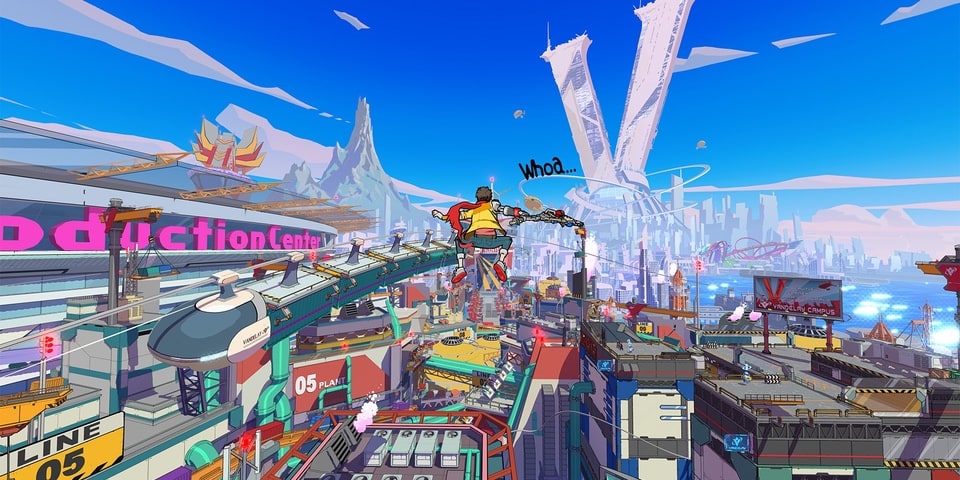
When it’s on point though, you will feel like a robot-smashing rock star. The flow of combat that Tango Gameworks has achieved is incredible to experience, and the range of different combos, special attacks and assist moves will have your fingers dancing across your pad’s buttons like Eddie Van Halen’s geekier second cousin.
These moments meld perfectly with the licensed tracks that accompany some of the bigger set pieces and boss battles, and from the opening Nine Inch Nails-set encounter, you know you’re onto something special. The original soundtrack is awesome as well, causing involuntary movement of feet, head and shoulders as you try to stay on the beat. By the end of the game, you’ll be a rhythm-action hero, never mind about Chai.