
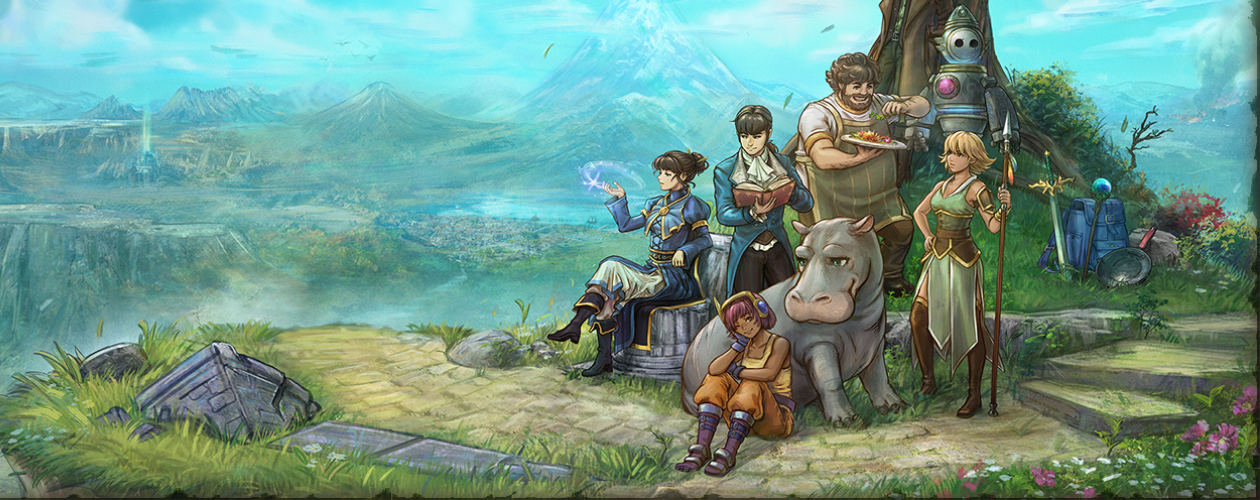
The legacy of Final Fantasy (and to a lesser extent Dragon Quest in the West) is impossible to overstate with Squaresoft’s SNES RPGs in particular still standing unchallenged as the pinnacle of the classic 2D JRPG. For this reason, any modern attempt to recapture the look and feel of these games is inevitably going to be caught in their shadow – often to unfortunate results. Quartet is the latest title to try and recapture the nostalgic thrills but also takes influence from the modern Square-Enix series Octopath Traveller. The result is a fantastic old-school JRPG that should be on every fan’s wishlist.
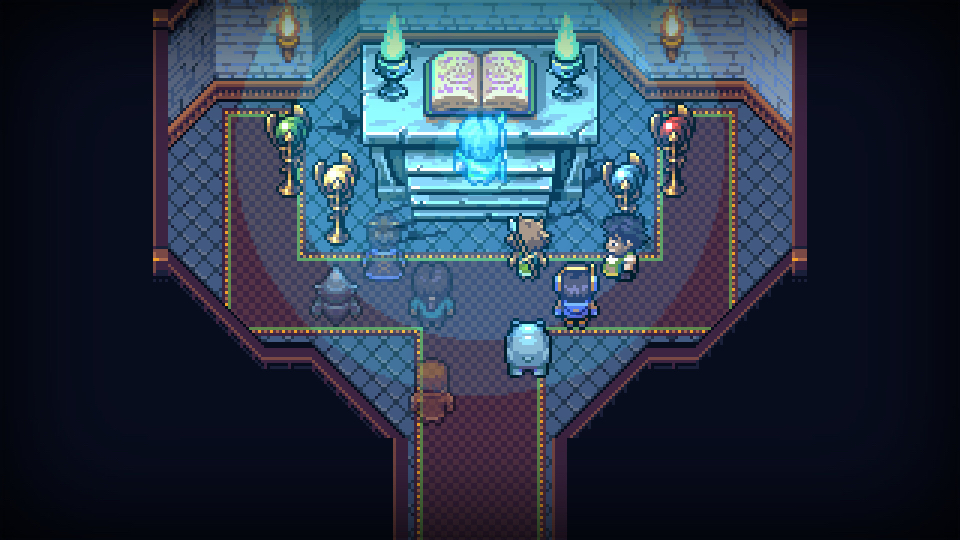
The pixel graphics of Quartet are a modern iteration of the 16bit style and capture the tone and look really well. Obviously they don’t necessarily scale up to a 4k output quite as faithfully and I personally preferred playing handheld on my Switch 2 as this seemed to suit the aesthetic better. There is, however, an excellent level of detail in the pixels with characters looking distinctive and there are a range of environments in which to explore and battle. Later in the game you also unlock an airship in true Final Fantasy style and the world map stunningly mimics the classic Mode 7 effects of SNES games.
One of the most surprising standout aspects of the game is the soundtrack. There is a ridiculous variety of moods and tones here from panic-inducing battle tunes to jazzy town melodies and even a barbershop quartet hidden away in the basement of one building. I found myself revisiting areas once I could free-roam purely to take in the tunes and will look to pick up the soundtrack to add to my writing playlist. Sound effects are appropriate for the chosen aesthetic and weapon noises in battle have a good heft to them.
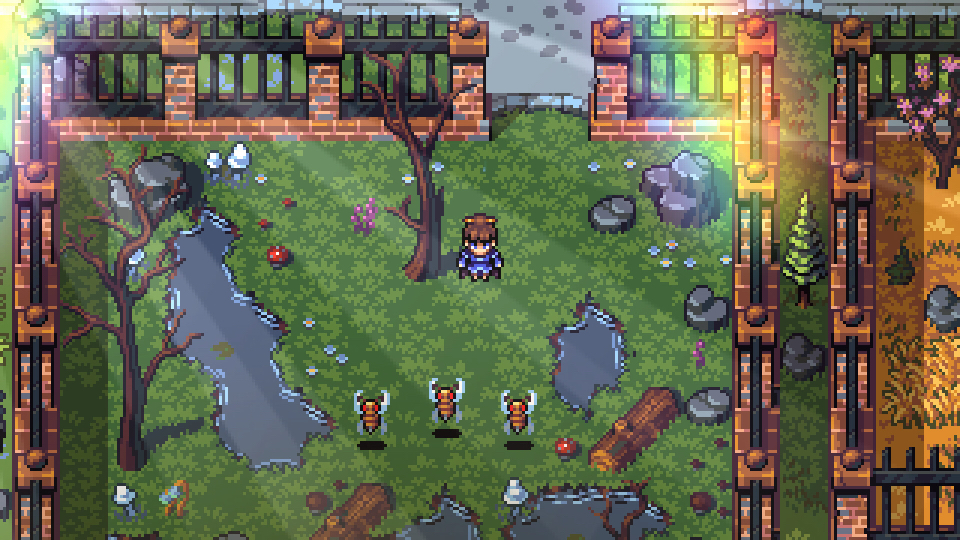
I mentioned above that Quartet is a fusion of classic Final Fantasy and Octopath Traveller with the former being the main influence for the setting and narrative. Quartet takes place in a world that is equal parts magic and technology focused and the areas and characters reflect this dichotomy. You’ll travel from monster-infested marshes and sacred ruins to sci-fi hangers and the aforementioned airships with the variety of locations ensuring that nothing gets stale or boring. Perhaps one of the most memorable is a Wild West inspired location that features outlaws, gunslingers, an iconic theme and dusty, arid environments whilst late game missions will take you to mysterious underground shrines.
The inspiration from Octopath comes in the form of Quartet’s characters and structure. To begin the game you can choose from four different opening chapters in whichever order you like. Each character is then joined by a supporting member (and occasionally temporary others) so that by the time your party comes together there are four distinct pairings that you can freely mix up to make your battle team of four. In effect this leads to half magic users and half melee but all have an assortment of abilities that can be combined to swing battles in your favour.
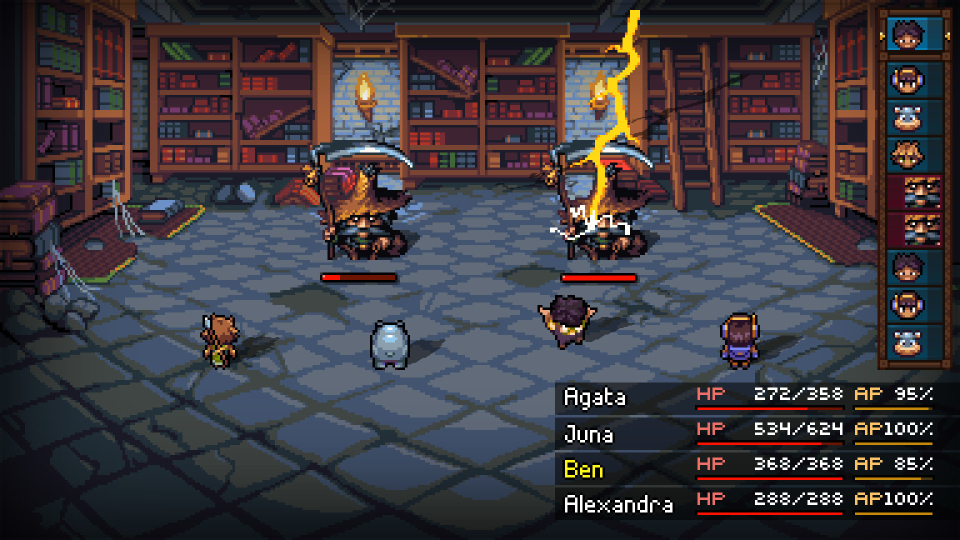
The four main characters represent the four elements – another faithful FF influence – and elemental damage plays a considerable role in the battle mechanics, as do the different weapon types. This makes combat a matter of strategy and tactics wherein choosing the right character can make all the difference. It’s a simple matter to swap in any of your teammates too so you don’t have to rely on guesswork to have the right squad. The tactical aspect is increased by the complex interaction between buffs, debuffs, elemental properties, and turn order and it feels incredibly satisfying when a plan comes together.
The bulk of Quartet is fairly linear, with little scope for exploration outside of some optional paths for bonus items. There is also no grinding potential until the latter parts of the game as random battles have been replaced by mostly static enemies visible on the map. This is a welcome choice as it means that the main focus is on battle strategy over excessive levelling up and so defeat results in a change of team choice or attacks rather than lengthy grind. At the end point of the game, things open up and a choice of character quests become available which does mix things up a bit.
On the regular difficulty setting Quartet is well balanced with boss battles offering a decent challenge but nothing that should prove frustrating. Casual and Hard options are available too if you want to make the experience either more story based or more challenging. The game also contains the usual assortment of optional bosses and areas for the completionist gamers. Once the world opens up both narratively and mechanically it really comes into its own.
