
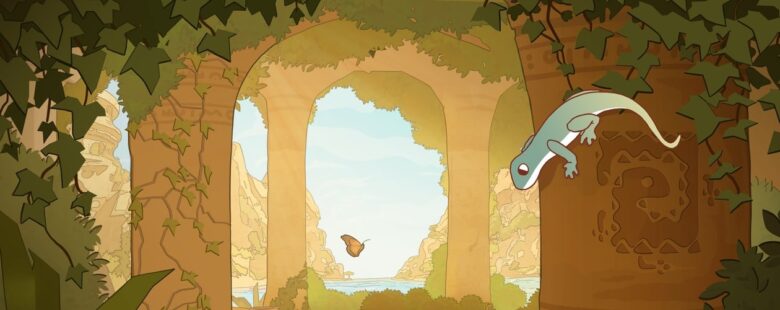
Lizards are cool. Previously represented in gaming by the wisecracking Gex, a figure whose verbosity was only matched by his divisiveness, Gecko Gods sees you play as an anonymous little guy who finds themself at the centre of a grand destiny involving the resurrection of the titular deities. In order to fulfil this unexpected task, you must travel across the various islands of the archipelago and solve a range of environmental puzzles. At heart, Gecko Gods feels far more like a tribute to Zelda (both classic and modern) than I was expecting and kept me gripped throughout.
Aesthetically, Gecko Gods is a treat to look at. Everything has a hand-crafted look and gentle cell shading, with items of interest always clear to see. Your lizard is customisable with a range of colours and designs, allowing you to make the gecko of your dreams (although that is a strange dream to have). The various islands are covered in dense foliage, climbable trees, and the remnants of a lost civilisation that clearly revered geckos as deities. Animation is smooth, and the camera generally holds up – although given the complete freedom to walk up, down, and around walls there are a few awkward moments here.
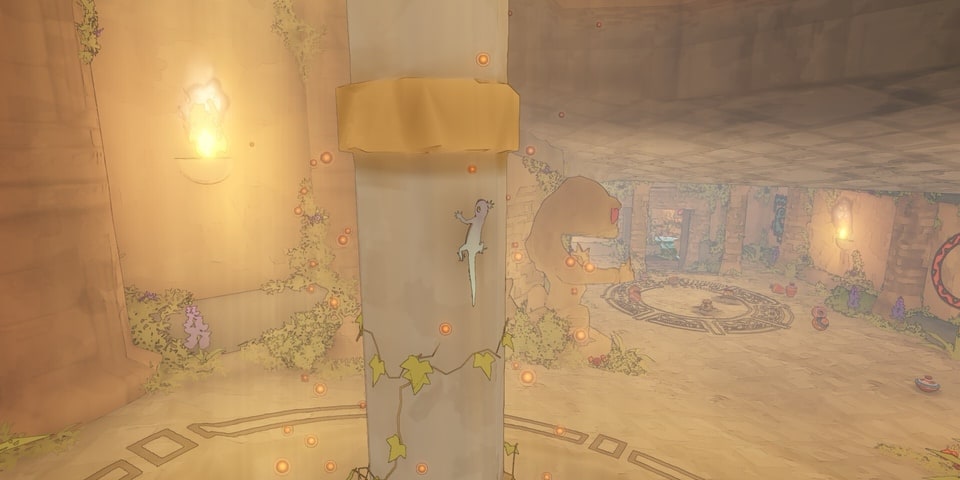
The main hook of Gecko Gods is the manoeuvrability of your protagonist. Unlike most 3D platformers where you are restricted to running and jumping, potentially dealing with obtrusive stamina mechanics for climbing, your little lizard can freely make their way across almost all surfaces in any direction. This can take a little getting used to and reminded me a lot of the PC classic Aliens vs. Predator games (although obviously with a very different vibe and feel!). Early on in the game navigation is fairly straightforward, with your goals being clear and visible, but as the story develops you’ll really need to take full advantage of your climbing abilities with entrances to rooms being hidden on ceilings, floors and in concealed caves.
The first island serves as a tutorial of sorts, as you explore the ruins and solve some rudimentary puzzles, mostly involving pulling levers with your mouth and opening doors or revealing exits. This early game also begins to introduce the wider narrative of the game as your lowly lizard discovers their role and sets out to reawaken the Gods and renew the lands. Once you finish the first island you’ll unlock a sail boat that enables you to travel between the main islands and some smaller ones. Each island has collectables in the shape of insects to munch on and hidden figurines, so there is plenty of scope for the completionists.
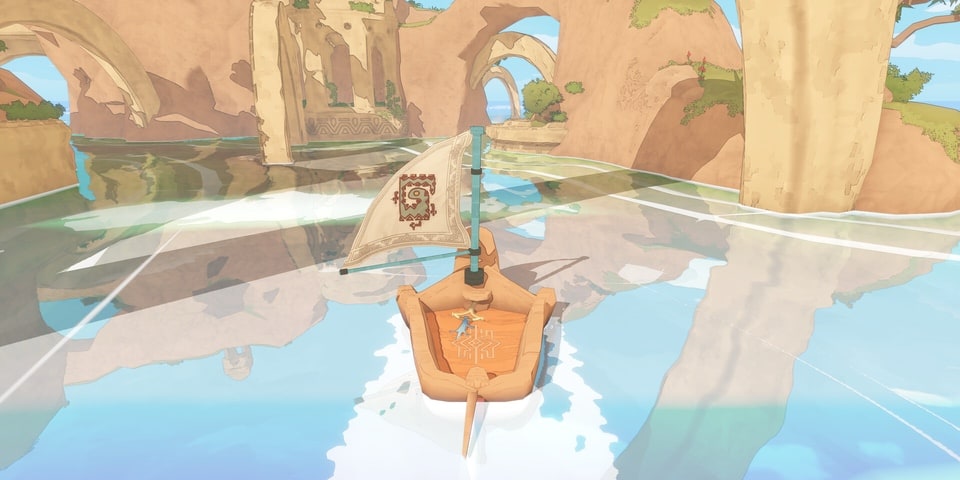
The boat itself is one of the clearest nods to Zelda, and exploring the seas around the islands was wonderfully nostalgic of Wind Waker, although it is far more focused here. Controlling the boat is intuitive and there are no real penalties for crashing into the land – the game as a whole doesn’t seek to punish players,but instead to reward exploration and curiosity. Each main island has ports with horns that you can blow to call your boat if you forget where you moored it, or you just abandon it to check out something interesting.
Several of the most involved puzzles in the main islands require you to navigate through caves with the boat and find hidden entrances to the ruins and temples and these were always satisfying to solve.
