
There are few things more unsettling in a horror game than knowing something is behind you, but being too afraid to turn around and find out exactly what it is. Silent Hill: Townfall understands this perfectly.
Moving through the foggy streets of St. Amelia in first person, I found myself constantly wondering what might be lurking just out of sight. Every time I turned a corner, I was expecting something to be waiting for me, and when I heard something behind me, the temptation to turn around was almost as frightening as whatever might actually be there.
After spending time with Silent Hill: Townfall at Gamescom, I walked away with one very simple thought: I desperately want to play more.
Townfall puts us in the shoes of Simon Ordell, who returns to the mysterious Scottish settlement of St. Amelia at the beginning of the game. Simon appears to be suffering from amnesia, and much of the opening section is spent piecing together exactly who he is, what happened to him, and how the people around him fit into the mystery.
Moving the series away from its traditional American setting has been a key part of the continuing Silent Hill revival, following Silent Hill f’s move to Japan. Townfall takes things much closer to home for a British player, with St. Amelia offering a wonderfully recreated slice of Scotland. The attention to detail is immediately noticeable. Flickering street lights, road signs, buildings and reflections all help to make St. Amelia feel like a real place, which only makes it more unsettling when things inevitably start to go wrong. The fog is thick enough to obscure what’s ahead, while the game’s first-person perspective means you can’t simply rely on seeing your character’s surroundings from a comfortable third-person viewpoint.
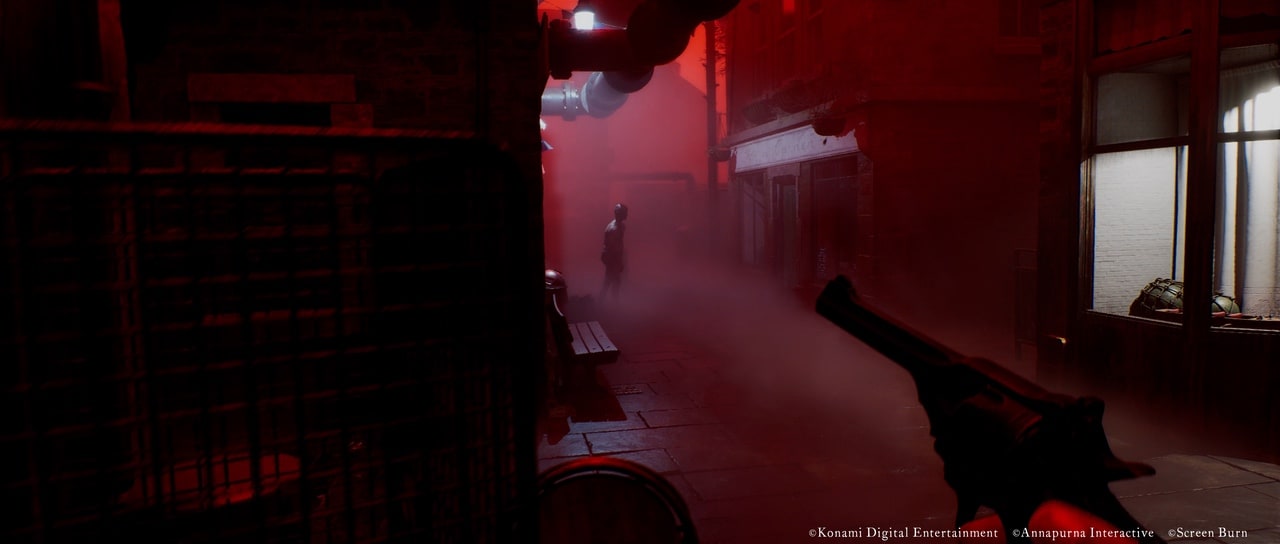
The first-person perspective inevitably brings comparisons to P.T. and Silent Hill: The Short Message, both of which demonstrated how effective the series can be when you’re forced to experience its horrors from behind the eyes of the protagonist. Townfall feels like a natural evolution of that idea, though, using the perspective to make exploration and combat feel just as uncomfortable as the scares themselves.
And then there’s the Otherworld.
I didn’t see enough of it during my time with the game to understand exactly where developer Screen Burn is taking things, but the transition into these nightmarish versions of the environment was immediately impressive. The familiar Scottish streets become something altogether more sinister, drenched in an oppressive atmosphere that feels unmistakably Silent Hill.
Fans of the series will also want to keep their eyes open. I spotted a rather clever little reference involving the red squares found on a telephone box, while another Easter egg later in the demo was hidden behind a “Welcome to Red Squares” email. These little touches suggest that Townfall isn’t forgetting where it came from despite taking the series somewhere new.
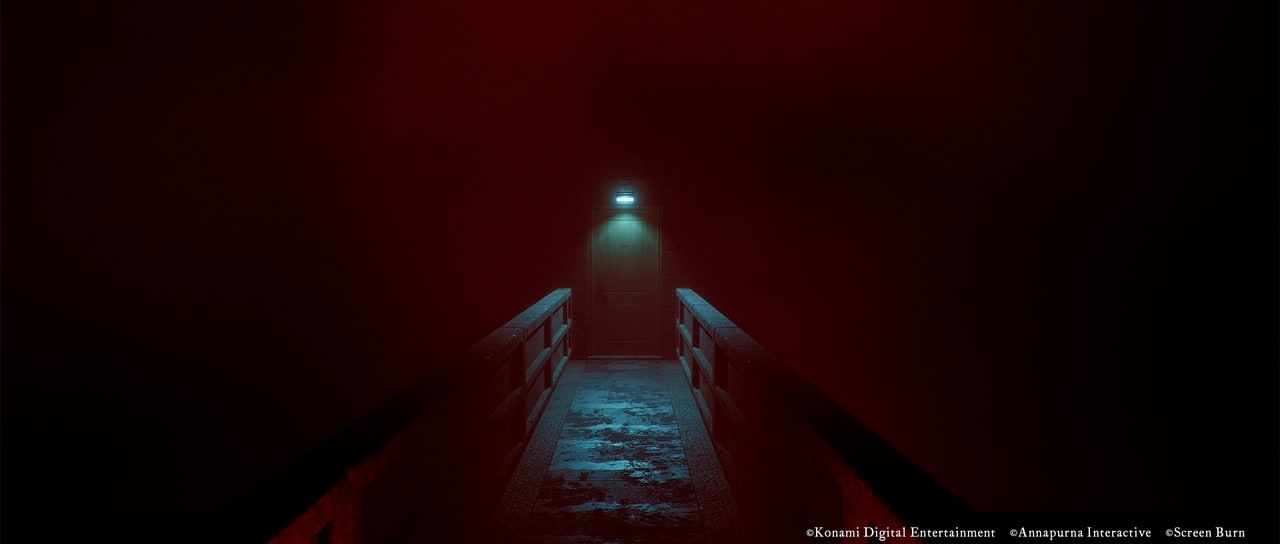
Exploration and puzzle solving appear to be a much bigger part of the opening than simply fighting whatever happens to be wandering around St. Amelia. The map system returns, while combining items is also back, giving Simon the tools he needs to work out how to progress.
The game’s biggest new tool is the CRTV, effectively replacing the radio found in previous Silent Hill games. At first glance, it might seem like a simple modernisation of an old idea, but it’s much more than that. You can tune the CRTV into different frequencies to uncover clues, pieces of the story and information about the world around you. It can even be used to scan for nearby threats, giving you another way to work out what might be lurking beyond the fog.
It’s also used as part of the puzzles. At one point during my demo I had to tune the CRTV to a specific radio signal, though I found the motion controls used to do this incredibly sensitive. The controls required you to physically manipulate the DualSense controller, and while I appreciated the idea, it took me a little while to get the tuning exactly where I wanted it.
That said, I loved the environmental puzzles. Rather than simply throwing arbitrary locks and keys at you, Townfall often gives you enough information to work out what you should be doing yourself. The CRTV provides clues, but you’re still expected to use a little common sense to figure out how those clues relate to the environment around you.

Combat is present, although it certainly doesn’t feel like Townfall wants you to go charging into every encounter. I found a weapon during my time with the game, but it was breakable, and the monsters felt dangerous enough that stealth often seemed like the smarter option. That fits with what I’ve seen of Townfall’s design, and hiding and avoiding enemies could be the smarter route to take.
I used stealth a little during my session, but I’m still not entirely sure how the balance between combat and avoidance will work across the full game. What I do know is that the first-person perspective makes even relatively simple encounters feel much more threatening. You don’t have the same awareness of what’s happening behind you, and that lack of information creates an uncomfortable tension that suits Silent Hill perfectly.
The demo also gave me a glimpse of something much larger towards the end of my time with it. Through the fog, a giant creature appeared in the distance, simply walking through the environment.
It was one of those moments where you stop moving for a second and think, “What the hell is that?”

I still don’t know exactly what Screen Burn has planned for the rest of Townfall, and frankly, I’m glad I don’t. The mystery is one of the game’s biggest strengths so far. There’s Simon’s missing memories, the history of St. Amelia, the strange signals coming through the CRTV and the people connected to Simon’s return. Even the puzzles seem to be feeding into the wider narrative, with the information uncovered through the CRTV tied directly into the stories of the characters and the town.
After the success of Silent Hill 2 and Silent Hill f, Townfall has the unenviable task of being the next game to carry the series forward. Moving to Scotland and switching to first person could have easily felt like unnecessary change for the sake of change, but after Silent Hill: Townfall, I’m convinced Screen Burn is onto something.