


The HD-2D art style has been a revelation for Square Enix, proving to be brilliantly adaptable between new adventures with retro aesthetics and remakes of 30-year-old classics alike. With Final Fantasy Resonance, it’s being leant to the most prestigious series in Square Enix’s stable of Chocobos for the first time.
Some of that prestige is maybe undercut by learning that this story’s origins are from a free-to-play mobile game, but we’ve seen just how well it can work for Square Enix to revisit and adapt a mobile game for console with Octopath Traveler 0.
The story here features the trio of Rain, Lasswell and Fina adventuring to protect crystals across the world from the Veritas of the Dark. Along the way, they can be joined by other heroes, but they’re not always from this world. In fact, that’s one of the key hooks for Final Fantasy Resonance, as Visions of heroes from other games in the series can join and be paired with your main adventuring party, lending their abilities and particular strengths to you in combat.
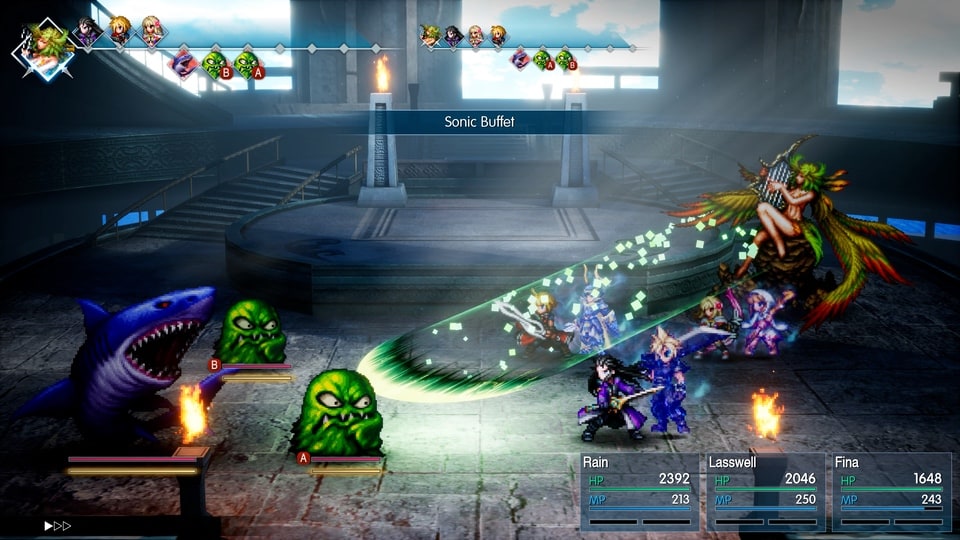
This is a more traditional style of JRPG than Final Fantasy fans have been used to of late, stepping away from the increasingly action-oriented battling of Final Fantasy XV, XVI and VII Remake, and getting back to a traditional turn-based system. This isn’t even the Active Time Battle system that had its heyday through the 1990s, though there is a turn order shown at the top of the screen and the ability to stagger and interrupt enemies.
While it’s pretty traditional in its core mechanics, the way that this is layered with additional abilities and characters is rather distinctive. There’s Limit Breaks as you fill the meters beneath each character’s health and mana, coming with great attack cutscenes in their HD-2D style. Meanwhile, staggering enemies gives you the opportunity to have your whole party jump in with an extra attack through a Bonus Phase, building up to a Resonance attack from a character of your choice. It’s effectively a whole party super move, with a flashy finisher. Certain characters can also summon Espers who will stick around and bolster your team with support or added attacks for a few turns.

The Visions are then the sprinkling on top. You can assign any of your unlocked Visions to your characters, and they then have their own growth and progression through battles, building up their own additional set of abilities, spells and buffs alongside your main heroes. In battle, they can then be called upon to perform spells and attacks instead of their main character, effectively making them an extension of that character’s own ability set, as opposed to standalone units.
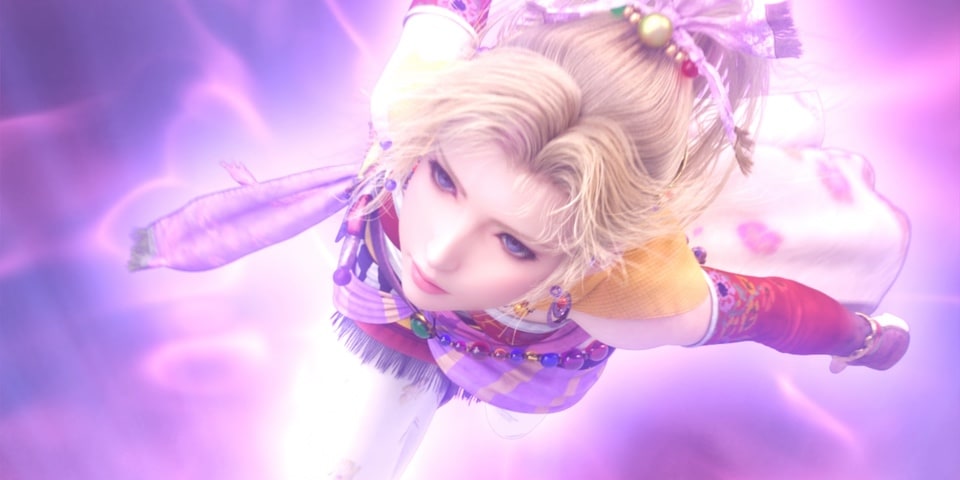
That’s great if you know the kinds of enemies you’re facing off against. Cloud, for example, comes with physical attack and lightning magic, so you can lean on him for taking down flying units, while Zidane is about stealing buffs and energy, while the Warrior of Light comes with a great range of thunder, stone, healing and protection spells. They also come with their own ultimate attacks, with lavishly rendered CGI cutscenes sweeping away the HD-2D visuals for a few moments in show-stopping fashion.
I, somewhat foolishly, started to fiddle with my party composition while battling through the Wind Shrine. The Cloud in the demo was already beefed up, but I wanted to see what Noctis was about, and immediately found that a level 1 Vision was nowhere near as useful in combat. I stuck with it, though, failing to swap them back before coming up against the Veritas of the Heavens as the final boss of this dungeon. This made the fight a real struggle for me, much of my party repeatedly being downed from the Veritas’ group attacks, while I realised that I could lean on Lasswell’s ice abilities to exploit an elemental weakness.
It was a fairly straightforward demo for Final Fantasy Resonance, giving just a glimpse of the overworld and then a battle through this fairly basic dungeon. While the Wind Shrine has plenty of lifts and moving platforms, there was really only one path to take with a couple of minor diversions to chests, and just a few battles before reaching the boss. A good time to tap into the Active Time Chat system, so you can explore while characters have a conversation and build out their relationships.
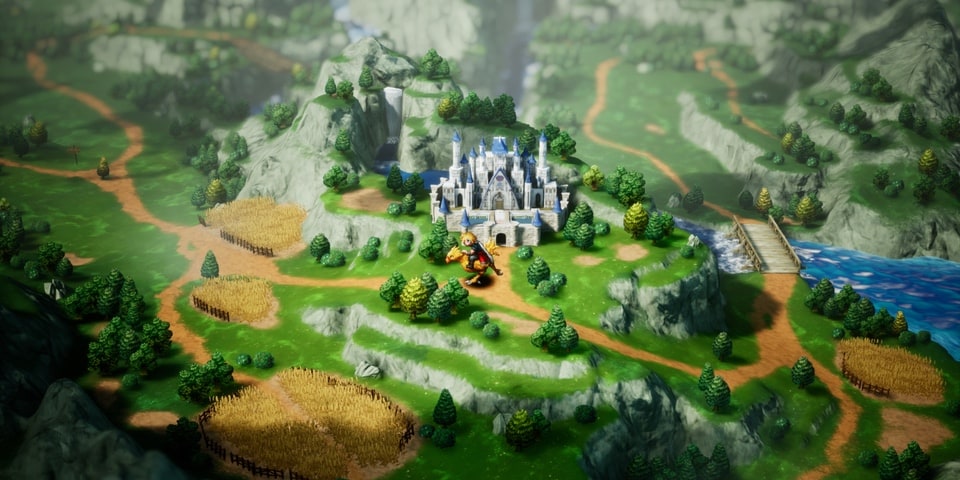
I am eager to see how much bigger and bolder Final Fantasy Resonance can become – I hope later dungeons are more inventive, for one – but I enjoyed the snippet of the game that I played and the Visions, and I’m still absolutely in love with every time that Square Enix can put its HD-2D art style to use.


