
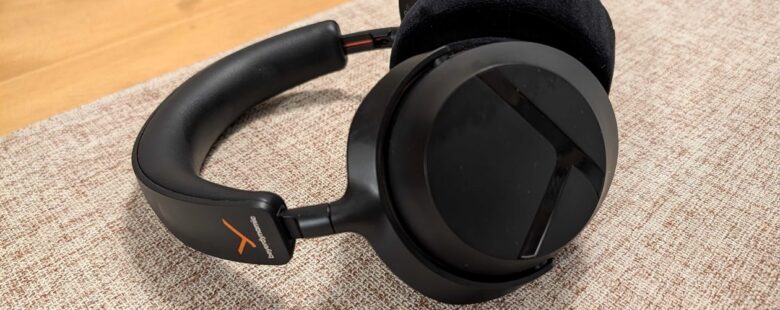
As we approach the festive season, the last few gaming peripherals are being placed under each manufacturer’s tree. For Beyerdynamic’s gaming-centric headsets, there’s two packages waiting for lucky listeners: the MMX 100 and the MMX 130, one a closed-back option, and the other open. Up first on the TSA review bench is the MMX 100, with wireless, Bluetooth and wired connection options making it a catch-all headset that will fit comfortably into any household. Especially mine.
Sometimes, when you pull a new headset out of its packaging, you’re caught up by the smell of fresh plastics and leather, or you’re immediately taken by the visual design. In the case of the MMX 100, it was the ear cushions. It’s not often that you immediately have to call other members of your family over to touch the soft fabrics of an ear cushion, but that’s exactly what happened. Admittedly, this is a weird house.
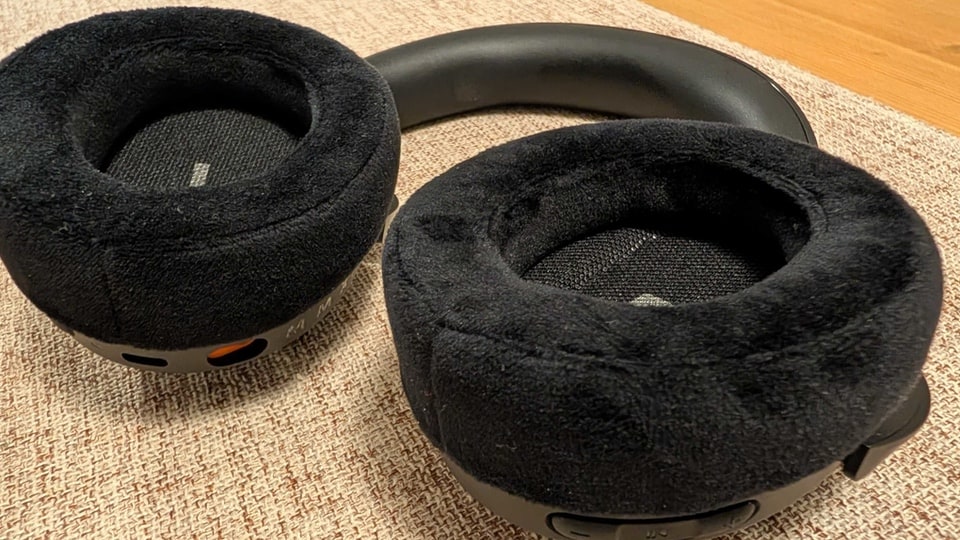
These are velour earpads, a fabric we don’t often find attached to gaming headsets, and the difference between this and the traditional leather/leatherette/synthetic mesh of its peers is stark. They feel absolutely lovely on your head, and they also form a strong passive noise-isolating barrier too – important when there’s no on-board ANC. I’ve worn the MMX 100 for hours, across long trips, extended gaming sessions and some relaxed music listening, and they’ve stayed comfortable throughout.
That’s helped by the relatively low 275g of weight. There’s definitely substance here – given the range of technology packed into them, that’s not surprising – but, any weight is distributed well, spreading it evenly through the two earpads and the thick slice of memory foam across the top of the headband.
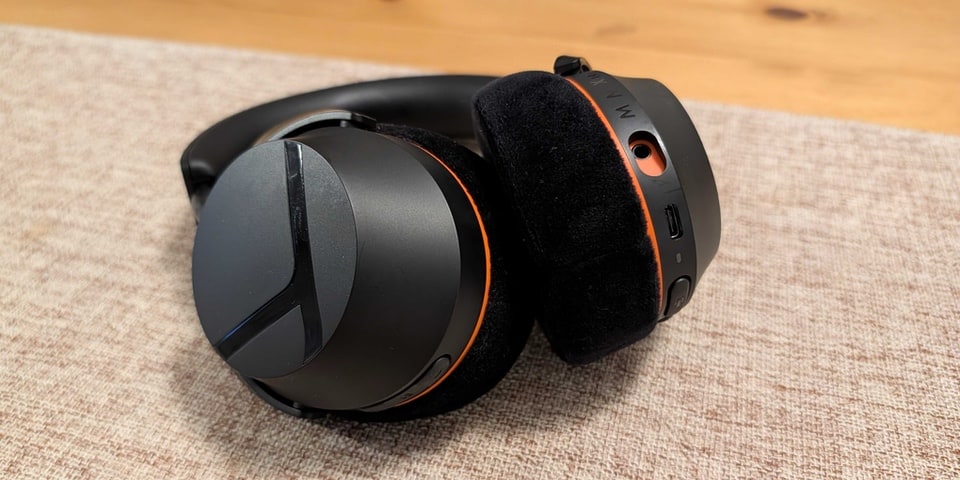
Visually, the MMX 100 keeps things relatively simple, but there’s enough character and visual flair to ensure that you know this is a Beyerdynamic headset. Our review unit came in black with orange highlights, while the alternative white/grey option retains the orange highlights but looks a little less impactful. Each earpiece has a large cross section of the Beyerdynamic logo on, and they really give the MMX 100 a sharp, clear identity, over some of the plainer headset and headphone options out there. Each earpiece is relatively large, but not so big that I wouldn’t consider wearing them for a commute or a long trip.
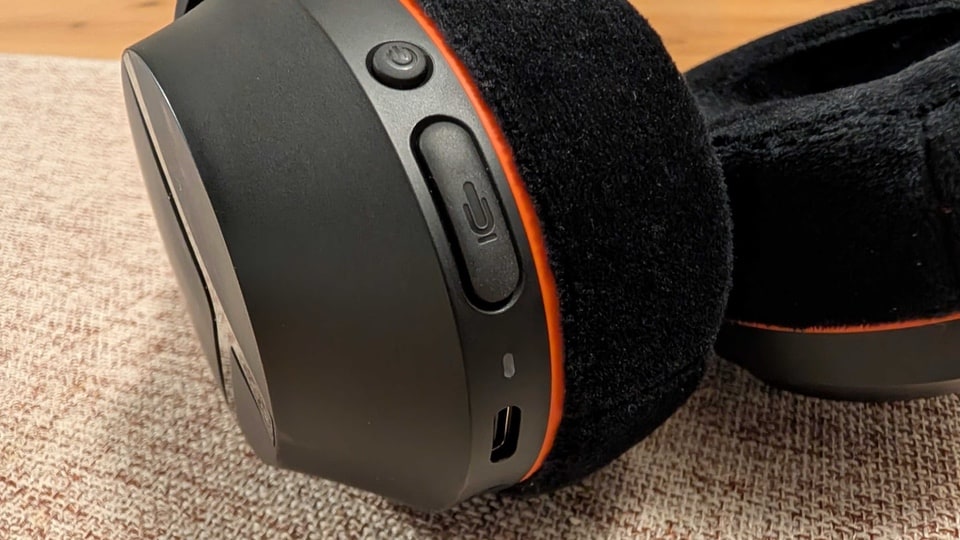
Controls are spread across the rear of each earpiece. The left-hand side plays host to the power button, which doubles for switching between dongle audio, Bluetooth audio and Bluetooth pairing with repeated presses, while a huge separate mic mute button ensures that there’s little room for confusion.
Over on the right-hand side, there’s a three-tier track which offers both volume functionality and audio track control as well. Each of the buttons has a rubbery, solid feel, and they proved reliable and responsive throughout testing. There’s little in the way of unnecessary extras with the MMX 100, and what is here speaks to the focus and precision that Beyerdynamic have approached their gaming headset range with.
On the left there’s then a dedicated connection for the removable mic, and a USB-C charging socket that also allows you to attach the MMX 100’s USB-C to 3.5mm cable. I love the multiple connection options, particularly wired, as it’s increasingly forgotten, though it’s slightly diminished because the headset still needs to be powered on, losing that wired-as-a-backup option for when batteries run dry.
So it looks smart, but how does it sound? I can categorically say that the MMX 100 sounds good – very good, even – and that’s made all the better by the ability to customise the EQ via the iOS and Android app. You can also set the custom key to perform different functions, choose the length of time before the headset turns off, and put the MMX 100 into Low Latency mode for a snappier, more seamless gaming experience.
I’ve been playing a ton of Call of Duty: Modern Warfare 4 on the Switch 2. Throughout my entire experience, the MMX 100 were a brilliant audio companion, bringing plenty of depth and immersion through the explosive campaign. At the same time, the multiplayer modes allowed the MMX 100 to showcase its excellent directionality; I was able to communicate clearly and succinctly with my teammates thanks to the Meta voice mic, while still picking out where gunfire and enemies were approaching from. Admittedly, they mostly listened to me groaning in defeat after another short-lived run straight into a hail of bullets, but it was very, very clear.
After all that getting shot in the face, I needed to take time out with some music, and I’ve become stuck on Bush’s most recent album, which is a bit less in-your-face than some of my general listening. The MMX does a great job of delivering the distorted guitars straight into your ears, with plenty of dynamism and energy, while it retains a good balance between the highs and the lows. Beyerdynamic have tuned it to be natural-sounding, so avoiding the overly bass-heavy tones of many of its peers, and that makes it far less wearing across longer listening sessions. If you tune things up via the amp, mind you, you can still bring in plenty of bottom-end aggression if you want.
The final most remarkable thing about the MMX 100 is its price point. I hadn’t actually checked the RRP before starting my review, and when I discovered it was £100, I was genuinely surprised. The MMX 100 feels like it could easily sit at least £50 higher, thanks to the overall build quality, connection options, and great sound, but at £100 it becomes something of a bargain.
The key competitors at this price point, then, have to be the Nacon 600 HS and the SteelSeries Arctis Nova 5, both of which bring similar dual wireless connection options and plenty of comfort, especially the Nacon 600 HS, though the gamer-centric design really won’t be for everyone. The Arctis Nova 5, meanwhile, boasts an even more out-of-the-house-friendly visual design, but the MMX 100 handily beats it on overall build quality.