
A few days ago, we heard allegations that Microsoft was paying for positive coverage on YouTube. The scheme, which was running through Machinima’s family of channels, offered $3 per 1000 views for videos that featured promotion of the Xbox One.
Machinima’s UK Community Manager tweeted encouragement to enter the scheme and has since deleted not only the tweet, which promised “the easiest/best promo [they’ve] ever done!” he seems to have deleted his entire twitter account – an account that’s now been taken over by an extremely anti-machinima tweeter.
Now a user on NeoGAF has posted evidence that EA had similar schemes in place. EA’s schemes offered $10 for every 1000 views of videos that met their stringent guidelines in the screenshot below. They also prohibited participants from disclosing their arrangement.
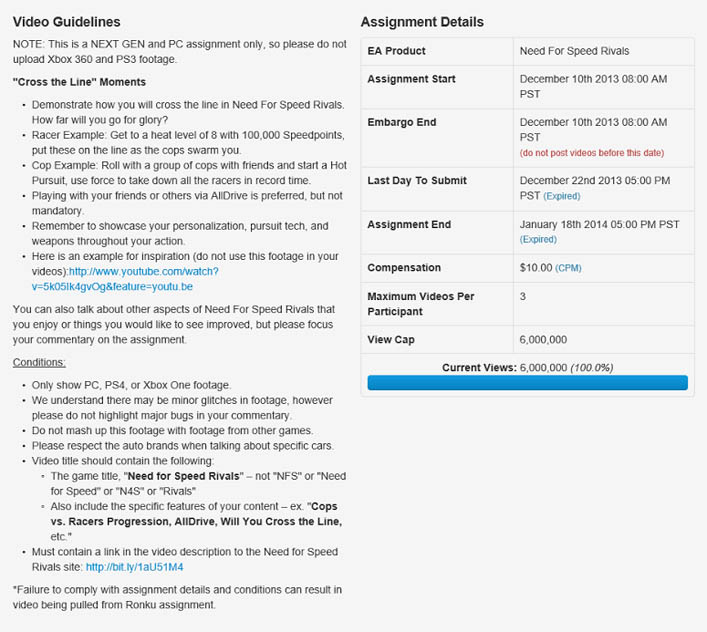
This is nothing new and we suspect that many more companies take part in similar efforts to get their products promoted by YouTube’s massively popular videomakers.
The ethics of it are a bit of a grey area. YouTube content creators are not bound by any code of journalistic ethics – they’re individuals taking part in a hobby. But that hobby has become extremely valuable to advertisers as some gaming channels rack up subscriber counts in their millions and view counts that dwarf traditional media outlets.
The question is simple: should influential people be compelled to disclose if they’re being paid for the statements they make? Is it dishonest to put those paid-for opinions alongside their own and present them to fans and an audience that trusts them?
UPDATE: EA have released a statement to The Verge.
“Through EA’s Ronku program, some fans are compensated for the YouTube videos they create and share about our games. The program requires that participants comply with FTC guidelines and identify when content is sponsored. User-generated videos are a valuable and unique aspect of how gamers share their experiences playing the games they love, and one that EA supports.”
“We explicitly state in the Terms & Conditions of the program that each video must comply with the FTC’s Guidelines concerning Use of Testimonials and Endorsements in Advertising.”


BullyBeef 47
Who takes any reviews on YouTube seriously anyway? Everything I watch on there I take with a pinch of salt/expect false information. To me YouTube is another social site where you should be free to say what you want (minus offending material against race/sex/religion etc) but the viewers should also bare in mind any negative/positive statements could and most likely are endorsed.
Now if a sales assistant came up to me and praised a device to the high heavens when indeed it is naff and faulty – I would be miffed to find out he had been paid to do so rather than just being clueless.
gazzagb
I don’t have a problem with it, it is just another form of marketing after all. What I do think though is Youtubers should be open and state in each video that they are being paid to promote a game. Transparency is key imo.
hazelam
if they want to advertise or promote their products, i’m pretty sure they’re legally obligated to make it clear that it’s advertising.
if they want to buy people’s voice and profile without telling anybody go find a politician.
it seems to be perfectly legal there.