

There’s a delightful symmetry as the PlayStation 4 is now on sale in Japan, effectively marking yesterday’s one year anniversary of the PlayStation 4’s announcement. That day followed months of leaks and rumours, with photos of dev kits appearing and details of touchpads and light bars slipping through the net of secrecy that surrounded them. Then Sony started to join in, coquettishly teasing the PS4 themselves.
It was at the PlayStation Meeting 2013 in New York on February 20th that Sony took control, though. Everything up until that point had been rumour and conjecture, but Sony brought everything into focus.
Knack became the first PS4 game to be aired in public, as Mark Cerny took to the stage to give us the juicy details about the console’s inner workings. After the complexities of the Cell CPU, Sony were turning to an AMD designed APU with a PC-like system twisted to Sony’s demands for a balanced but powerful and easy to develop for system. The biggest surprise came in the form of 8GB of GDDR5 memory, much larger than many had anticipated.
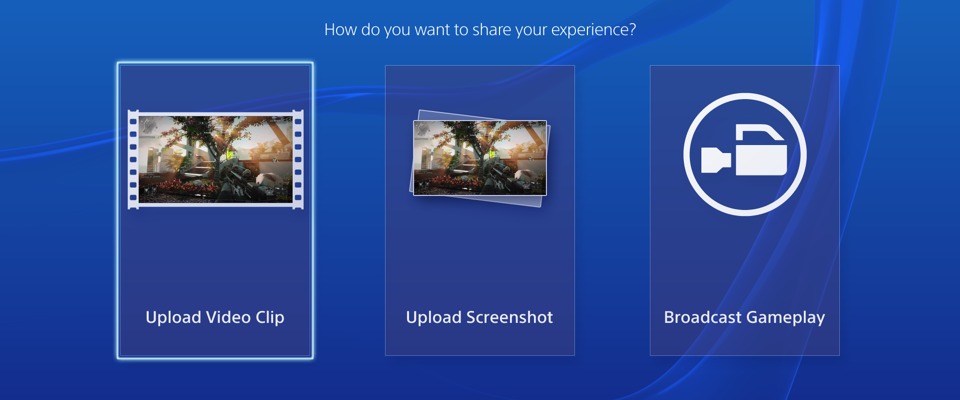
The DualShock 4 also appeared in its finalised form, the first substantial alteration of the PlayStation controller since the dual analogue sticks were added. Rather than the touchpad and large LED light, it was the Share button – making use of Gaikai’s technology – which really defined a big part of Sony’s vision for the coming generation.
Yes, the games would be more impressive graphically, with Killzone: Shadow Fall, DriveClub, Deep Down, Watch Dogs and Destiny all promising a huge leap in visual fidelity, but it was interconnectivity which would push Sony’s new generation. New games truly centred around playing with your friends in a more pervasive manner and the ability to hit the Share button and show that great moment, rather than just tell.
It’s proven to be a powerful notion and one which has seen Twitch reporting that after just two months on sale the PS4 was already accounting for 20% of all broadcasts. That’s before new ideas like interactive streams have really come into play.
Though Sony didn’t show the actual console design at the PlayStation Meeting, a fact which was lampooned and derided all the way to E3, theirs was a tough act to follow. So it proved as there was always a sense that Microsoft were playing catch up with the Xbox One.
A first outing months later in May that focussed far too heavily on TV and multimedia content rather than games, the bundling of the Kinect camera with every console and an objectionable DRM system which would have altered the way in which you could trade and share games with friends.
Microsoft were forced to backpedal in the face of widespread and harsh criticism, and it was telling that Jack Tretton could come on stage at E3, simply say that there would be no DRM on disc-based purchases and receive a round after round of rapturous applause.
Sony’s strong and decisive positioning has led to months of bad headlines for Microsoft. While Sony stayed the course and played on gamers’ nostalgia, Microsoft had to alter their plans based on gamer feedback, unintentionally allowing Shuhei Yoshida to deliver single word rebuttals or confirmations that invariably painted Sony in a better light.
Of course, Sony have had their own missteps. A lack of certain obvious media features, the delay to DriveClub, the inflexibility of some Share button functionality and even the delay of the Japanese launch which would have disappointed millions of fans in Sony’s homeland.
But regardless of any pre-launch stumbles, what both Microsoft and Sony did well was sell consoles. Both sold vast numbers of consoles across the world, with over 7 million shifted in a little over a month, putting to bed the persistent suggestion that home console gaming was to die a death by smartphone. It was an impressive show of force.
While Sony do have the early lead in this race, they can’t get complacent. The PS4 has launched in Japan just as this article has gone live, opening a new chapter in the PS4’s story and a new market which Sony are sure to dominate. But there are still questions to be answered.
Microsoft’s Xbox team are working incredibly hard to improve upon their software, so that while the persistent news of poorer resolutions or frame rates on the Xbox One continue, they could easily take a lead in general functionality via a series of major OS updates. Not to mention how Titanfall is arguably an exclusive with more mass appeal than inFamous, or the potential for the Xbox One to drop in price one way or another.
The challenge for Sony is to maintain their own momentum, to deliver on their own promises and missing features. As Peter wrote last week, what we have in March is a light shower of new games, but the monsoon season isn’t be until later in the year. At E3 and Gamescom, we’ll doubtless learn what Sony have planned for later this year, with the potential for exciting new games from the likes of Naughty Dog, Media Molecule and more.
It’s been a year since the PlayStation 4 was announced, but in truth the story of this generation has barely even begun.


RedStarGlow
From the US perspective, it is just nice to have Sony on level ground (or better) to Microsoft. Competition is good for the industry. What is a “West country yokel style” sound like anyway?
Temascos
I remember watching the reveal and when Andrew House talked about the system archietect’s history I knew it was going to be Mark Cerny, and for me that was freaking HUGE. The game franchises he worked on were ones that practically defined gaming for me, over a span of decades. I was shocked about how people reacted to the guy, lot of name calling and stuff but damn he knew what he was doing with his team when they designed the system. I’ve got a backlog of stuff I want to play through first on PS3 before I move on, which will be several years yet most likely but I know for sure that my next gen system will be a PS4. Largely smart design, much needed improvements on all sides of the table from controller to game development and a strong future ahead of it.
Sony just need to keep up developing their studios and letting them do their thing. If they all reach Naughty Dog’s caliber it would be a amazing generation.