

It’s E3 2013. Sony are killing it at their press conference. It seems like every announcement trounces that of Microsoft’s much maligned plans for their Xbox One. The PS4 doesn’t require an always on internet connection, the PS4 won’t stop you trading your games or playing used ones. The PS4 doesn’t require the use of a camera system, and, perhaps crucially, the PS4 is considerably cheaper than its rival. It’s no surprise that immediately following E3 the pre-orders for Sony’s new console outpaced those for the Xbox One, and continued to do so until both systems launched five months later.
In fact, the PS4 continued to outsell its rival throughout 2014 month-on-month, until in November, Xbox One finally pulled ahead for that month’s sales. After months of successes it was perhaps the briefest glimmer of a chink in Sony’s impervious armour, and though some might scorn Microsoft’s huge policy U-turns, they’re clearly starting to have some kind of effect.
Jump to present day and those advantages that Sony has had are slowly beginning to fade. Let’s get this straight – they’re still comprehensively outselling the competition with 18.5 million PS4s sold through to customers compared to, prior to Christmas, 10 million shipped Xbox Ones, but Microsoft’s sales are improving, and frankly from Sony’s point of view it shouldn’t have allowed them any such opportunity.
The major contributor to the improvement of the Xbox One’s sales has been Microsoft’s consistent and increasingly inclusive strategy. Admittedly they had all of the hard work to do, after announcing the Xbox One with a set of ‘features’ that were so far removed from what the market actually wanted that it nearly stalled any interest in the console whatsoever. Since then though, Microsoft have listened to their customers, and paid attention to their competitors, whilst steadily updating the Xbox One’s firmware with features that the community has requested.
The removal and reduction of Kinect functionality, and the subsequent price cut that that allowed were game-changing decisions, and ones that can’t have been made lightly by Phil Spencer and his team. I still find that Kinect, and its voice commands in particular, works surprisingly well, though I generally only use it to turn the machine on and control media content. I originally considered it the Xbox One’s defining strength, though that view has diminished the longer I’ve spent with the console. Arguably the £70 difference between the Xbox One and the PS4 at launch did not offer an equivalent value to gamers, and the price cut following it’s removal finally put it on level pegging price-wise with the PS4 and gave the console a much needed sales boost.
The extra processing power that was freed up by removing Kinect from the experience was also welcomed by developers, who were immediately able to improve the performance of their games. Key titles such as Destiny ran at the same frame rate and resolution on Xbox One as they did on PS4, with minor differences in graphical effects. After months of news stories in 2014 where the lack of parity was an issue and painted the Xbox One as the poorer cousin, Microsoft finally managed to find a way to reduce such issues, though the likelihood is that they’ll never completely eradicate them given the strength of the PS4’s memory. We shouldn’t underestimate though the importance that fewer negative comparison news pieces in 2015 will have on the Xbox One’s fortunes.
Most months Xbox One owners now see an update to their console’s firmware, recently adding features such as custom backdrops, DLNA support and media playback, along with improvements to the various apps that underpin the Xbox One OS. Some of those changes were already available on the PS4, or, especially in the case of media playback, are hopefully coming to the console this year, but Microsoft has got a lot better at communicating their improvements to consumers while Sony often seems reticent to communicate on a regular basis with its customers.
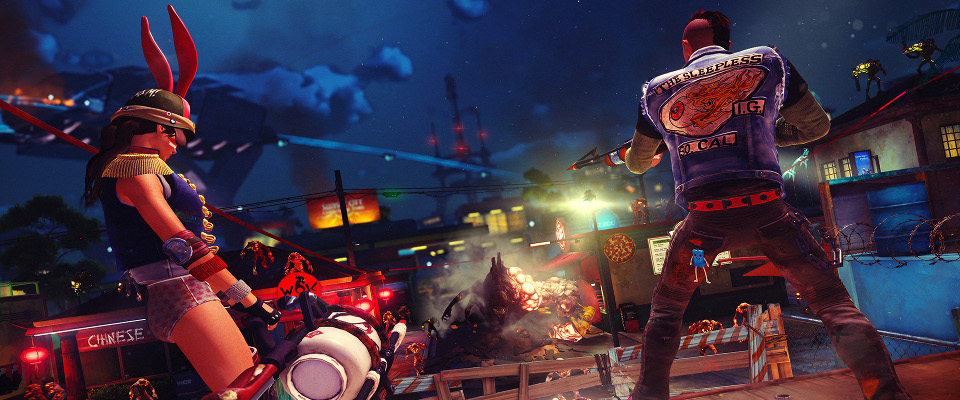
Meaningful exclusives are always going to be integral to any console’s success, though it only takes a look at the Wii U’s stellar output last year to see that it’s not always the whole story. Microsoft delivered some strong exclusives for the 2014 holiday season in the shape of Forza Horizon 2, Sunset Overdrive and the Master Chief Collection, and though the latter was plagued by matchmaking problems it was arguably a stronger Christmas line-up than Sony’s troubled Driveclub and LittleBigPlanet 3.
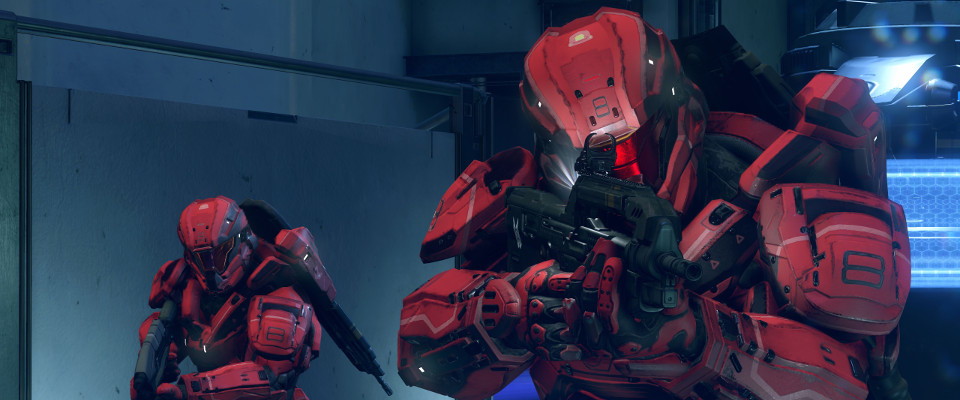
2015 will be an interesting year, as new IP on both sides of the fence such as Bloodbourne and Quantum Break will join heavy hitters like Uncharted 4 and Halo 5: Guardians. Whilst it’s clearly far too early to judge the quality of any of these titles, Microsoft are rolling out a number of games from exclusive franchises this year; Halo, Fable and Crackdown will be compelling arguments to a large proportion of 360 owners who have yet to upgrade.
Perhaps the most telling of Microsoft’s moves this year was the purchase of Mojang and thus the rights to the gaming behemoth Minecraft. The game, which has shifted nearly 60 million copies across a multitude of formats, is quite simply a social phenomenon. While it could be commercially restrictive to limit future editions to Microsoft platforms, it wouldn’t be surprising in the least to see them at the very least offer exclusive content that make PC and Xbox the definitive place to experience the game which would be a huge boon. We’ll just have to wait to see whether they get their money’s worth from their $2.5 billion investment.

Within Microsoft’s ongoing strategy it would be foolish to underestimate the importance of the Xbox Live service too. Tellingly, as server loads increase, this could be the crucial strength that Microsoft wield against Sony. Xbox Live has been a paid-for service for years, and it shows. Whilst it didn’t escape the same hacker attacks that brought the PSN down over Christmas, Microsoft’s service was back up quicker, and stayed up for the remainder of the festive period.
When the service was free, the state of the PSN was simply something you had to live with. Now however, as a paid for service that boasts nearly eleven million subscribers, it can be catastrophically weak. Sony need to invest the money they’re making into improving servers, network code and security before suffering any more high-profile problems. Each failure to improve plays into Microsoft’s favour, and with the American company seemingly willing to engage directly with it’s customers it wouldn’t be surprising to see them market themselves in 2015 as the console manufacturer with the most robust network for gaming.
Despite Sony’s commanding lead, Microsoft and its Xbox One have every opportunity to turn it around. Glimmers of improvement have already been seen and if they continue to focus on their strengths, listen to their customers and capitalise on their competitor’s failings the next year of this console generation could be very interesting indeed. Either way, healthy competition breeds success, and it can only be good for consumers if Sony are pushed to innovate and excel in this round of the console war – as they have before with features such as Remote Play and Share Play – rather than resting on their laurels following the success of their opening salvo.


danny_ken
As someone who has only owned Sony and Nintendo consoles (I don’t think I have even held an xbox controller) who will be getting a new console in the next few months, the only thing that is stopping me give the xbox one a go is Bloodborne being a PS4 exclusive. Appart from that I have not seen anything to convince me the PS4 is significantly better than the PS3 (I care not for graphics and frame rates)