

Yesterday saw Microsoft close the book on one of the major success stories of the company’s history, as they announced the discontinuation of the Xbox 360 after more than a decade on the market. Naturally, it’s time to look back on the console’s story, where it succeeded and where it stumbled.

The Xbox 360 first arrived in late 2005, ushering in both the seventh videogame generation and the first to be in HD. Launching in two varieties, the storage free and SDTV focussed Core, and the 20GB hard-drive toting Premium, the console was an immediate hit, selling out in both North America and Europe before arriving in the rest of the world. Coming just four years after the original Xbox, the swift development, production and launch of the 360 gave it an immediate advantage over its rivals, though it didn’t come without a cost.
The 360’s launch line-up relied heavily on established franchises such as Project Gotham Racing, Quake and various sports titles, while new IP such as Kameo and Condemned: Criminal Origins looked to make the most of the new console’s increased power. Arguably it was a solid range of games, but as with any launch line up, it wasn’t until later in the console’s lifecycle that developers truly began to make the most of its capabilities.
The console’s online functionality was a huge part of its success, building on the groundwork set by the original Xbox and its online service Xbox Live. By charging a subscription fee for access to online multiplayer, Microsoft was able to reinvest in the service, creating a stable and industry-leading framework that is still yet to be bettered. This was underpinned by various other innovations that are now integral to gaming, including achievements and a personal gamerscore, which helped to promote more interaction with the Xbox platform.

Microsoft also made some of the first moves with digital game downloads on console. Bringing Xbox Live Arcade across from the original Xbox, and focussing on smaller games at a reasonable price, it set the tone for the generation, with titles such as Geometry Wars: Retro Evolved, Braid and Trials HD able to reach a huge audience that might otherwise have completely missed them.
This was also the first home console to regularly update its firmware, with the original Xbox 360 dashboard featured four ‘Blades’ that allowed access to the all of the console’s functionality. As time passed the dashboard when through a number of iterations, with the simple Blades making way for the NXE before finally settling on the Metro styled layout that 360 owners will have used for the past five years.
But the 360 wasn’t without some major failures. Alongside its inability to find a market in Japan, which helped Sony to close the gap in terms of console sales, the earliest versions of the Xbox 360 suffered from an exceptionally high failure rate, with the dramatically named Red Ring Of Death a problem that could have easily overwhelmed a smaller company. Microsoft managed to save face, though at an ultimate cost of $1.15 billion, rolling out an extended warranty that managed to keep the brand alive and their reputation amongst gamers largely intact. Despite the problems, Microsoft somehow still reaped the rewards of beating Sony’s PlayStation 3 to market, without damaging the Xbox brand.
Some of that advantage came from the 360’s more standardised processor and simpler development tools, which saw it become the lead platform for many multiplatform titles, with the PlayStation 3 taking a number of years to achieve parity and eventually surpass it.
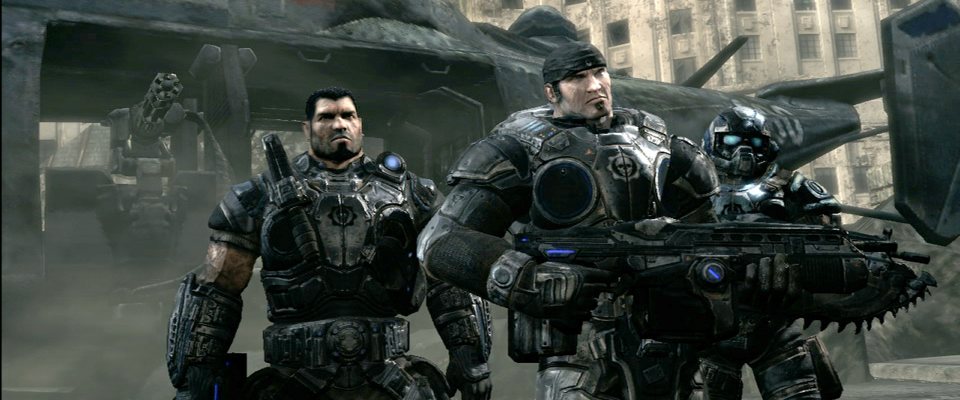
The console’s exclusive software was also very strong, with Gears of War’s arrival in 2006 marking the true beginning of the generation, alongside the ubiquitous Unreal Engine 3 that would underpin so many of the last decade’s games. While probably not the leap in storytelling some would have hoped for, from a graphical and gameplay point of view it indicated what would be possible in the following years. Flagship shooter Halo 3 arrived the next year in 2007 to much furore, and secured the Xbox 360 as the shooter fan’s console of choice.
Microsoft also took the racing genre battle to Sony, whose oft-delayed flagship Gran Turismo series came under attack from both the Forza franchise and the Project Gotham Racing series. Shored up by games with more outsanding exclusives such as Fable 2 and 3, Left 4 Dead, Crackdown, Mass Effect and Alan Wake, the Xbox 360 was able to gain a great deal of traction with gamers around the world, while the performance of key titles like Skyrim gave it a further advantage.
However, while they long held a sales advantage over their direct competitor in the PlayStation 3, the Nintendo Wii was the surprise that came to have the most sales last generation. Naturally, Microsoft looked to latch onto the seeming popularity of motion controls and in 2010 they released the first version of their Kinect sensor. Bundled with Kinect Adventures, it became the fastest selling consumer electronics device to date, ultimately shipping more than 24 million units. Despite a generally positive reaction to the hardware, it never garnered enough support from developers, with only Dance Central making a compelling argument for its existence and titles drying up in the following years.

But all good things must come to an end. The release schedule of major first and second party titles tailed off as a new generation of hardware loomed. The 360 quietly stepped away from the limelight in 2013, as the Xbox One was released, but its legacy remains. As a platform it successfully built on its online functionality, digital distribution, and engaging with its community, but as with any console, it’ll be best remembered for the games and for players experiences within them.


bunimomike
It’s interesting where the 360 did well, did badly and did well simply because Sony messed up on something. Of course, it works both ways and Sony gained where Microsoft screwed up.
However, I’m not sure anything will let my brain passed the nightmare that RRoD created. Credit given, they eventually sorted things out but knowing that a friend of mine went through seven 360s is obscene. I believe a few people on TSA went through even more. That’s a shocking PR disaster right there.
JR.
PBoD will be next. Power Brick of Doom. I’m calling it.
CrawFail
7? That’s nothing. I went through 9 of the bloody things before I made the switch to the PS3. I’ve also got 4 of them at the minute so I’ve had 13 in total excluding the ones I bought and sold as repair units.
They’re great machines but I can’t see them living long enough to be considered retro.
Avenger
Got one. It RRoD’ed. Got it fixed. Still got it 9 years later. It’s wacky that some people got through loads of them, considering the problem only existed in the older models and MS’s repair seemed to work.
tactical20
Loved my 360. The controller was much better than PS3, imo. And it had some brilliant games. Loved Fable 2, Gears of War and Rockstar Table Tennis in particular. Only switched to PS3 because of Buzz and the fact all my friends had one. RIP.
blast71
Good read that. I’ve never owned an xbox, being a Sony fanboy, but I know plenty of friends who swear by theirs. I wonder when it’ll be the ps3 getting laid to rest. Both brilliant consoles and helping to make it a great time to be a gamer.
What’s the betting tsa will be called SHILLS! for this article. (angry coward/big boner or whatever name your going by,over to you ;p)
bunimomike
I hope we see Angry Boner and Big Coward to mix things up a bit.
blast71
Or even Big Angry Boner Coward.
The Lone Steven
That sounds like a rather pornographic version of the Angry Video Game Nerd.
Also,
SHILLS! SHILLS EVERYWHERE! I can’t believe this site would shill for MS. Oh my god, who cares about the MS? Teh power of teh sony is great! TSA never…
oh feck it,
I ain’t parodying that. I have some standards when it comes to jokes.
And yes, I know how hard it is to believe that i have standards.
Avenger
What the hell! What standards???
beeje13
Never had one as I had been PS since a toddler. However I wish I could have had one, mainly for the height of the cod craze as the majority of my friends were on 360. MS raised the bar high for console online services.
Architecturally, the hardware was great, being much cheaper and simpler than the PS3 it could still more than hold it’s own.
JR.
Never owned a 360 but I almost bought one for Mass Effect (before it went Multi plat) and Alan Wake. I decided against buying one because I never saw the point of owning two consoles. Owning both a PS4 and an XB1 this gen I’ve realised that I was right. One console is enough. Who has the kind of time to get the most out of them?
I find myself only playing exclusives on the XB1 and playing everything else on the PS4. The XB1 hasn’t been turned on at all this year. Mostly because there have been no exclusive games until Quantum Break. But also because when Quantum Break was released, the power brick failed. So I have to buy a new power brick for a console that is barely used and I’m not even bothered about now Tomb Raider has been and gone.
So I don’t regret not owning a 360 last gen and I’ll never own two consoles again (if there are traditional consoles in the future).
MS and the 360 may have shaped modern gaming but at what cost? I might be wrong here but I don’t remember there being a huge focus on online gaming, paid exclusivity, paid dlc, paywalls etc. before the 360.