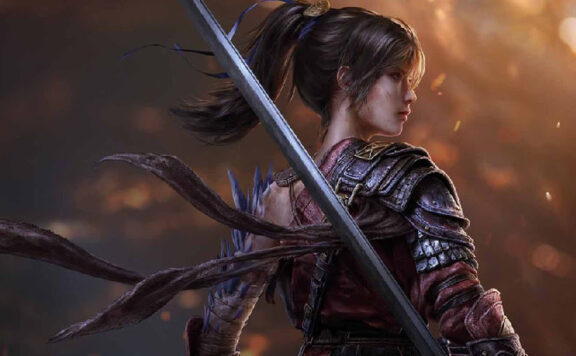


If you are a developer and you want to ground your video game in a compelling era of history, then the late Ming Period could well be for you. This was an era in Chinese history identified with great sweeping change, and the societal tension that accompanies it. Indeed, the potent series of crises – including the old favourites of ineffective leadership resulting in famine, rebellion, and war – that afflicted the Imperial Court were significant enough to bring an end to the near 300-year-old Ming Dynasty. But don’t take my word for it, take the word of Xia Siyuan, Co-Founder/CTO of Leenzee Games and Game Director and Art Director of Wuchang: Fallen Feathers, a brand-new soulslike that sees the player taking on hideous mythical beasties, and a game that just so happens to delve into this historic setting.
“The late Ming Dynasty was a period filled with conflict, cultural richness, and philosophical tension…all of which fit the kind of story we wanted to tell” said Xia “The lands of Shu, especially in Sichuan, gave us a unique backdrop with deep historical roots and regional myths that many of us on the team grew up hearing. It offered the perfect mix of real-world texture and space for dark, imaginative storytelling.”
“Real historical events gave us a strong foundation. The turmoil during the late Ming Dynasty — especially the chaos in Sichuan during Zhang Xianzhong’s invasion — helped shape the atmosphere of collapse and unrest that runs through the game. We took those real moments of instability and layered in myth, using them to imagine how the world might have unravelled if something like the Feathering had taken hold.”
What is this Feathering that afflicts the land? Well, it’s a particularly cruel condition, one that causes the poor unsuspecting victim to sprout feathers from their limbs before ultimately going mad and transforming into a hideous monster. Lovely stuff, but where did the initial idea for this disease originate from? That’s what I wanted to know.
“According to existing records,” Xia dramatically intoned, “the Feathered People first appeared in the Classic of Mountains and Seas, and a significant number of unearthed artefacts also depict them. These relics, texts, and folk legends have all served as sources of inspiration for us.

“Many of the creatures in Wuchang draw from Chinese mythology, regional folklore, and ancient archaeological finds. We looked at stories about resurrection, spiritual corruption, and shape-shifting beings, then imagined what those myths might look like if they were warped by the Feathering disease. Sanxingdui relics, with their abstract, otherworldly designs, were a major visual influence, and we used them to help create enemies that feel both ancient and unsettling but woven into the world in which they live.”
If I wasn’t intrigued enough already, now my Indiana Jones senses were really tingling… ancient archaeological finds? Relics? Otherworldly designs? What exactly are the archaeological discoveries of Sanxingdui? Well, Sanxingdui is an archaeological site in modern Guanghan, Sichuan. Initially uncovered way back in 1927, it has since proven a treasure trove for bronze age artefacts, which archaeologists have attributed to the ancient Kingdom of Shu.
“The archaeological discoveries at Sanxingdui are a fascinating topic” continues Xia, “We’ve incorporated those elements not only into the design of certain bosses, but also throughout the environments and the story’s background. As players continue exploring, these cultural references will gradually become more prominent — eventually culminating in the ancient capital of the Bo people, where this unique cultural thread reaches its narrative peak.”
Sanxingdui excitingly consists of numerous sacrificial pits, which in total are crammed with over 13,000 relics, with more than 3000 items intact. This is mighty impressive, considering many of these artefacts are millennia old. My smart phone barely sees the year out before promptly self-destructing. Some of the relics uncovered depict half bird half man figures – human bodies transmogrified with feathers, wings and bird claw feet. It is these that proved the inspiration for the Feathering disease, and for many of the bosses that will repeatedly kill you until you get good.

“The game’s world, it’s actually set in a parallel timeline—one shaped by a small divergence during the time of Du Yu” explains Xia, “In this alternate world, the worship of the Feathered People and legends of resurrection have taken root.”
Which is all very well and good, but if players are going to fight hideous monsters inspired by the relics of an ancient mysterious culture, they’re going to need a range of weapons to dish out some damage, right? Well, don’t worry, Wuchang has you covered, with twenty-five brutal weapons to assist you in cleaving feathered wing from feathered body, like an overenthusiastic KFC chef.
“Several of the weapons are rooted in real historical designs from the Ming Dynasty, as well as legendary arms from Chinese mythology” begins Xia, “The Ming era was a transitional period in terms of warfare — moving from traditional cold weapons like swords and spears to early firearms and explosives. That shift gave us a lot to work with, both mechanically and visually. We incorporated these changes into the game’s weapon variety, blending grounded historical detail with mythological symbolism. Some weapons are stylised interpretations of relics from the period, while others are tied to specific folklore or spiritual beliefs, adding another layer of meaning to how they function in combat and within the world. It was important to us that each weapon felt like it belonged to the era, even if touched by the surreal or supernatural.”
Quite frankly, Wuchang: Fallen Feathers sounds fantastic, the perfect game for lovers of history, mythology, and weird looking bird-dudes. Before I wrapped up my time with Xia, I wanted to know, what do the team at Leenzee Games hope players will learn about Chinese history, culture, and mythology through experiencing Wuchang: Fallen Feathers?

“Jiangkou sunken treasure, the Four Loyal Sons, Sanxingdui, the Jinsha ruins, Taoping Qiang Village, Baoyun Temple in Pingwu—these Sichuan landmarks and legends are part of the memories that shaped me and my team as we grew up. We drew inspiration from local folk culture such as the Sanxingdui relics, Sichuan opera’s face-changing, the iron firework ritual datiehua, as well as from Ming Dynasty philosophies—Confucianism, Buddhism, and Taoism—and the evolution of firearms. All of these influences were woven into the gameplay.
Our hope is that these elements not only reflect historical authenticity, but also allow players to experience the unique cultural richness of the region. For us, sharing these memories and stories with more people is meaningful in itself—and we believe they’ll resonate with players.”
Wuchang: Fallen Feather is being published by 505 Games and will launch later this month on July 24 for PlayStation 5, Xbox Series X|S, and PC.
Excellent news! The first Playing with History book – featuring over 100 games, 200 pages, and 10,000,000 years of history –has been successfully funded on Kickstarter. But don’t worry if you missed out on the campaign, you can still take part by proving a late pledge, right now!