
Last year’s newest hardware from Nintendo has proven to be a massive hit. The Switch 2 has already sold 17.37 million units, in an impressively short space of time, making it the fastest-selling console ever. That’s a huge victory for the Japanese company, particularly when there was a point – I’m sorry, my beloved Wii U – where it looked like Nintendo could be heading out of the hardware business altogether.
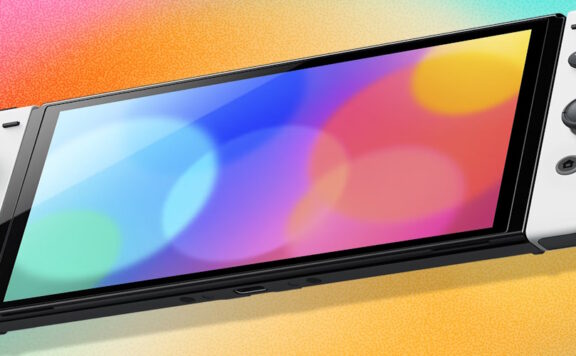
Still, Nintendo isn’t known for resting on its laurels. The Switch 2’s predecessor went through a number of revisions, and while some of them were purely under the hood, both the Nintendo Switch OLED and the Switch Lite made major changes to the hardware. It seems unsurprising then, that rumours are already swirling about a Switch 2 revision of its own, with the three letter code “OSM” sparking this mystery.

Could the first revision we see of the Switch 2 be the Switch 2 Lite? Those nosy kids on the internet have dug around in Nintendo’s back pocket – well, the User Account Portal – and found what appears to be mention of an all-new hardware tag, that doesn’t correspond to any of the current Switch consoles out there.
This OSM model uses the same type of product identifiers as both the original Switch and the Switch 2. The original Switch model numbers all began with “HAC”, the Lite used “HDH”, and the OLED used “HEG”, while the Switch 2 itself is thought to be “BEE”. Now, OSM doesn’t really fit into either generation, and it’s never been an acronym, but that hasn’t stopped people suggesting it might stand for Ounce Small Model or relate to an OLED revision. Maybe it’s an Oversized Switch Museum to make Welcome Tour a reality?

So, we’ve got a mystery, and we love a good mystery don’t we? Especially if it means we might be seeing a new version of the Switch 2, but you do really have to ask, do we need a new version of the Switch 2 already? The initial hardware is less than a year old, and new hardware’s primary function is to reinvigorate sales or find a new market for a product where sales are slowing. That’s definitely not the case for the Switch 2. The Switch Lite arrived 30 months after the first Switch came out, and the Switch OLED even later, so to see a Switch 2 Lite in 2026 would be very premature.
Assuming that a Lite version of the Switch 2 arrived, we can probably predict various things about it. The first is that it will be smaller and lighter than the Switch 2. The Switch Lite was some 30 percent lighter than the original Switch, weighing in at 275g compared to the Switch’s 398g. The Switch 2 weighs a hefty 534g, so if Nintendo were looking to make a similar reduction, a Switch 2 Lite could weigh in around 374g. Despite undercutting the original Switch, that’s still a long way away from the dinky Switch Lite, so perhaps they’d take things even further.
The most likely barrier to that will be cooling. The Switch 2’s innards are considerably more powerful than the original Switch, and so the cooling also got an upgrade for the new generation. The Switch Lite only arrived when Nintendo was able to shrink the console’s chipset and reduce its power consumption (which also led to a better battery life version of the regular model). We would likely need to see Nintendo make the same move for the Switch 2 to avoid struggling with cooling and thermal throttling.
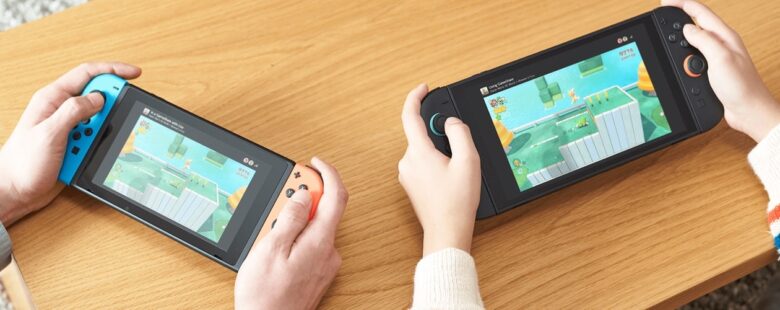
One of the reasons the Switch Lite was such a hit, though, was because it was so much easier for children to hold. The smaller form factor has smaller sticks and buttons, perfect for younger hands, and without the detachable Joy Con, it was a simpler, more straightforward device, never mind easier to carry around. If Nintendo couldn’t make it that small because of hardware issues, is there really any point?

Of course, there could be another option for the mystery hardware tag: a revised version of the original Nintendo Switch. The Switch has been an incredible success – with over 155 million sold, it’s just scooted past the Nintendo DS into second place behind the PlayStation 2 – and Nintendo certainly still see value in supporting a console with a huge library and a monstrous install base, particularly when it can work as a gateway console before buying the newer Switch 2. At a time where consoles have been getting more expensive instead of less, and with the skyrocketing RAM prices a possible concern for the Switch 2, a cheaper version of the Switch would be the perfect way to keep Nintendo consoles arriving in more people’s homes.
We saw Nintendo do this with the Wii Mini, a stripped-back, cheap version of the Wii hardware that appeared six years into the console’s lifespan. We’re nearly at 9 years for the original Switch, but it still remains relevant, with new games continuing to release for the plucky hybrid. Consoles are sticking around for much longer than in previous hardware generations, and though the Switch 2 will be Nintendo’s poster child for years to come, there’s money to made with the older console, particularly when its older components shouldn’t be as affected by the AI server farm craze. And OSM? How about Original Switch Mini?
Whatever the case, something is intriguing about the OSM model tag, but we’ll just have to wait and see exactly what it is. In the meantime, we’ll continue to love the Switch and Switch 2 we already have.