
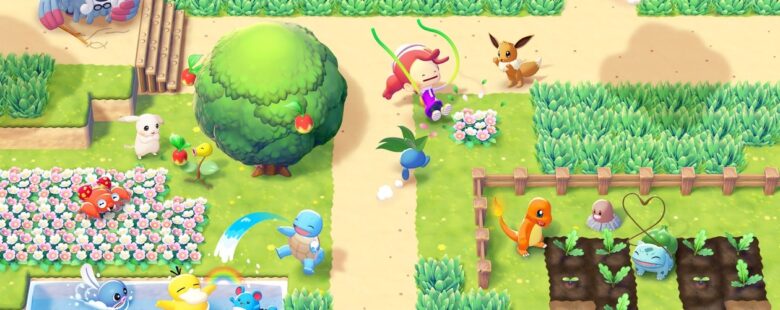
What would happen to the Pokémon world if all the humans disappeared? That’s what Pokémon Pokopia asks in the wake of some mysterious disaster that has left the world in ruins, the Pokémon in hiding, and not a single trainer in sight. Well, you look an awful lot like a trainer, Ditto, so it’s time to get to work on a new haven for Pokémon.
Having woken up all alone in a cave and chosen to mimic the shape of your trainer, you run into Professor Tangrowth who’s rummaging around nearby. Together, you step outside to find a desolate world all around. With nobody else willing or able, it’s up to you to bring life back to this land, watering the parched land, creating natural habitats to draw Pokémon to you, and restoring parts of the human ruins left behind.
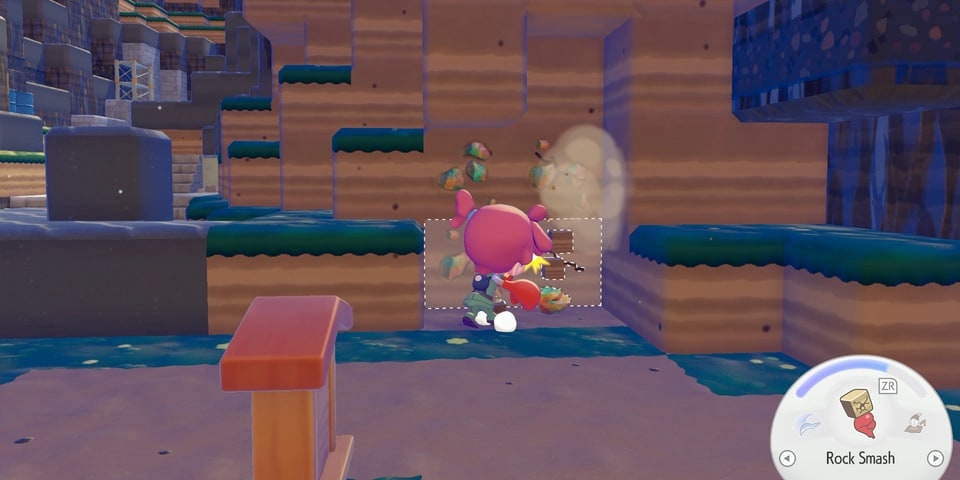
The opening hour is a rush of meeting new Pokémon and, as a Ditto, learning to copy their moves to bring life back to the world. Water Gun from Squirtle, Leafage from Bulbasaur to let you sprout thick grass, Scyther teaches you Cut, Hitmonchan demonstrates Rock Smash to punch through the blocky world. You get the fundamentals pretty quickly, but a handful of others, like Swim and Glide, are reserved for when you reach later areas.
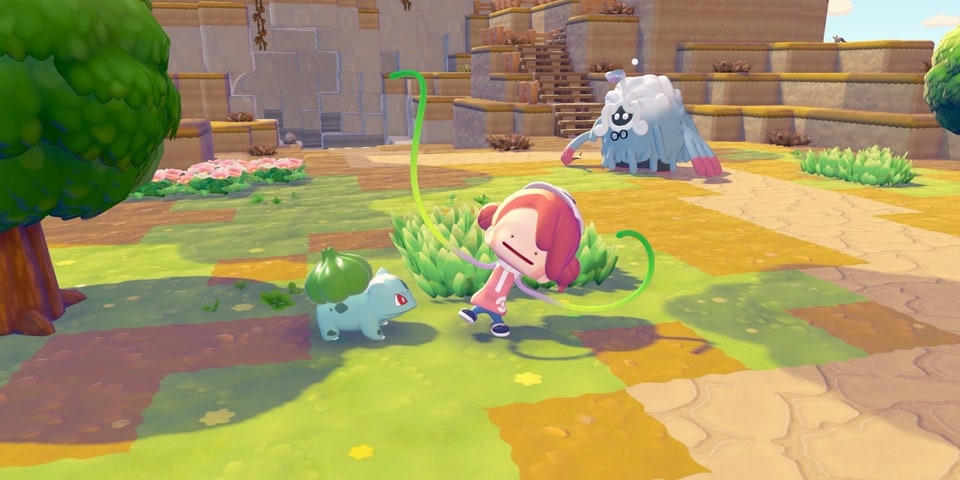
You soon start to see the sparkling glimmer that hints at the kind of habitat that will draw a new Pokémon to the area, these habitats ranging from a small patch of tall grass by a tree or rock, to fragrant flowers on top of a hill, a psychic glass ball in a darkened room, or an office desk and chair. It’s then a waiting game for them to show up, allowing you to wander off and do something else for a while.
Once befriended, these Pokémon just kind of amble around, chatting to one another, having little interactions you can photograph, and having a chill time of it, but even though you’ve learnt a bunch of moves, you will still need their help. As you take raw resources from the world – timber, metal ores, salvageable rubbish – they need converting to usable materials, and that’s where Pokémon with their various skills come in. Giving them raw materials, leading a fire Pokémon to a furnace, a grass Pokémon to freshly planted trees, they’ll jump at the chance to help out and get to work.
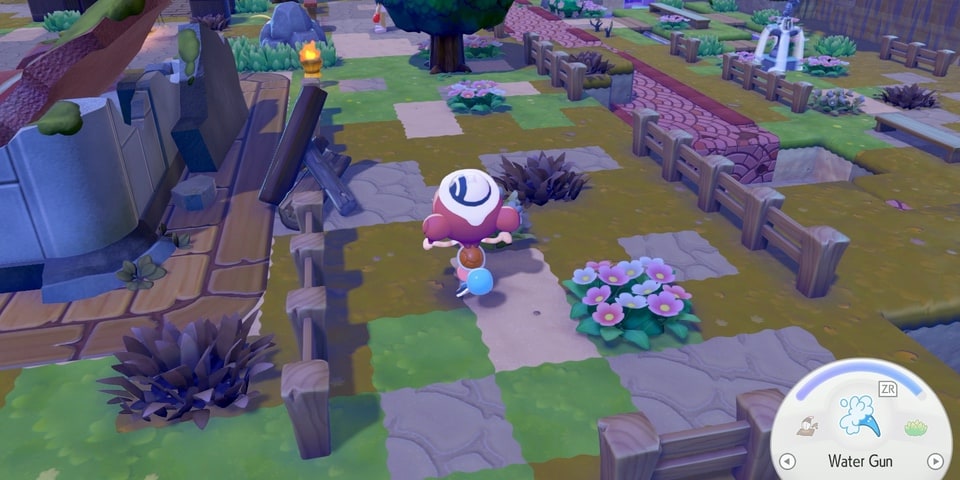
It’s all so thoroughly homely. Pokémon are universally happy to be your friend, there’s perfectly judged ambient music, and Pokopia leans on the UI and style of Animal Crossing for the inventory and crafting (thankfully with far fewer limits!). The Pokémon Center computer happily dishes out challenges that are just like Nook Miles, but there’s a different overarching structure to Pokémon Pokopia, and you can see that common heritage from Dragon Quest Builders 2 (and that game’s own inspirations) coming through.
Pokémon Pokopia blends in some real world time elements. You can, to a large extent, play for as much as you want within a day and make great progress through the various regions and story – a sleeping Pokémon will still happily come to help – but there’s also some soft and hard time blockers that push you to switch off the console and come back later. The main examples of this are the building projects, for which you first need to set down the location of a new building, then stock it with the required materials and bring Pokémon with the necessary skills and in great enough numbers to cobble it all together. You’ll be given a specific completion time for some buildings, but some larger structures will simply tell you to come back tomorrow. It’s not as strictly real-time as Animal Crossing: New Horizons is – though the time of day in-game does reflect your local time – but it does force you to focus on something else, at the very least.
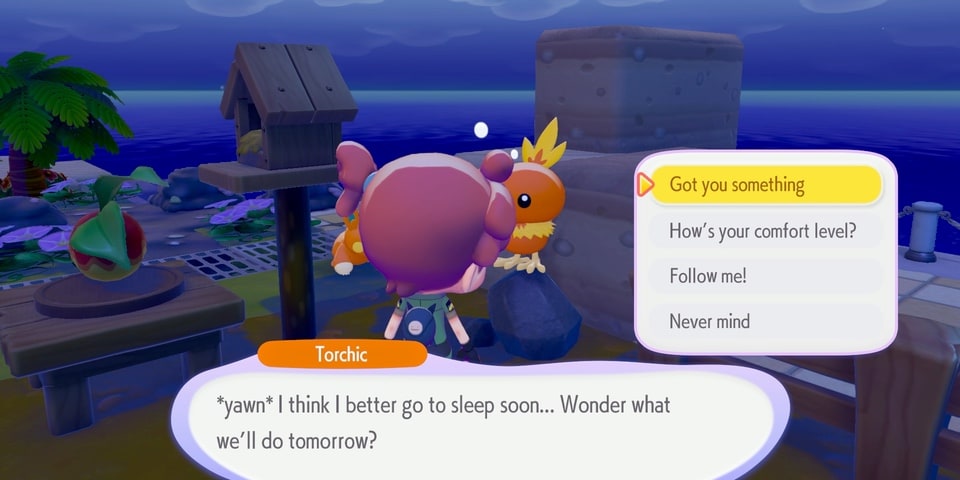
Thankfully, there is always so, so much that you can do. The more Pokémon you’ve met and befriended, the more habitats there are for you to grow and improve. Each Pokémon has certain likes and dislikes – preferring dark or light places, spicy food, or sweet – but you can also ask them about their habitat, and they’ll tell you that they want something like a toy, decoration or furniture to relax with. You can meet those requirements on a very basic level, but you can also put the effort in. Some Pokémon will want more enclosed shelters and houses, or ask for something that you don’t quite have a good fit for just yet.
As you make your way through the admittedly quite light story and missions, there’s some nice nods to classic regions and landmarks, and some more colourful Pokémon characters with special tasks for you. It’s really up to you how committed you are to fixing everything up, shaping the world and making it all look good as you progress. Given just how many Pokémon you eventually need to cater to, and how this plays into the late-game, you might just want to barrel through, do the bare minimum, and then come back to it in the post-game.
Pokémon Pokopia takes a clever, multi-layered approach to online play. For the main story regions, others can come to visit and see what you’ve done passively, but there’s then the Palette Town region, separate from the story, which can be played with all players having an active role in shaping the world. That will save to the host player’s file, but Cloud Islands are generated, server-hosted regions that you can share with other players regardless of whether the host is online or not. In addition to being a great solution to this common co-op game problem, Cloud Islands are where the game seems closest to Minecraft, with an emphasis on blank canvas creativity. While we didn’t test multiplayer during the review window, we did get to experience it at a preview event in January, and had a great time running around and sharing the Palette Town space.
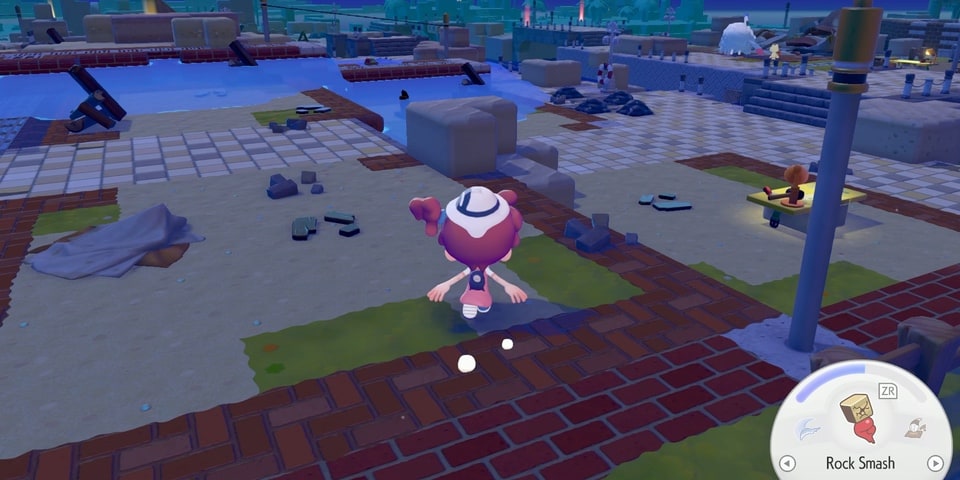
As cosy and relaxed as the game is, there’s a smattering of persistent, minor annoyances with how it plays. The one you’ll run into most often is when you aim while trying to water the ground, smash blocks or place them. Watering has an unusual plus-shaped spread of five blocks, punching can somehow target anywhere from one to four blocks at a time, and placing blocks without a dedicated reticule is just a bit too clumsy. More broadly speaking, rebuilding the various habitats and homes for Pokémon ends up being an aesthetic disaster if you don’t learn and then meticulously plan for them, especially as you meet their requests for additional furniture and items – I’ve got a Machamp with a double bed next to some mine cart tracks and a patch of grass, right in the middle of the quarry. He loves it, but it’s heckin’ strange.
I also wish for a way to call out and find Pokémon better, as each has a particular skill and attribute for you to rely on. Needing someone to crush berries into paint in one region, I was searching everywhere for a Pawmo that had completely vanished, forcing me to go to a different region and ask an Onyx to do it instead. Another time, the Scorbunny that lived near to the furnace had completely disappeared. It’s just a fuss having to then consult the Pokédex for another nearby Pokémon that can fill in – there’s a good set of filters for Pokémon, but some parts of the Pokédex UI are fairly impenetrable or vaguely categorised lists.