
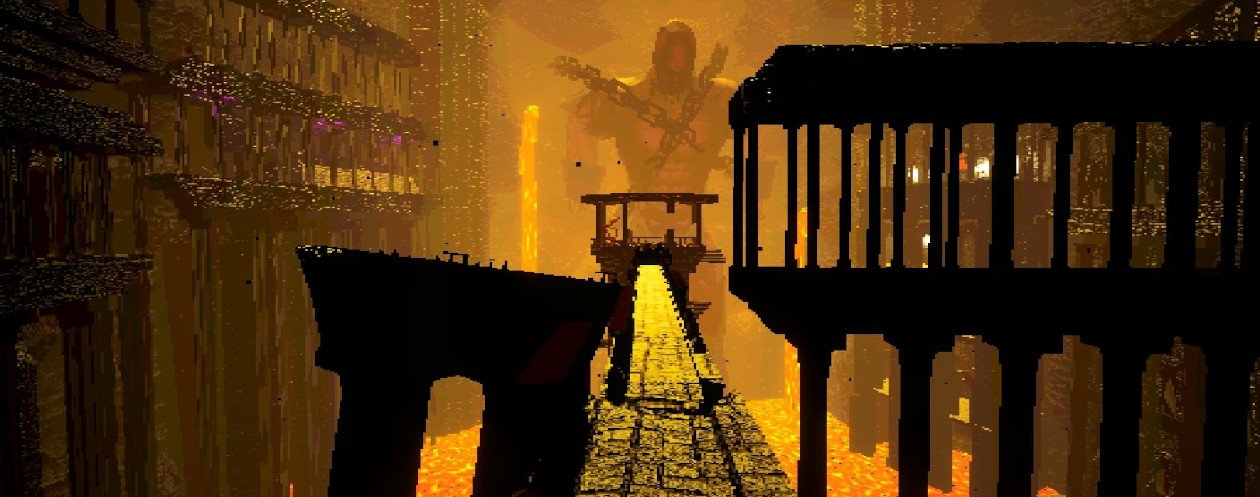
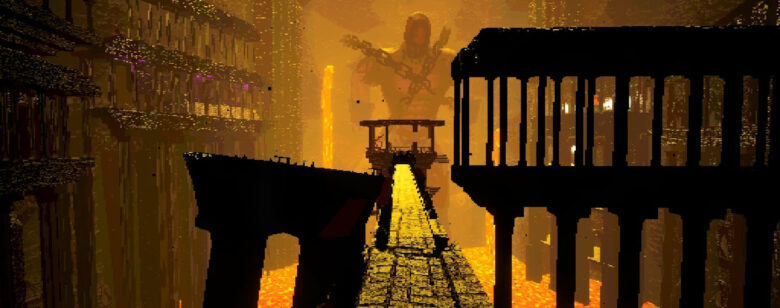
Tartaros wants you to remember the past. That begins with its gorgeous, retro-styled, low-poly PS1 visuals, which feel utterly authentic, begging you to remember a time where your mind still filled in the blanks, but you were finally able to explore digital 3D spaces, visiting times, worlds and places that you could barely have imagined before.
It continues with Tartaros’ mythical Greek setting. While the majority of gamers might simply imagine the chained blades of Kratos spinning through hordes of demonic spawn, Red Spark are crafting a far more gentle, even natural, journey through the Greek underworld.
Here, you play as Persephone, the unwilling wife of Hades, who has been set free from her bondage to Hell’s ruler. This is not without caveats though, as you will only be free if you can escape the underworld.
There’s no glowing sign here marked ‘EXIT’. Instead, you have to solve a series of environmental puzzles, finding keys, unlocking sections, and slowly making your way through the depths towards freedom.
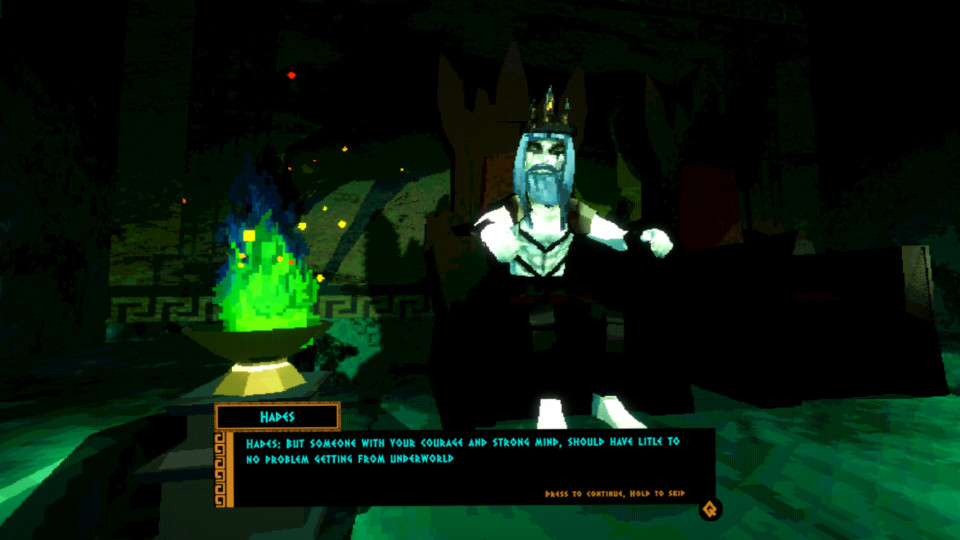
Through our hands-on, a number of those puzzles involved Amphora. Pop a vase on a pressure plate to keep a door open, break all of them open to discover a missing key, or match the right colour to the correct position. In terms of gameplay, it’s recognisable, but requires a pleasing amount of thought.
Persephone’s powers complicate things. She’s capable of making plants grow or causing them to shrivel up, giving you a significant number of ways to approach the puzzles laid out in front of you.
She can make plants bloom and grow so you can bounce into the upper reaches of an area, finding new items to help you elsewhere, or make trees mature so you can walk across their branches, mending broken stairways. It’s an interesting and non-combative mechanic that has an array of possible uses, and during the demo alone, there were several ways we had to utilise them to make it to the next area.
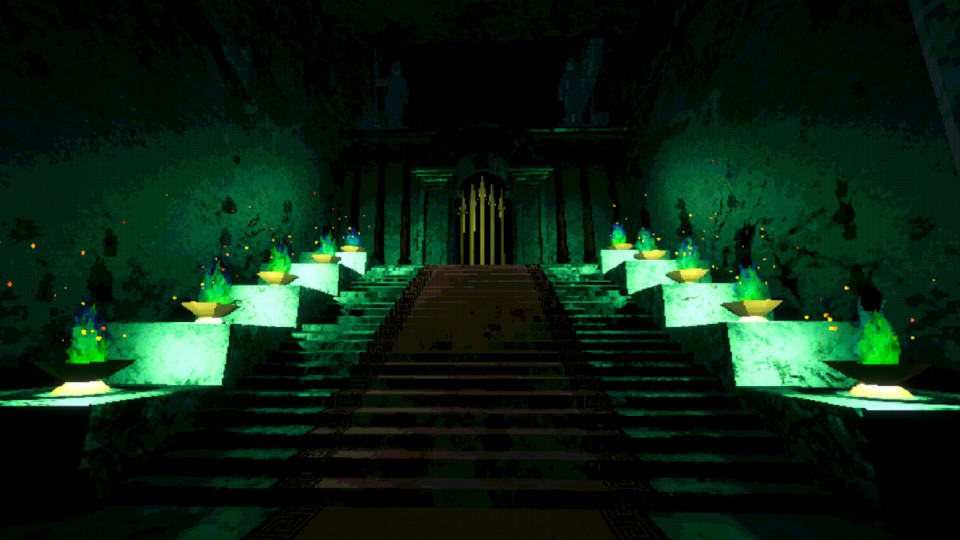
The team at Red Spark are approaching the game’s development in a really interesting way, with Early Access planned to be free to all, presumably due to funding from the Slovak Arts Council.
Aiming for the same sort of thoughtful puzzling and exploration as games like QUBE and The Unfinished Swan, I can see plenty of players getting onboard for that, but I hope that it’s still going to provide the financial success that the 7-member team deserve to have.
The finished game is due to have a 4-5 hour runtime, and I’m interested to see how they continue to expand and implement the puzzling action with Persephone’s powers. If you’re interested in seeing where Tartaros is currently up to, there’s a demo available on Steam.
