
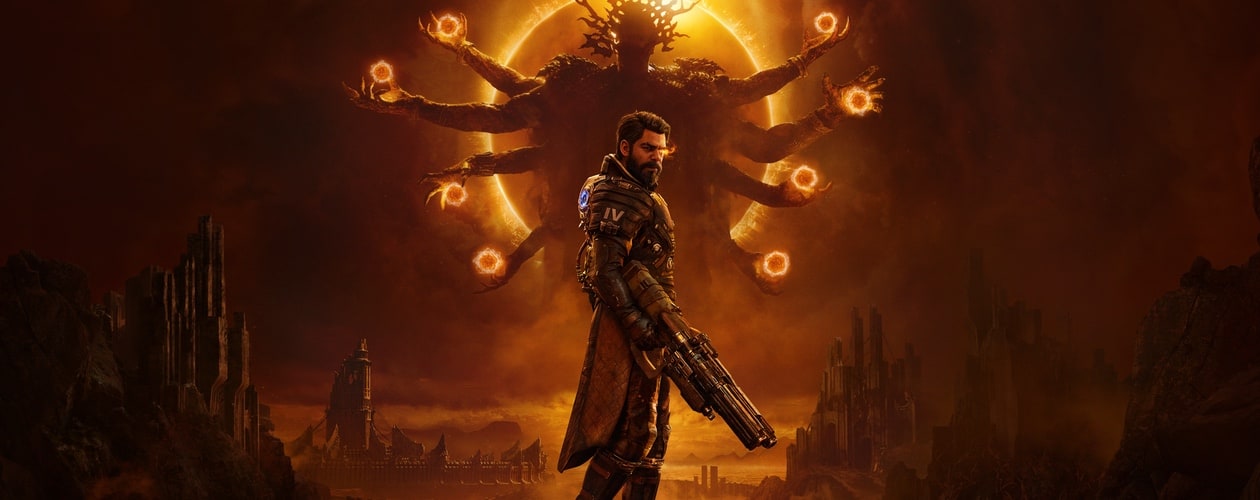

Saros might be following in the footsteps of Returnal in many ways, but this is very much a standalone experience, telling a new story within another original sci-fi setting, building out its third person bullet hell action with its own particular twists, and a compelling new roguelite narrative to unfurl.
The Echelon IV expedition has a really bloody bad time when arriving on the planet Carcosa. After the Soltari corporation has seen three waves of colonists they sent to settle the planet disappear – the first three echelons – Echelon IV is dispatched to find out what happened. Already a smaller, rescue-focussed team, they end up crashed and stranded on the planet, trapped in a cycle of deeply affecting solar eclipses.
Enforcer Arjun Devraj (played by and modelled after Rahul Kohli) is your leading man here, and right from the first moments of the game, there’s a disquieted nature to both his character and the handful of survivors still at camp. Eclipses happen, he blacks out and finds himself back at camp. He’s lost some time, other members of Echelon IV are confused by his reappearance, everyone’s motivations, minds and memories are jumbled, Carcosa’s landscape a confusing, shifting maze. And yet, the mission remains to try and find the previous colonists, Arjun insists.
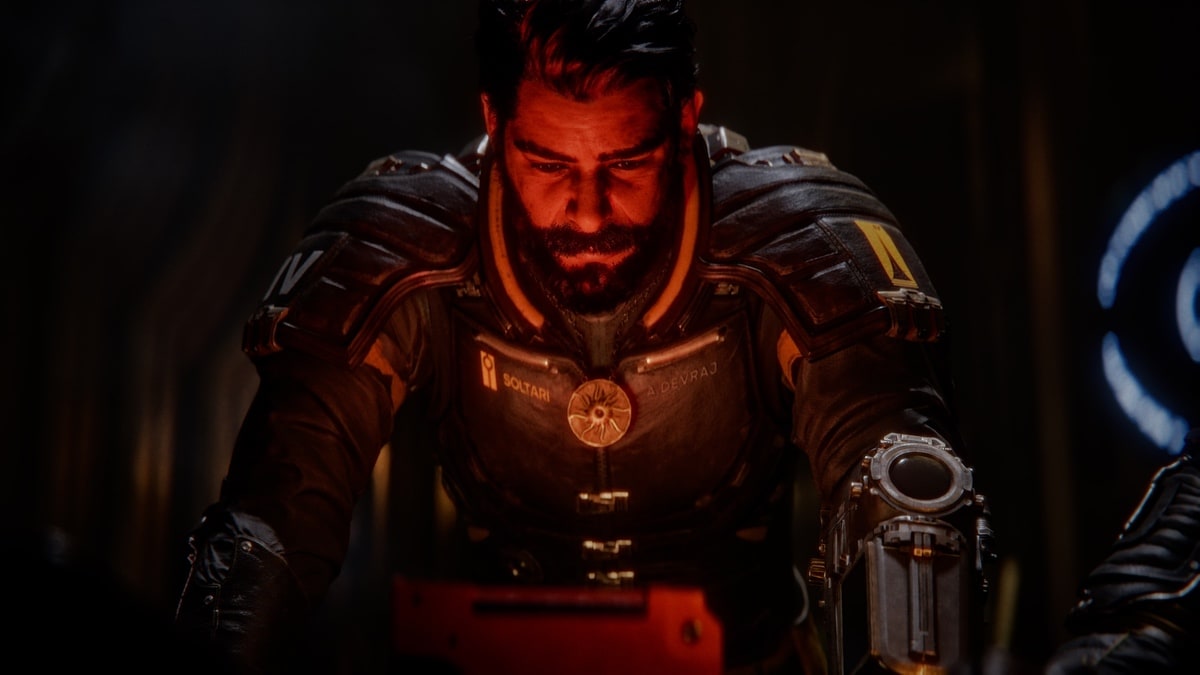
The way the story unfolds is multifaceted. There’s regular cutscenes as you reach milestones in your roguelite runs, and these are combined with optional dialogue between runs, radio chatter with another roving Enforcer, voice memos and notes that you can find, and even flashback sequences. The character animations outside of cutscenes are rather stiff, and you can get a backlog of optional dialogue that then feels unnatural to hear in succession, but I was still absorbed in trying to learn more about what befell these expeditions, of the all-consuming nature of Soltari – they’d give Weyland-Yutani a run for their money, given the chance – and seeing how characters are affected and change over time.
Of course, while roguelites have found a narrative niche, it’s the core third person shooter that will be the main driving force for going on one more run. Housemarque are once again showing off their action game prowess, with some key changes to make it feel that little bit more accessible for newcomers, while also extending the challenge and gameplay depth for expert players.

One of the key concessions is that many weapons have a pretty hefty amount of auto-aim, a dotted line from where you’re aiming to the nearest enemy showing it’s in effect, and this is in addition to the already large reticule. It’s only by the second biome that guns without auto-aim start to appear, giving you time to really get to grips with how they game works. You can only carry one gun at a time, its ammo infinite, and its reload leaning on the Gears of War-style Adrenaline reload system – the timing for this feels more forgiving, but stringing them together to get the stat buffs is no less tricky. They always have an alternate fire mode, engaged by partially depressing the left trigger, while a full press switches to the Power Weapon ability when you have enough energy.
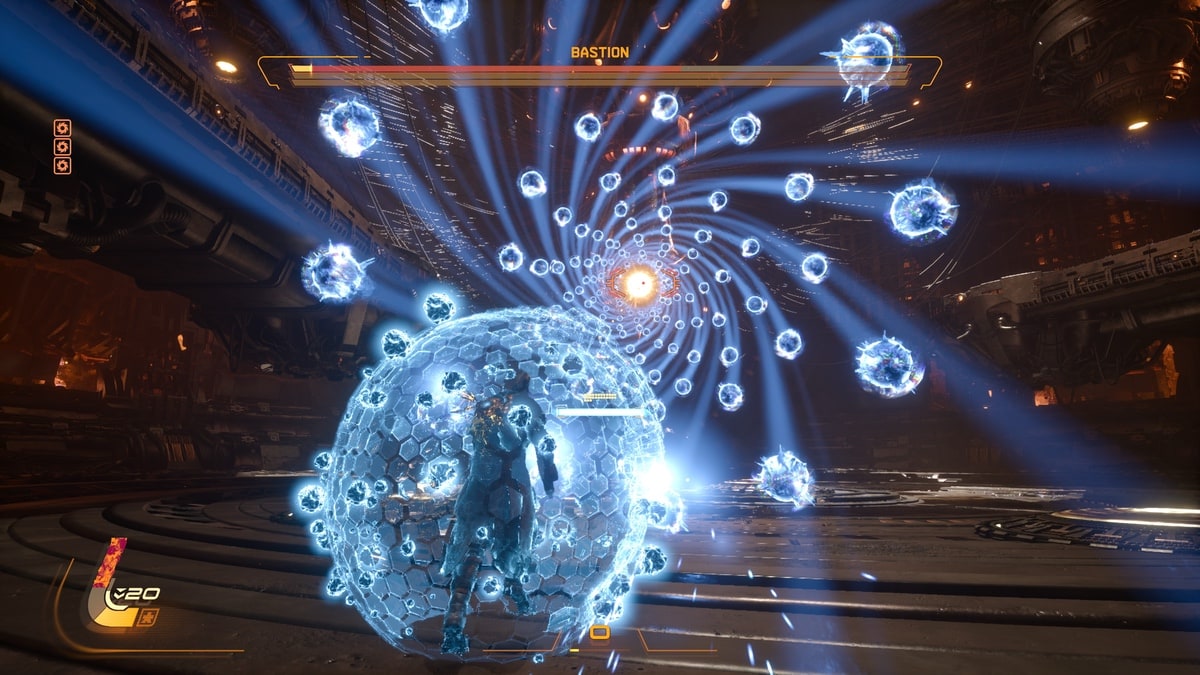
So far, so Returnal, but there is more to understand here. Enemies fire off reams of projectiles your way, whether they’re clustered together and leave a trail of other damaging balls behind them, sent out in expanding walls, or squirted up into the air to drift around. It’s bullet hell in third person, and a major part of your ability to survive depends on being able to keep them away, to dodge past and between, or use the dash and phase through projectiles and lasers.
But there’s another option: to absorb them. Arjun’s Soltari Shield can block many projectiles, but blue projectiles can be absorbed. This both recharges the shields as well as feeds your Power Weapon, giving you more regular access to this attack to dish out greater damage. Getting the hang of using the shield is pretty important to your success, and it’s odd that it shares a button with melee – tap to melee or parry red attacks, hold to then have that also activate your shields.
And then there’s the eclipse. I don’t know why Arjun has a thing for touching the weird hands sprouting out of the floor – why do people in sci-fi horror stories always want to touch the alien stuff? – but doing so triggers an eclipse, transforming the world with weird writhing tentacles, activating machinery, bathing the surface in reddish hues, and increasing the challenge for the run through to the region’s boss. Now damage adds corruption that reduces your maximum health, which can have its own benefits, while all of the artefacts that you find to boost stats on this run will be both more effective, and have a modifier downside. Do you want fall damage? Or maybe for your gun to jam if you get hit?
I’ll admit that I was apprehensive of the effects that this eclipse mechanic would have, but in many ways it adds structure and a difficulty ramp up through a biome. It’s a stepping stone to ensure that you’re powerful enough to take on the bosses, which I was (after a couple efforts) then well equipped to overcome. They’re pretty great bosses, as well, starting off with largely stationary encounters so you can focus on positioning and dodging, before ramping up the stakes. In some ways, the mid-bosses can be more taxing as they come alongside waves of enemies and force you to move around the locked down space.

Inevitably, since this is a roguelite, you will die and end up back at camp. Between catching the latest morsels of story and heading back out for your next effort, you should always spend the resources you accrued on upgrading Arjun’s suit. This goes a long way to helping you survive out in Carcosa’s various biomes, whether it’s adding a point to your three core stats, unlocking an extra artefact slot, or increasing your abilities in other ways. Actual new abilities – things like being able to use jump pads across Carcosa, or use grapple points, or finding new weapon types – are dependent on progressing through the biomes and overcoming bosses to reach the next, and then reward you with being able to reach more areas in earlier regions. The raw stat increases do still feel meaningful, and you can get a good power increases from the way that you can pile on stat bumps after a good length run.
While you can start from the beginning on each go, for the sake of the story’s flow, you can just teleport to later biomes once you’ve unlocked them. This does bring its own challenges – you can trigger eclipses right away in some locales – but it means that a single biome run can last roughly 30-40 minutes if you don’t skip anything.
There’s plenty reason to keep coming back, not least that a challenge system emerges mid-game, letting you tweak the difficulty with modifiers, both positive and negative. Each one is given a weighting, and you need to balance the points tally of pros and cons in order to be able to proceed… or if you want a super easy mode, there is a setting to override this.

Now with Unreal Engine 5, Housemarque has created some incredible looking landscapes, from desolate ruins, through a thoroughly alien industrial complex, and beyond, and they’re once again randomised and pieced together, flowing from platforming to combat and then back to exploration. As enemies appear, though, the oppressive soundscapes come down upon you, Sam Slater’s soundtrack trying to overwhelm your ears, just as your eyes try to take in all the dangers and the refined haptics shudder through the palms of your hands. It almost feels rude to address the audio-visual experience last, when Saros is another fantastic showcase for the PS5 – I played on PS5 Pro, admittedly, and it looks fantastic.


