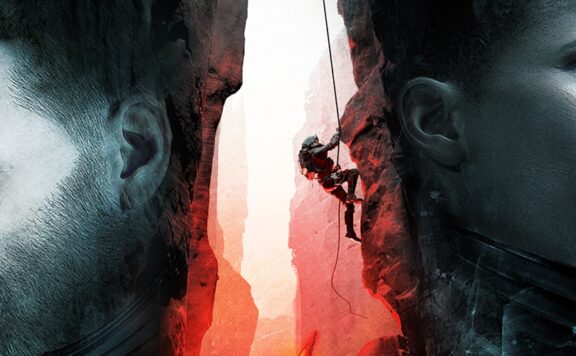


Sci-fi movies have taught us a few things over the years: in space, everyone can hear your explosions, people wearing red always die first, and, if you’re visiting a planet to discover if its inhabitable, you will definitely crash land upon arrival. It’s the latter rule that applies to Aphelion. Here two astronauts – both will-they-won’t-they-enthusiasts – Ariane and Thomas are stranded on the secret 9th planet in our solar system, Persephone. They are there to see if the planet will support human life, but wouldn’t you know it, they are separated and must survive alone before reuniting and uncovering the mystery that lurks at the heart of Persephone.
Aphelion has been enormously irritating to review. This is because some elements of the game are truly superb, pushing the boundaries of the artform in the process. Whilst other aspects of Aphelion are so bad you wonder how they even ended up in the final release.
First off, the good. In terms of cut-scenes, Aphelion is mind-bogglingly excellent. Vanessa Dolmen – as Ariane – and Eric Geynes – as Thomas – give stand out performances, full of detailed character nuance that engages the player from beginning to end. You stick with the naff parts of the game precisely because you care about Ariane and Thomas, you want to see them reunited.
In particular, the performances are so impressive as each action has no-one else to bounce off, for much of the run-time Thomas and Ariane and talking to themselves. The fact they hold your attention throughout is a mighty achievement. Facial animation is superb, truly providing a best-in-class presentation, one that leaves developers and publishers with far more money in their bank account looking a little embarrassed.
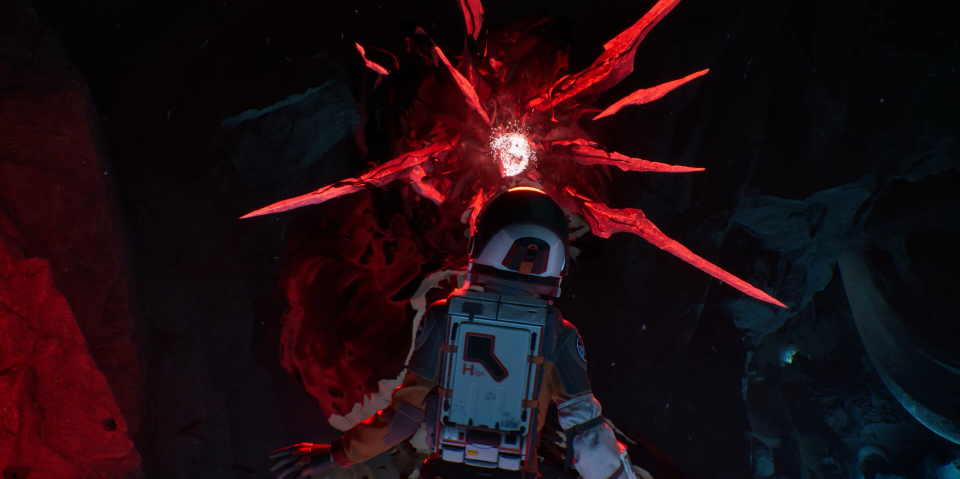
Indeed, the game looks stonkingly gorgeous, with photorealistic alien vistas that artfully span into the distance. Sure, there’s a little bit too much snow and ice – Ariane’s sections are effectively one long snow level – but when winter looks this pretty, it’s hard to complain too much.
This standard of visuals clearly comes at a cost however, as Aphelion is a horribly janky day-one release. Player characters regularly clip through terrain, their feet frequently fail to connect to the ground, and in the platforming sections characters often get stuck mid-jump – just sort of horribly hovering in place – until the game flips a coin and decides if they live or die. For a linear game, the number of invisible walls you encounter is inexcusable, your player character regularly getting stuck between them just because you had the audacity to want to explore. Get stuck like this and it’s either a reload or the classic technique of repeatedly jumping and wiggling the thumb stick to try and extricate yourself from the situation.
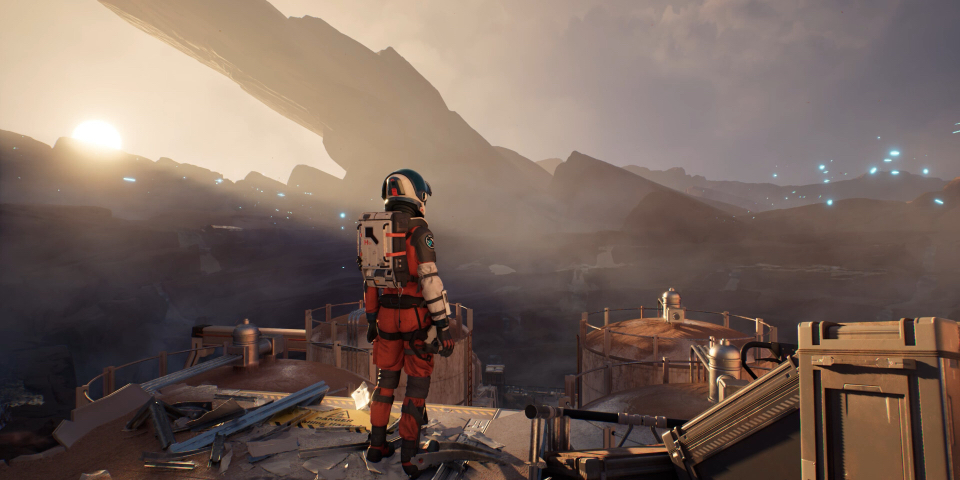
To counter this, the storyline is excellent. Offering a compelling and realistic sci-fi yarn that provides a fascinating mystery to attempt to understand; just what happened on Persephone before your arrival? To say more would be to undermine a well-told tale but suffice to say this is one of the best narratives I’ve experienced so far this year. Indeed, the story has the feel of an Andy Weir book – you know, Project Hail Mary, but also The Martin and the under-rated Artemis – that no matter how bizarre and seemingly over-the-top things might get, they are absolutely grounded in scientific fact and theory.
The actual gameplay though? Oh dear. In Ariane’s adventure you’ll be doing the traditional third-person adventure stuff. That means lots of climbing walls to reach highlighted handholds. You’ve done this in games a hundred times or more, which makes it even more baffling as to why it doesn’t work very well in Aphelion. Too often you miss handholds because the game glitches, forcing you to return to a frustratingly distant checkpoint. It’s also just plain boring, other than the game going weird and making you fail, there’s no way you can’t succeed, turning the entire endeavour into a lesson in perseverance in the face of tedium, rather than requiring any skill.
Stealth sections are laughable, amounting to little more than having to walk slowly. That’s not stealth, that’s just dawdling. Puzzles are finickity and do little to liven up proceedings. Indeed, mostly it all feels like padding to get the game length to a specific number of hours. I found myself frequently baffled as to why the game seemed intent on me playing a bad third-person action game, rather than simply being the compelling narrative adventure game, I know that it wants to be.

Thomas’ sections aren’t much better. Lumbered with a debilitating injury, he spends most of this time walking ridiculously painfully slowly – yet still has the strength to use a tether to pull down obstructions, go figure. Thomas’ space suit has a leak and is losing oxygen, so he must frequently stop to top-up his supplies. Often, you’ll get a little bit lost and die, forcing you to go back to a distant save point. Again, more padding. Developers Don’t Not seem obsessed with delaying the player from getting to the good stuff. Because Thomas’ story – and Ariane’s too – gets really exciting. Exploring an abandoned space station is an atmospheric highlight, one in which all the player is doing is walking and letting the expert pacing and world building to carry them through an incredibly compelling experience. And then, after that brilliance, there’s more lumbering around looking for oxygen, bizarre.
Indeed, aside from the jankiness, Aphelion’s issues can be summed up rather succinctly. It’s a four-hour game pretending to be a ten hour one. Which means you’ve got six hours of substandard action guff to meander through before you get to the seriously good narrative adventure hidden beneath.