It feels like every year there are more and more indie that appear out of nowhere and surprise you with fresh ideas. Vultures: Scavengers of Death is one such game, blindsiding me with its blend of survival horror and turn-based mechanics, first as a Next Fest demo earlier this year, and now with the full game.
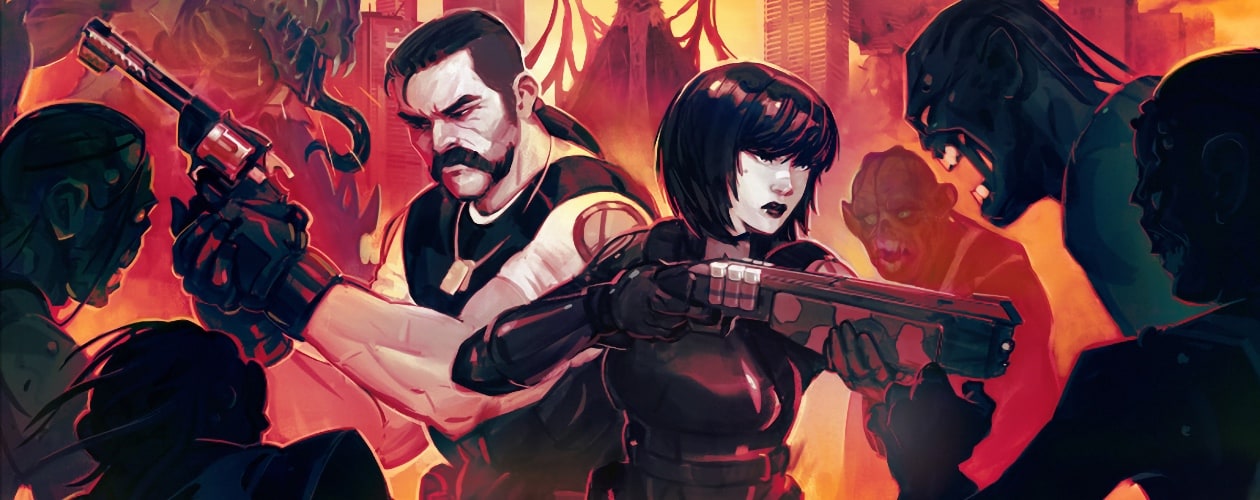
Vultures: Scavengers of Death follows a small mercenary group called Vultures, who have been hired to investigate a shadowy organisation called Eugenesys. You are told Eugenesys are likely behind the recent bioterrorist attacks that have turned Salento Valley into a wasteland of ruined buildings filled with zombies and other monstrous creatures, and so, as either Leopoldo or Amber, you embark upon missions into key places in the valley. As you do so you encounter an unravelling yarn of cult activity, inhumane experiments and acts of conspiracy.
Each of these missions takes place in a location you would expect from a survival horror – asylums, military complexes, police stations, you know the drill. However, you explore these in a turn-based structure that sees you spending Action Points (AP) and Movement Points (MP) to navigate the grid-based map of dangerous corridors and halls. As you explore, you’ll acquire the limited supplies of typical resources, solve light puzzles, and uncover clues to the ongoing narrative of the game.
You could say from this that Vultures is basically a turn-based Resident Evil, and I can’t deny that a lot of screenshots give this impression – heck, even playing the demo left me with this impression. After spending a lot more time with it, I genuinely think that comparison does a disservice to both titles. It wears its inspirations very clearly and proudly, citing Resident Evil among of key horror franchises among them, but it’s more than the sum of its parts and – dare I say – Vultures exceeds its inspirations in many ways.
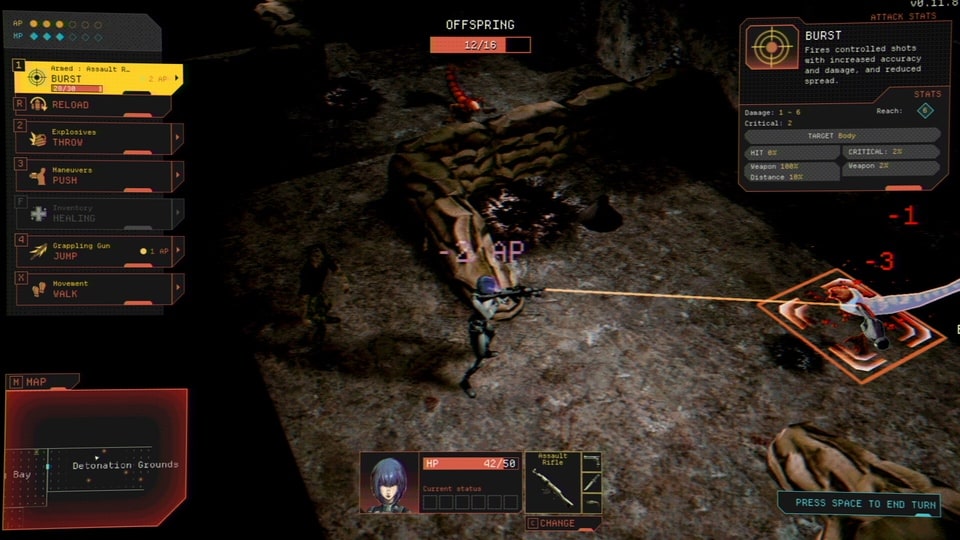
One small way that this is achieved is through the distinct differentiation of the two characters. It’s not a simple case of one character having an arguably easier time of it – looking at you, Jill Valentine – but each one plays differently. Leopoldo is more tactical, allowing for vaulting over tables, for example. Alternatively, Amber has a grappling hook in her toolkit allowing her to navigate uneven terrain and manipulate her positioning and that of the enemies to her advantage.
Vultures excels through its turn-based structure, shaping both the exploration and combat. When in combat, your total AP and MP lower dramatically, and the true tactical action of the game begins. Will you try to headshot the enemy for greater damage at the cost of two of your three AP for that turn, or use a single AP to shoot the legs to potentially immobilise them from advancing on their turn?
Every combat encounter, regardless of number or power of enemies requires this level of strategy. With every action you perform in combat taking up a valuable Action Point, you must decide whether to use one to heal or instead roll the dice on that next fired bullet keeping you out of harm’s way. Every step of movement can be the difference between getting bitten or not. The number of encounters in Vultures that I have only just survived is so damn high, and yet the tension of these encounters has not lessened.
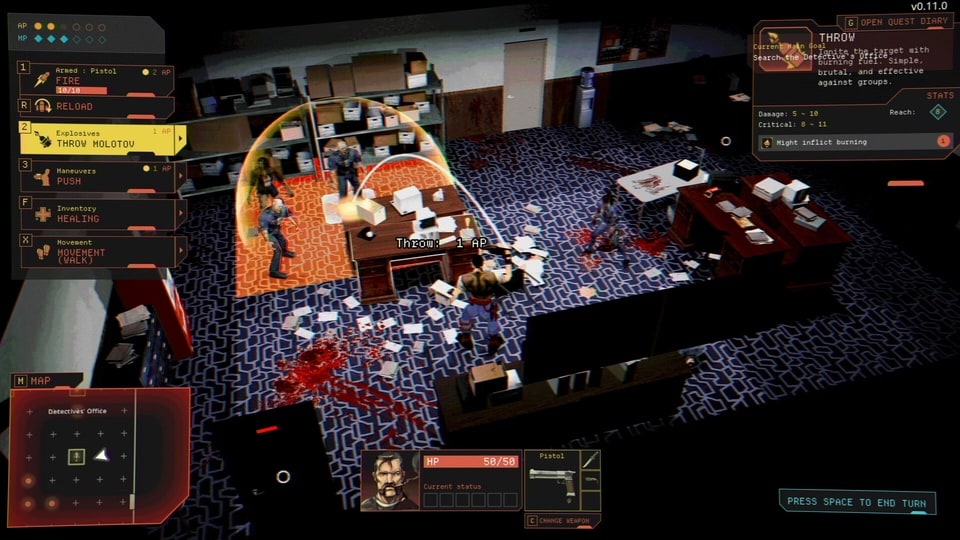
Finding new weapons brings new layers to the strategy, and you’ll be glad that hot-swapping guns doesn’t cost AP, allowing for a flexible approach to tackle hordes instead of single enemies, for example. Certain weapons can inflict status effects as part of their toolkit, such as the Stun Rod potentially paralysing the shambling undead. Weapons can also be upgraded, not only boosting to their damage but other beneficial bonuses, such as the Knife being able to kill with a single stab if used in a surprise attack. You can find this in the Market menu in the base between missions or in Arsenal boxes and this can also be used to give other buffs like boosts to your health or additional inventory slots, which you unlock throughout the game and can be acquired by finding valuables in each mission to sell.
On this note, it’s hard not to notice that each weapon, item and upgrade in Vultures feels incredibly well considered not only to keep the game’s difficulty balanced, but to give a palpable sense of customisation in player approach to the challenges. Despite the upgrades, I have not felt overpowered during my time with the game, like I do towards the end of other survival horror titles. I always felt that the challenge was growing at a similar rate to my power as a player.
Similarly, the ammunition and healing items are just scarce enough that you need to be smart with when and how you use them. Sometimes, I’ve found that avoiding a room while you scrounge around for more resources to be the best course of action, but I have also avoided rooms, only to find scant items elsewhere and be forced to engage from a decidedly worse off position. The turn-based nature of the game doesn’t only give a respite in which you can pause and decide on courses of action, but also quickly shows you the folly of a poor decision.
While it excels on the whole, the game has not been without problems while reviewing, and there are several bugs and issues that the developers are aiming to fix by launch – thankfully only being minor inconveniences. One of the main annoyances is that the game has crashed when trying to reload from a death. Luckily, the game autosaved just before that room, but it’s a definite reminder to save regularly. There’s also been a few UI problems for me where the menus for the inventory haven’t adapted to the inventory being larger, so key buttons are obscured.
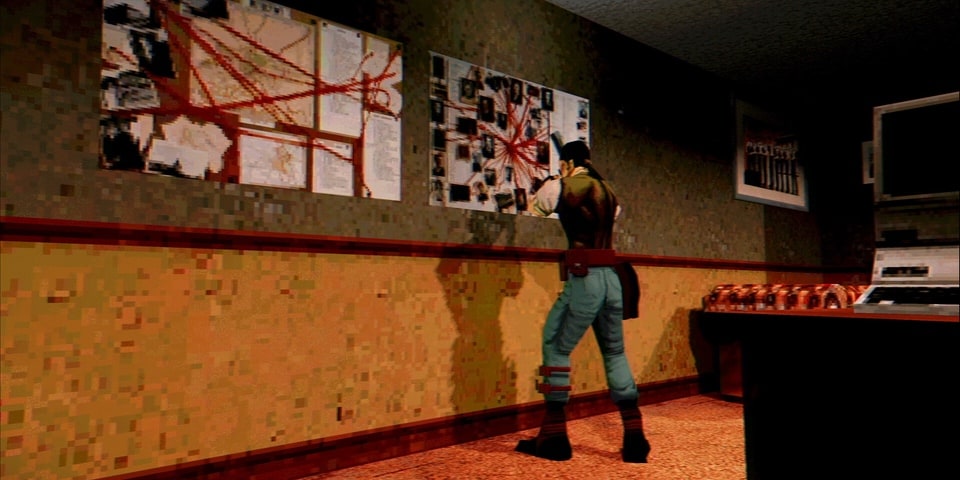
Speaking of obscured (but in a good way this time) I must gush about the visuals for a moment. Vultures: Scavengers of Death absolutely nails the feel of a PS1 era survival horror. The endearing blockiness of the characters, the dark and dingy locales, the low-resolution body horror of the enemies … It’s all just so disgustingly exquisite. If not for a few modern conveniences and UI features, you could be forgiven for thinking that this was simply rediscovered lost media from the time.
This goes as far as the music and sound design too, striking a sombre and oppressive tone that pervades every inch of the experience. A personal highlight being the music that plays in the various safe rooms, a track that still gives a palpable sense of threat despite being one of the softer songs. This is then bolstered by every zombie groan in the distance, squelch of a creature being struck, and gunshot echoing around the room to create a distinct – albeit a little gross – aural treat.