


The original Culdcept remains a classic of the Sega Saturn era. In many ways, its unique approach of riffing on board games like Monopoly while introducing deckbuilding elements for combat, is now right on trend with modern tastes, making the arrival of Culdcept Begins a perfectly timed opportunity to introduce newcomers to the series’ charms. Fortunately, Culdcept Begins absolutely lives up to the series’ storied heritage.
We join the story at the Royal Cept Academy. You’re here to learn to be a Cepter, a powerful user of the divine Culd power. You take on the role of Kamru, a student thought to be the son of Origin, a Culd user who disappeared, attempting to use the power to become a god. That means there’s plenty of whispering and wondering behind your back, and plenty of interesting motivation to forge your own legacy.
The narrative draws on a number of interesting threads as you delve further into your family’s past, search for your missing father, and uncover the mysteries and conflicts of this fantasy realm. It’s told well, and while the music is generally excellent, I think Culdcept Begins really misses out on voiced character dialogue, which would really lift the whole experience a step further.
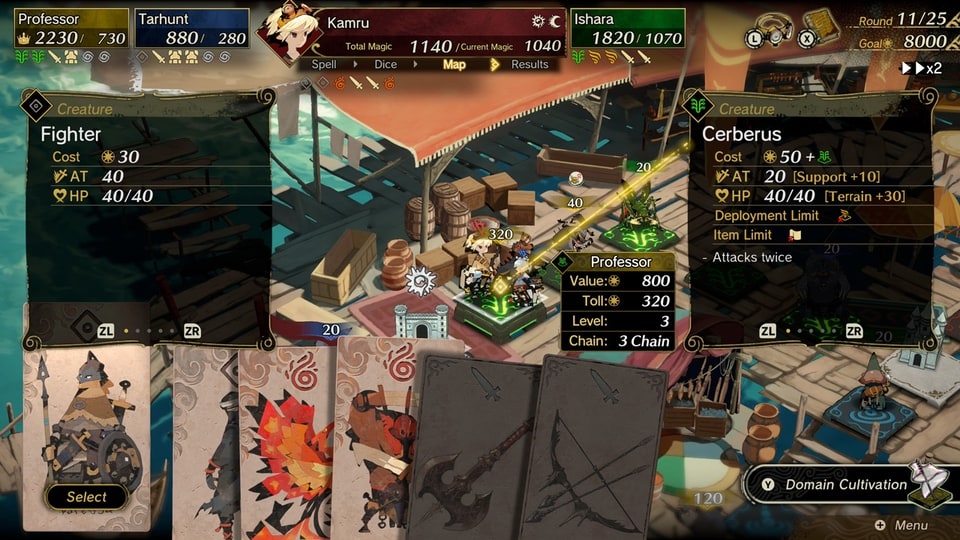
Culdcept Begins offers a unique tactical combat system that’s part board game, part deckbuilder. Through each encounter, you make your way around the board, completing laps, claiming territories as you go and earning G Magic. Whenever you land on an unoccupied territory, you can summon a creature, with bonuses for matching the element types between monster and land.
Land on an occupied territory, and you may find you have to pay a toll – just like in Monopoly – or you can start a battle to take it from your opponent. Battles appear to be simple affairs: got a more powerful card? Then you can take that territory. However, things don’t remain this simple, with Item cards helping your creature land a more powerful blow or weather the attack with extra armour.
Spell cards then offer different offensive and defensive options that open up the tactics you can employ, letting you attack from afar, alter your opponents dice roll or move further around the course. The aim of the game is to earn more G Magic than your opponent, hitting the level target before they do, and once again, just like in Monopoly, you can develop your territories so that they become stronger and more expensive to pass through.
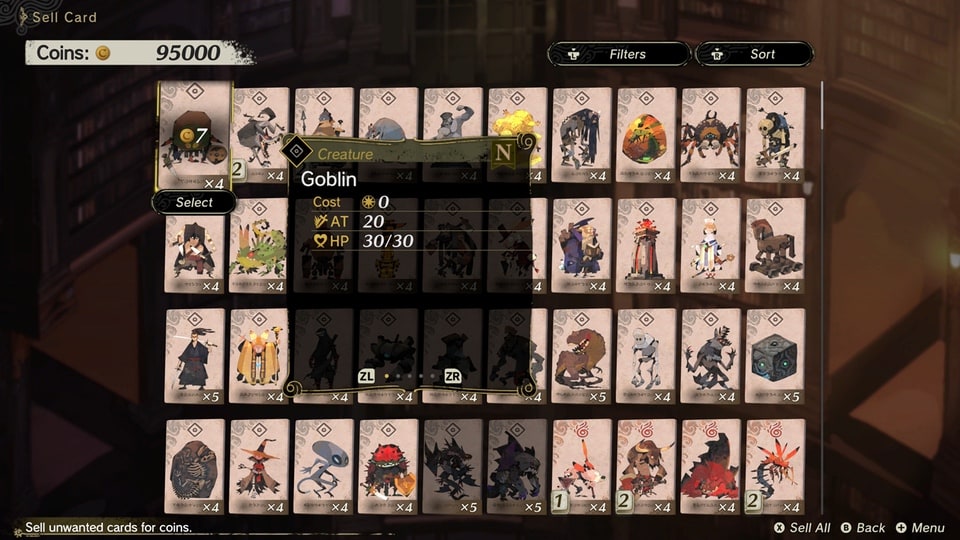
All the while, you’re building your own deck of cards. You start with two pre-built ones, and you can choose to simply edit these or start a new one from scratch, adding in new monsters and magic that you’ve acquired along the way, either from winning battles or by purchasing them from the Card Shop.
There’s a dizzying number of possible options and loadouts to busy yourself with. Do you focus on balance? Choosing creatures that cover all the different elements, with a spread of different spells? Or do you hunker down with defensive types that will give you a strong defence in each territory, while backing them up with additional weaponry? The steady stream of new cards through the central story means that you can constantly tinker with your magic book, trying new creatures out, or playing with your tactics as you prepare for the endgame: multiplayer matches against real opponents.
There’s a full suite of multiplayer options in Culdcept Begins, so you can either take your battles online against strangers, or school your friends in Gamechat multiplayer modes, either locally or online. The only thing that’s currently missing is single-system local play, and I don’t fully understand why it’s not there at launch. Here’s hoping they see fit to add that in at a later date.
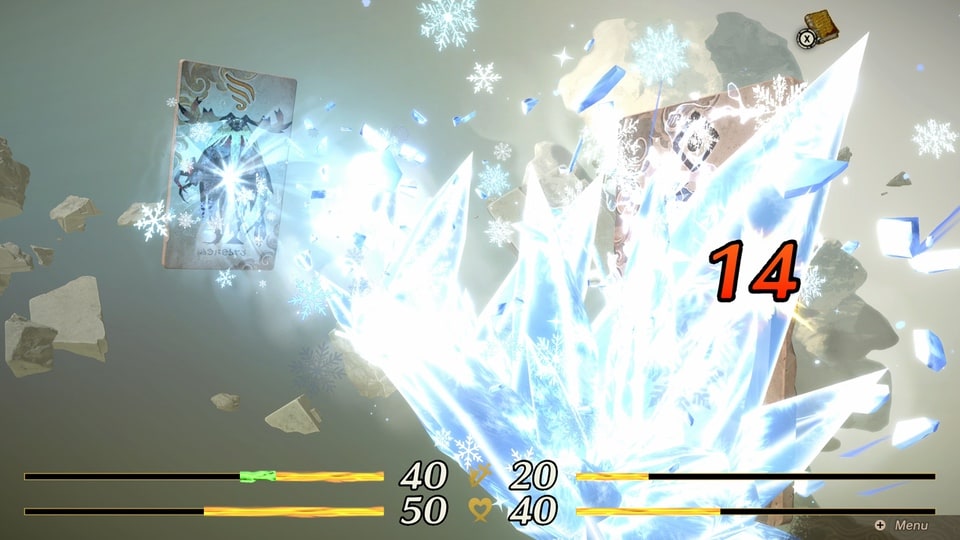
One of Culdcept Begins greatest strengths is its art direction. To my eye, at least, it’s truly beautiful. The hand-drawn character art makes it feel as though this is a storybook that’s come to life, and while the different areas are static and relatively small, each of the creature summons look distinctive and creative, and the world still feels believable and real. It’s understated, and refreshingly so.
If we’re looking for negatives, there are some lingering doubts about how fair Culdcept Begins feels when facing the computer. Any digital recreation of a board game experience relies on feeling fair, and sometimes that’s simply impossible when your dice rolls are repeatedly low, and your digital opponent whizzes around the board. When you’re physically rolling the dice, you can’t get away from your luck or lack thereof, but when a computer is telling you the results, you can feel suspicious of its machinations. It doesn’t stop it from being fun and interesting, but some frustrations do creep in here and there when things aren’t going your way.
