

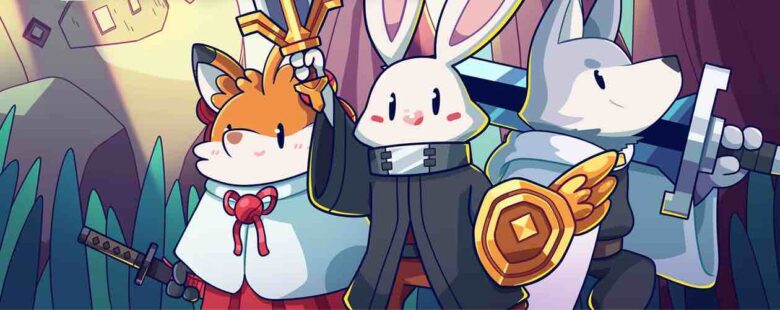
Sephiria is yet another roguelite, chucking you into a tower filled with enemies to take out, and rewarding you with upgrades as you climb the floors and beat the bosses. It’s standard stuff, but while Sephiria isn’t particularly unique, it is particularly good at doing it. It also comes with a bunch of features that help to streamline some of the issues present in the roguelite genre as a whole…eventually.
The game begins shortly before a ritual that will reveal to you, a young rabbit person who lives in a village called Bunnyville, what your destiny will be. When things inevitably go awry, you find yourself in the wreckage of your village with a cult leader to go after, so you head down into a base full of moles. Combat in Sephiria is quick and challenging, if you stop paying attention for a moment you’ll get hit and lose some of your precious, hard to replace health points.
But if you stay locked in, there are a lot of options for you. First there’s your weaponry. You begin with a sword and shield combo, which allows you to block with your shield using mana points. Very helpful if you’ve got the mana, but maybe you’d prefer being able to parry and riposte with the daggers, or just a big swinging attack with the greatsword? Then you’ve got warnings when enemies are about to attack showing you where and when the attack will hit, so you can use your dash to get out of the way, or just block/parry, if you prefer.
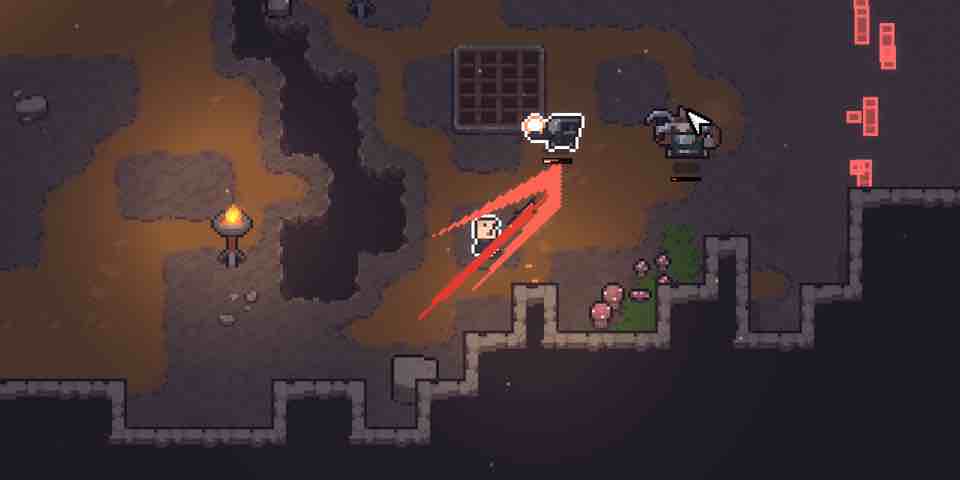
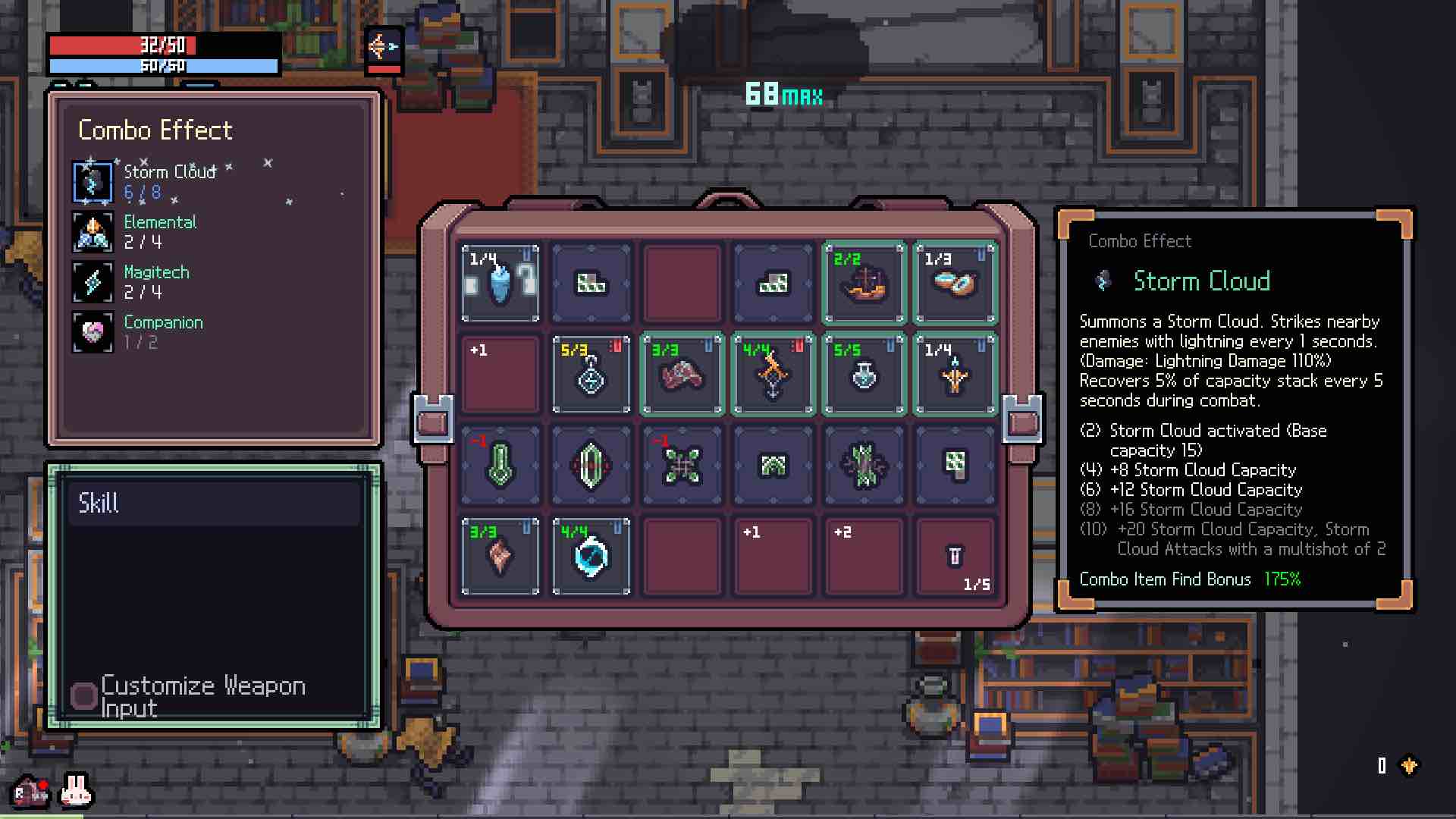
Defeat a few enemies and you’ll level up, allowing you to pick an artifact or a tablet. Artifacts are straightforward, relatively speaking, as they give you upgrades that range from improving your attack speed, through adding cold damage to attacks, to causing a storm cloud to float above your head and shoot lightning at enemies. They’re pretty useful. They also belong to different categories and, as you keep levelling up, grabbing more within that category will give additional bonuses. The Ember category will give you fire damage bonuses, for example.
Tablet are then just as good if not better. The foundation tablet, for example, must be placed at the top of your inventory to be activated, but upgrades every artifact on that row by one level. Others do the same in different patterns, for different amounts, and the ones that can add a large amount of levels sometimes come with a few -1 squares to balance it out a bit. Because of these, a bit of inventory Tetris can make you significantly more powerful if you know what you’re doing.
The combinations of powers are very varied as well. I’ve played runs where I had a great sword with a secondary attack that made it bigger and an artifact that made its hit radius 50% bigger as well, so it hit everything on two thirds of the screen every time I swung it. Other times I would walk into a room, wait for enemies to spawn, and summon a meteor storm and let it and my three companions, also acquired through artifacts, whilst I kept out of everyone’s way. Or when I upgraded my daggers into shurikens that did three different types of damage and became an almost unstoppable force of ranged death once I got my attack speed up. The combinations are extensive and can feel incredibly powerful.
As you play you can earn sapphires for the metacurrency, visiting the Destiny Inscription screen once you’ve died to spend your hard earned sapphires on health and mana upgrades, dice for rerolling upgrades, new items, and so on. Some things, such as starting with a health potion or unlocking a new weapon, will trigger an event in the village between runs. You could need to collect some resources from around the village to brew the potion, for example, or go through basic training for new weapons.
Once you get about a third of the way through the Destiny Inscription you start to unlock ways of making the game a little bit less random. Up until this point, you are a slave to the RNG and it can spend multiple levels not giving you a single useful upgrade. But then you get skewers to increase the odds for specific artifact categories, or just increase the chances of finding one that you’ve already gotten in the run. This is very helpful, allowing you to tailor the randomness towards your tastes a little bit. Then you get the ability to start with an artifact chosen from anything you’ve unlocked so far, which speeds up both your progression and the first floor. I really appreciated these features, as the repetition is frustrating enough when it’s my fault, it’s worse if I’m just not getting useful items.

The bosses are a bit of a letdown, though. In addition to a brief cutscene that you have to skip both before and after the battle every single time you fight them, there’s also some questionable boss design. Some can just jump out of combat to attack you from off screen whilst you run around dodging and wait for them to return, but at least these attacks are easy enough to dodge. There are also some attacks that I don’t seem to be able to avoid without artifacts that give specific abilities – even dashing through these attacks causes me to get hit, and one of them is two lasers approaching from above and below with nowhere to go on the side. These aren’t deal breakers, but they’re still a blemish.