
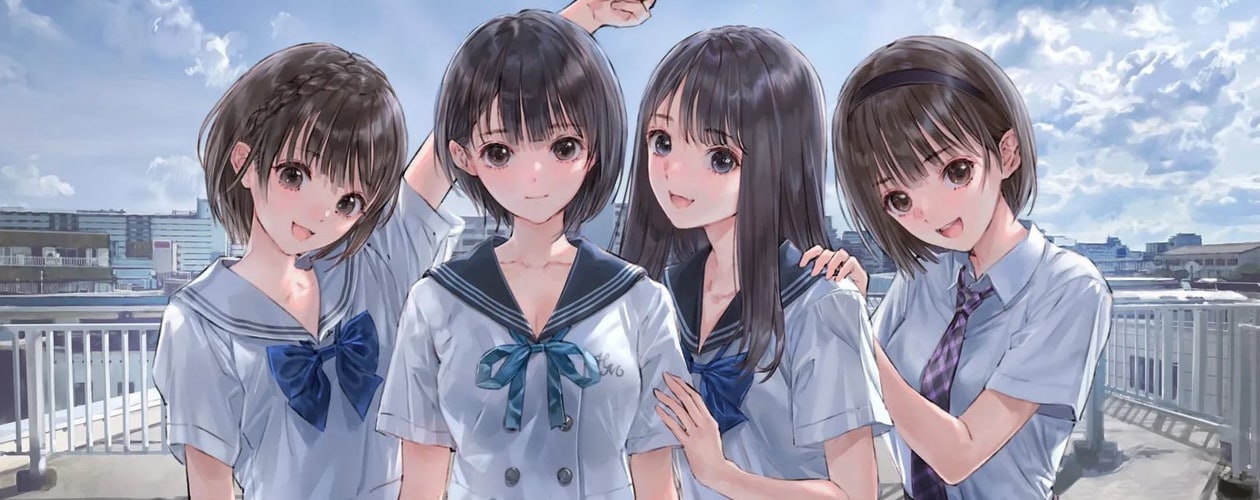
Under the Koei Tecmo Games umbrella, developer Gust is best known for the long-running Atelier franchise. They’re wonderful RPGs that bring together a blend of cutesy anime adventure with engaging alchemy synthesis gameplay, and there’s a new entry in the series almost ever year. They aren’t the only games Gust develops, though, and in 2017 they put a different spin on their usual slice-of-life RPG style with Blue Reflection. The game’s focus on an all-girl cast juggling their school struggles and magical girl adventures was a promising enough premise to spawn an anime spinoff, a short-lived gacha game tie-in, and a full-on sequel. Now, all four of these titles have been bundled together in one package. As exciting as it is to have the entire series bundled together like this, it’s a shame that half of the bundle is watered down and compromised.
The first game in the collection, Blue Reflection, was always flawed yet promising. You play as Hinako Shirai, a girl struggling with negative emotions that swell up when her promising ballet career is cut short by injury. Her negativity gets so overwhelming that she’s transported to the Common, a distorted alternate world where people’s emotions manifest as gruesome monsters. Hinako receives a gift in the Common, though, and gains the ability to transform into a magical girl using her Reflector Ring to defeat these monsters. As a Reflector, each chapter of Blue Archive focuses on Hinako solving a different classmate’s own swelling negativity and traversing the Commons that are spawned from these struggles.
I love this game’s darker twist on the traditional magical girl formula. It isn’t afraid to focus on dour circumstances and negativity, and seeing Hinako slowly learn to find peace and comfort rather than being the typical hyper-cheery magical girl protagonist is a delight. The gameplay isn’t nearly as inventive, but it’s still fine. Blue Reflection tosses you into turn-based battles with a turn-order timeline. Activities in your everyday life earn you points that you can use to enhance stats and unlock Ether Skills, and while there’s some room in the late-game to explore unique builds or powerful abilities, the battles are mostly easy enough to not need to deal with any of that. Overall, it’s charming JRPG experience that is carried by it’s strong storytelling, beautiful atmosphere, and great music.
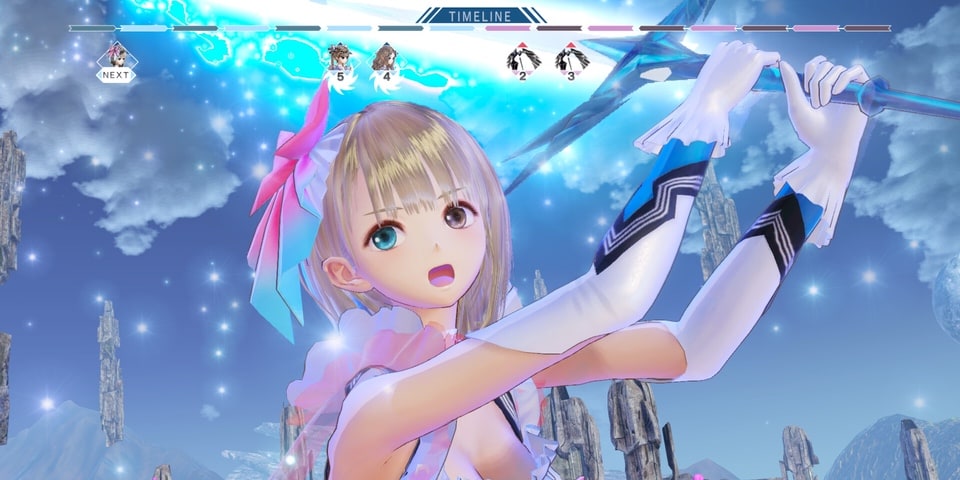
Blue Reflection Ray, the second part of the collection, is an original experience made for Blue Reflection Quartet. It’s also just really, really bad. Blue Reflection Ray was originally an anime spin-off released five years ago, but instead of including the anime in this collection wholesale, Gust has created a playable version of the experience. It isn’t a fully fleshed-out video game matching the beats and moments of the anime, though. Instead, it plays out like a strange epilogue & recap. You wander around empty maps collecting Fragments that trigger repetitive “remember when this happened?” narration moments paired alongside stills from the anime.
Summarizing the events and characters from the show like this makes no sense if you haven’t already seen it, and after just an hour, this bizarre recap is wrapped up and over. As a substitute for watching the anime, this is a complete miss. And for anyone who might have already seen the anime, I can’t imagine this is a very exciting companion piece for it either.
Blue Reflection Sun is a bit more fleshed out, but still a bizarre Frankenstein’d experience. The original version of this title was a short-lived online gacha game with an original story, cast of characters, and monetised gameplay elements. When it shut down, it was gone for good. In theory, its inclusion in this collection would be a great way to experience an offline and always-accessible version of the game. It’s set a bit further in the timeline, in a post-apocalypse setting. You play as a voiceless male protagonist (the only man in the entire franchise) and are tasked with commanding a crew of magical girls, this time called Eroded instead of Reflectors.
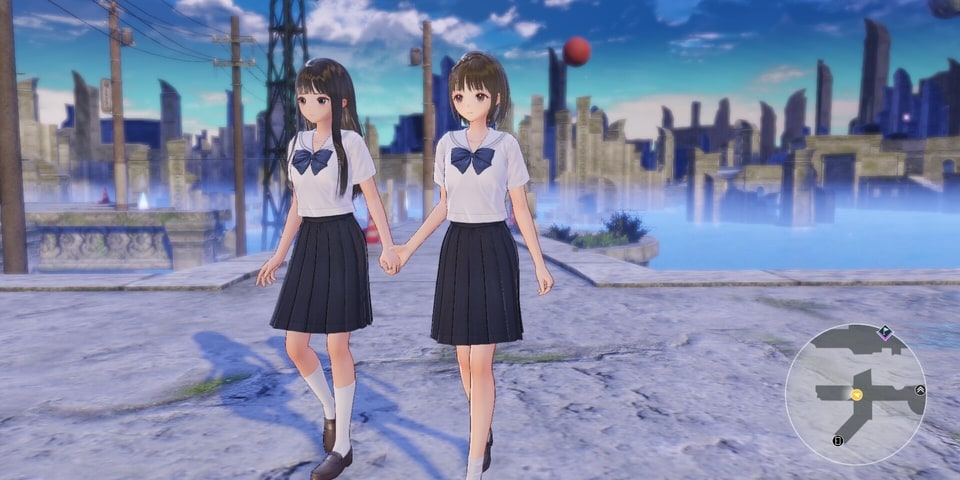
What’s bizarre about this version of Blue Reflection Sun is that it keeps the characters and main story beats from the gacha game, but everything else is retrofitted from the final game in the series, Blue Reflection: Second Light. Event scenes and story beats are truncated together and triggered by wandering around the same claustrophobic school environment in-between missions.
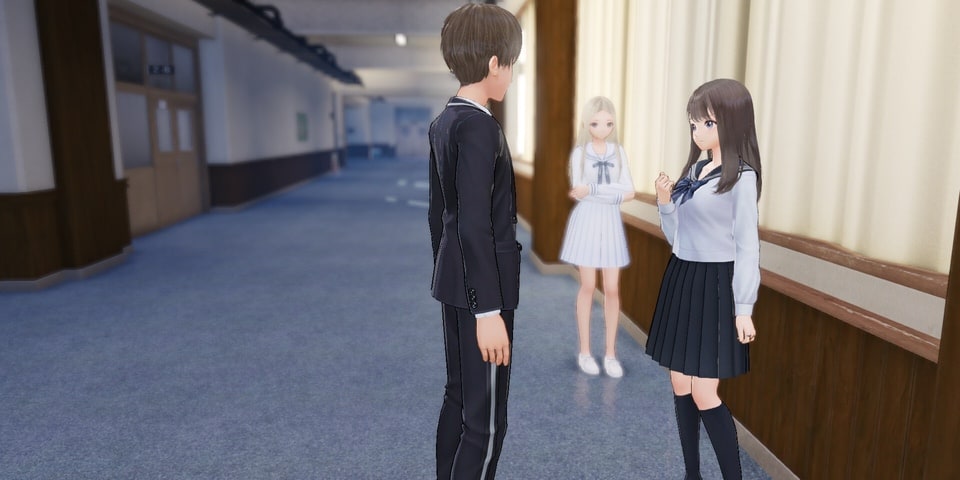
The soundtrack for the original gacha version of the game, full of beautiful music, has also been bizarrely replaced by tracks from Second Light. Even the combat system has been swapped around entirely, with battles playing out as automated, stripped-down encounters utilizing the turn-based formula of Second Light. While the combat isn’t bad at all, it seems like a strange decision to change it around so much when, judging from footage of the original game, the combat had it’s own interesting ideas and flow. This is still a good way to experience the characters and story of Blue Reflection Sun, but it boggles me as to why it had to go through so many changes and adjustments.
Finally, there’s Blue Reflection Second Light. It’s an incredible follow-up to the original game, bringing that same melancholic storytelling and hauntingly beautiful atmosphere forward into a new, dream-like setting. Ao Hoshizaki is transported to a strange world with three other girls that consists of an empty school surrounded by water. The girls need to not only navigate the dangers of this parallel world, but also their internal struggles and their clashing ideals. It’s a beautiful game, and it threads such a weirdly specific line between sci-fi and fantasy and traditional magical girl storytelling. As my favourite game in the package, I was thrilled to see how much new content was packed into it as part of this Blue Reflection Quarter re-release. New playable characters from Sun and Ray have been added to the game, and a bunch of helpful quality-of-life features that make battles flow even smoother.

Despite some rocky entries in the form of Ray and Sun, the original Blue Reflection and its sequel Second Light are incredible JRPGs. Having an entire franchise like this conveniently bundled together is a rarity, and I did enjoy getting to dig through the full chronology of the series for the first time and understand the connections between everything better than I did previously. Here’s hoping that this collection might be followed up by a proper console sequel sometime soon.
