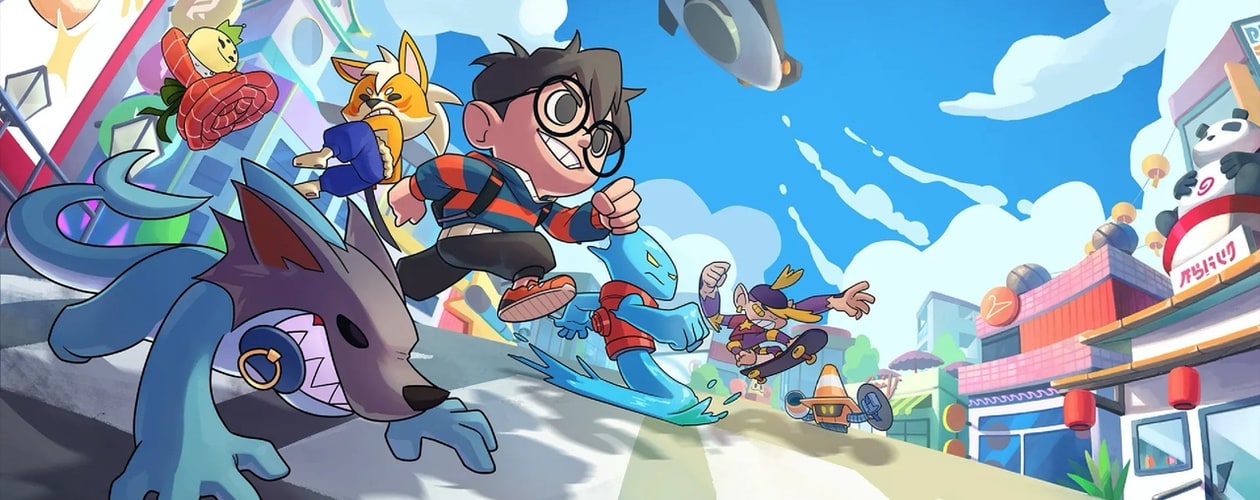

Montabi is a roguelite creature collecting, training and combat game. The titular Montabi live alongside humans in this society, which is nice, but what isn’t nice is that your Montabi has been stolen. Naturally you set out to go get it back through a series of turn-based Montabi fights. Except in this monster battler, you’re fighting alongside them, well, so you can’t just cower behind a monkey on a skateboard whilst yelling attack names at it.
You begin a run by picking a Montabi. These creatures come in a wide variety of shapes, so in addition to Tonkey – the aforementioned monkey on a skateboard – there’s also Goldie the goldfish in a plastic bag, Wishly the cat with a star on its tail, and Cacto, which appears to be a cactus in a plant pot holding a shield. That’s just four of the 22 starters you can choose from, with around 60 total Montabi within the game. There’s a lot of variety not just in appearance and weirdness, but each Montabi functions completely differently in combat.
Tonkey, for example, in addition to some standard attacks, has some skills that allow it to deal damage to enemies when it moves and that allow it to move without spending Action Points. Naturally this is very helpful, but is it more helpful than Kaibug’s ability to deal additional damage by expending armour? Or maybe area of effect damage would be more helpful? Whatever your preference, there’s probably a Montabi for it. As your creatures fight, they’ll level up, enabling you to pick a new card to add to their deck of moves. They can even evolve to get significantly more powerful as well.
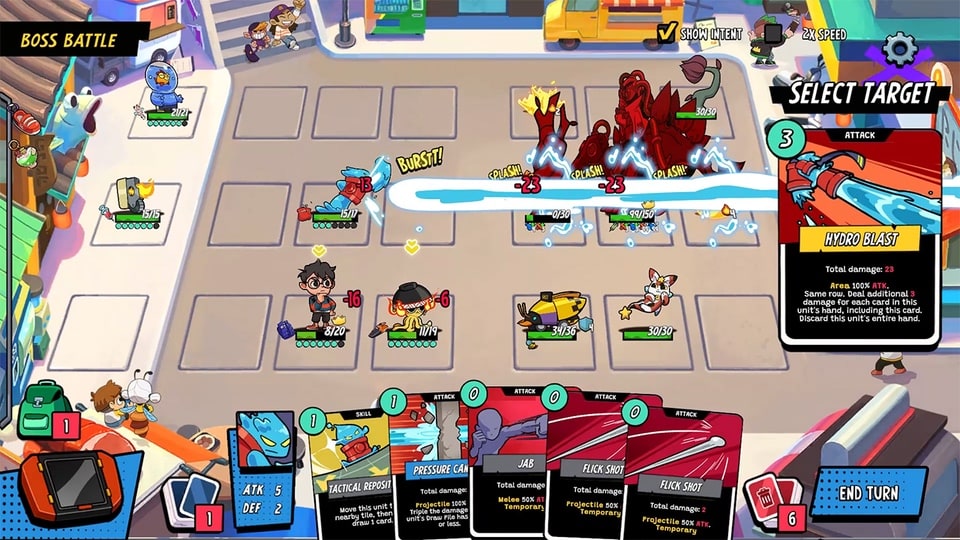
One big discrepancy between this and some other monster battlers is that your character itself is also in combat. Since you’re taking part in combat as well, you level up just like your creatures do, unlocking moves for yourself. Unlike your creatures, however, if you lose all your health, it’s game over. The Montabi can be switched in and out of reserve, but you can’t be, so you’ll want to defend yourself as best as possible or you’ll be picking a new starter Montabi and beginning a new run pretty soon.
An even bigger difference to the genre’s staples is that Montabi’s combat takes place on two 3×3 grids, one for your Montabi and one for the enemies. Positioning is important, as many attacks deal damage in an area, or to neighbouring enemies, or across a whole row, whilst some have a range that will only hit certain columns if you’re too far back. It can get pretty involved, tactically speaking, and a bit of brainpower can be the difference between losing and winning, or between winning and absolutely decimating your opponent. Tonkey’s ability to damage things whilst moving for free in addition to its normal attacks was my first breakthrough, but there are plenty of options. There could still be more options for synergy between different Montabi, though.

After combat you’ll often get a Montabi biscuit, which you can feed to a defeated Montabi after combat to recruit it into your team. Some creatures are more effective than others, though this isn’t just because of how well they compliment your existing team, it’s because balancing is a little loose. You can get pretty overpowered if you know what you’re doing, but you can also end up with a fighter that is a bit less effective than some of the alternatives.
Using these mechanics you’ll work your way through a roughly 30-45 minute run each time, assuming you don’t die early, unlocking more Montabi as you return to the start each time. It’s not especially difficult, but it is satisfying, especially when you figure something particularly useful out. You can always turn the difficulty up before a run if it’s feeling too easy.
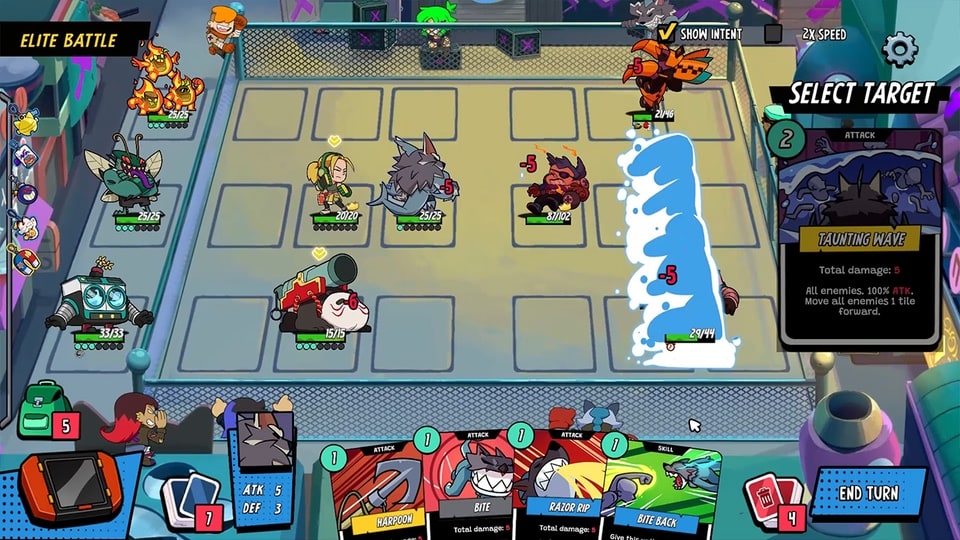
There are a handful of issues. I’ve been playing on a Switch Lite and some of the text was difficult to make out without moving it closer to my face – it’s just a bit too small on the adorable little Switch Lite screen, and I’d expect it’s fairly borderline on the stock Switch too. The frame rate can stutter sometimes too, but as it’s not a real time action title this is more an imperfection than a real problem.