
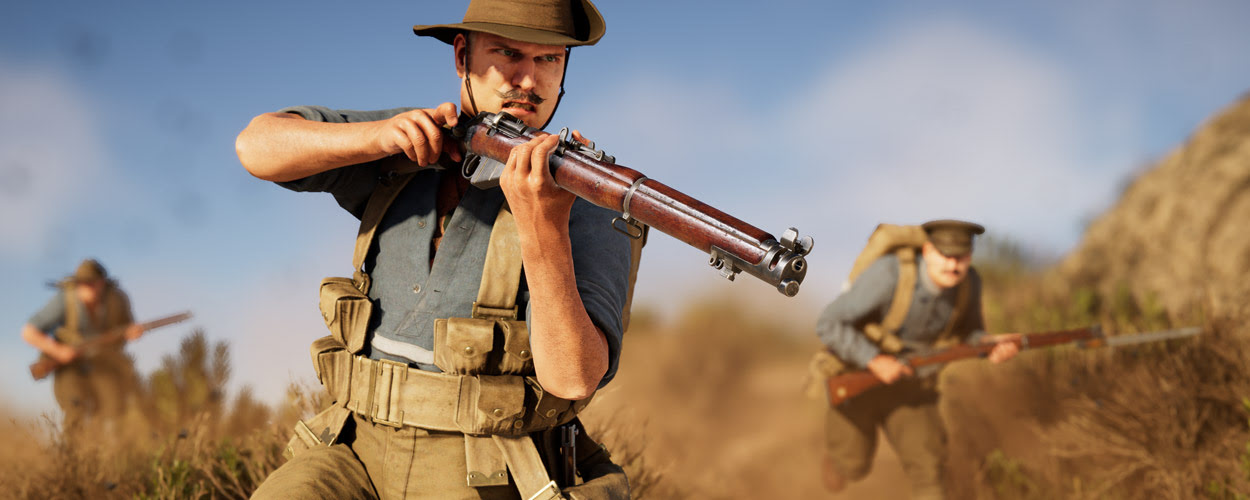
Nearly four years after the launch of BlackMill’s Isonzo, its WW1 Games Series returns, this time taking the fight to Gallipoli and the Ottoman Fronts. This is the developer’s fourth swing at making a grounded yet layered first-person shooter set during World War I, standing in stark contrast to genre stalwarts such as Call of Duty and Battlefield thanks to slower player movement, simpler class loadouts, and weapons that mostly kill with a single shot but are much harder to aim.
For English-speaking (and of course, Turkish) gamers, Gallipoli will have far more instant appeal than previous entries in the WW1 Game Series. It features an Allied coalition of British Empire forces and ANZAC – the Australian and New Zealand Army Corps – along with Indian troops, all battling to knock the Ottomans out of the conflict.
You don’t need to be a history buff to enjoy BlackMill’s series of online shooters. In fact, there’s very little exposition at all beyond the snippets of information describing the importance of each map as you quickly load into a match. Instead of walking you through a documentary of what happened during the Gallipoli campaign, the developers place a gun in your hand and invite you to relive it.
This is boots on the ground, first-person shooting at its purest. There’s no crazy wall-running, powersliding, or weapons that sport 10 different attachments and a weed camo. Everything here is stripped back to basics, though there’s plenty of nuance sown into Gallipoli’s gameplay thanks to its many different playable classes and features such as the construction mechanic.
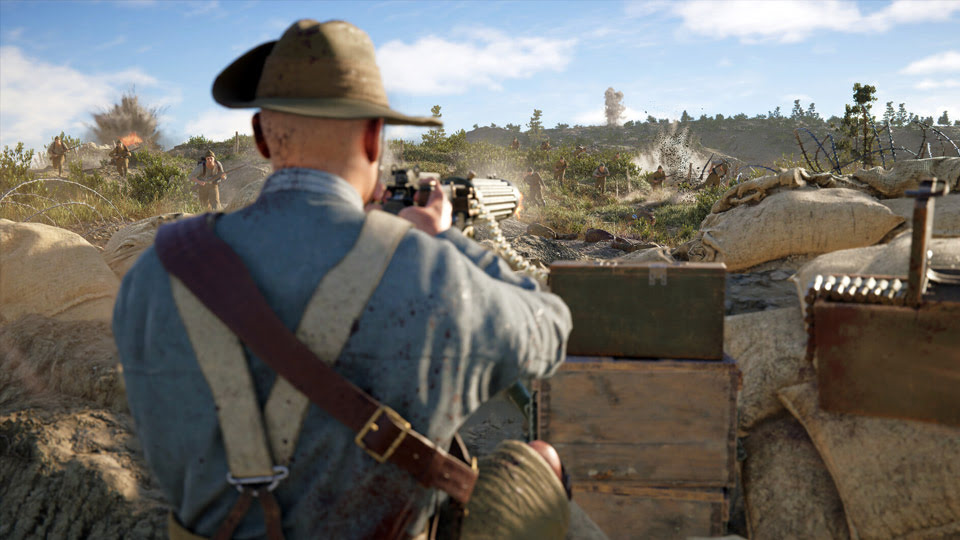
There’s one core game mode – Expeditions – that follows a similar asymmetrical formula found in Battlefield’s Breakthrough and Rush modes. One team is tasked with defending an HQ from attackers, whittling them down until they run out of reserves. If the attackers succeed, then the frontline is pushed back to another HQ until the final base is either captured or defended.
Again, there’s some nuance to be found here. During the first two phases of an Expeditions match, the HQ will be flanked by a secondary support objective. This gives defenders another position from where they can pick off invaders, but if it falls into the attackers’ hands, they can use it to build and fire powerful artillery weapons, helping their teammates lock down the HQ. Simply squatting within the bounds of an HQ isn’t enough to capture it either. Once the attackers have enough men inside, they’ll either need to build fortifications or plant (and guard) an explosive, usually exposing themselves to enemy fire in the process.
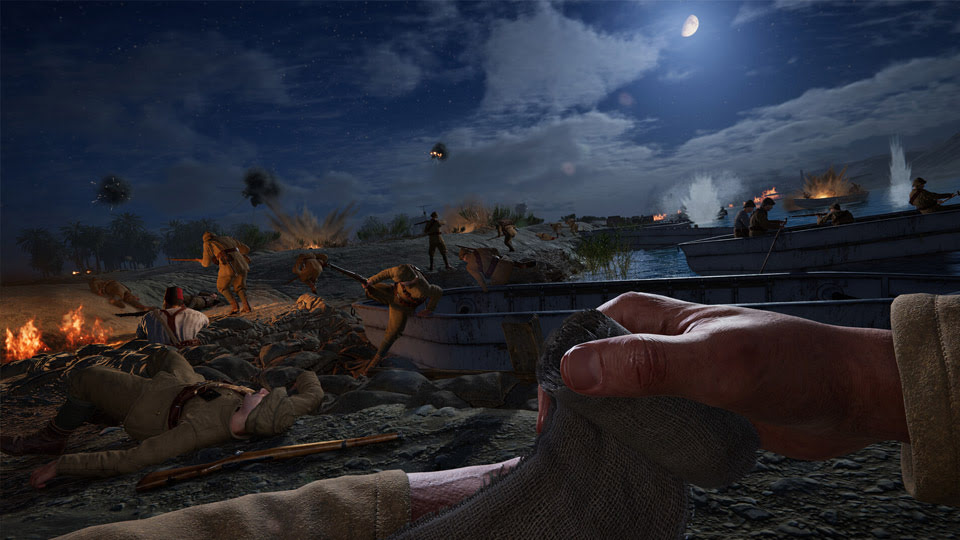
The most divisive aspect of Gallipoli – and the wider WW1 Game Series – is the gunplay. In most cases, one shot from a rifle (and even pistols) is enough to put down an enemy soldier, though the game’s weapon handling is deliberately unwieldy. There’s nothing more frustrating than whiffing consecutive shots on an easy target, especially given how long it takes to rearm and reload. At the same time, there’s definitely a knack to it, Gallipoli rewarding patience and positioning rather than simple running and gunning. Aiming down sights and using the focus mechanic can dramatically increase precision, but to counter this you also need to factor in suppression and “panic”. Again, these will be divisive, but add a layer of realism and strategy to what could otherwise be a very basic, bland first-person shooter. Even if you don’t have a clear shot on an enemy, firing close to their position will cause suppression, partially obscuring their view and increasing weapon sway. Keep this up long enough, and they’ll enter a panic state, making them slower and easier to pick off should they wander from cover. It’s a clever system and one that reflects a realistic aspect of armed warfare absent from most shooters: suppression can be used to great effect, dispersing a wave of attackers or helping to clear a path, allowing teammates to push an objective.
There’s a lot going on in Gallipoli’s 50-player matches, but they never feel completely out of control, the map designs and placement of objectives helping to keep the action focused. The frontline is constantly moving – something which is partly influenced by the WW1 Game Series’ building mechanic. Certain classes can place fortifications such as sandbags, barbed wire, and even machine gun nests, as well as spawn beacons that have bonus effects (such as granting health/ammo) depending on which squad you’re in.

On consoles, the game runs smoothly and offers day-one cross-play with the PC version. It may not be the prettiest shooter but does a great job of bringing historic battlefields to life, making each one look unique with its own distinct atmosphere. At times, however, the UI can hinder the action. While icons and markers help to highlight points of interest, they can clutter your line of sight and peripheral vision, making it harder to track enemy troops. It seems like a dud feature at first, though you’ll come to appreciate the HUD toggle button, which will help focus while dialling up that sense of immersion.
