
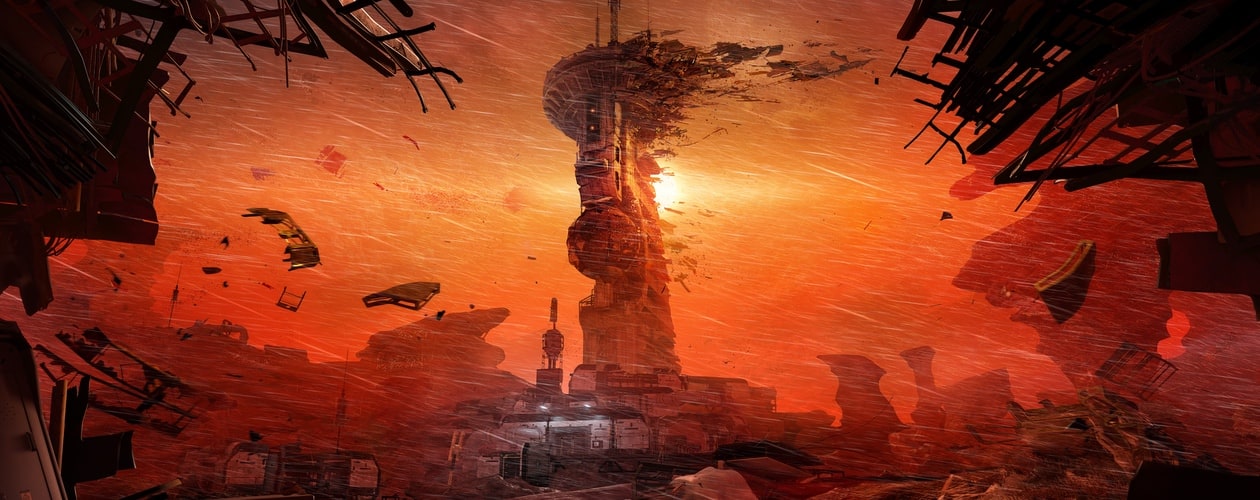

Rebellion might well be the Ronseal-iest of British game developers. Sniper Elite? You’re an elite sniper in WW2. Zombie Army? You shoot your way through an army of undead. Alien Deathstorm? Well, there’s a storm so bad it’ll probably kill you if the aliens don’t get you first. They all do what they say on the tin, and that meant that our hands on time with Alien Deathstorm was an assault on the senses.
Alien Deathstorm takes you to an off-world colony that’s not only being ripped apart by a huge, seemingly unending storm, but has also been invaded by lots and lots of aliens. It’s pretty lucky, then, that you’re a Combat Engineer, so you know your way around an assault rifle and shotgun as well as a sci-fi wrench and power substation repairs.
Producer Martin Willingham explained the origin of this scenario. “Mainly it was driven by the idea that Jason and Chris [Kingsley] had about the storm, so that’s why it’s on an off-world planet. It’s always great to do a remote story because, you say it’s a trope of horror, but that’s a really important thing for that isolation and feeling of being trapped and alone and far away from help. You are on your own, there is no help coming. It’s you versus the storm and the aliens.”

Our hands on with the game dropped us into the energy production part of the colony, but with massive damage having knocked various parts of the fission reactor offline. The immediate feeling is of being battered by the tornado-like winds, not as a physical sensation of course, but as a battering to your ears, with debris flicking off from buildings as metal panels come loose, fabric and cables flapping and blowing in the wind. It’s about as evocative as anything else I saw at Gamescom this year.
There is a respite from this once you pass through a doorway and get inside the reactor building, but as you start to diagnose the issue with a passing diagnostic terminal screen – chunky 80s sci fi tech, of course – the other shoe drops and waves of alien monsters burst out of vents, through doors and race towards you.
While they’re clearly inspired by the likes of Aliens and Predator in the alien design – Rebellion did make Aliens versus Predator back in the day, though I doubt they dug up the old 3D models – it’s difficult to tell how much smarts these aliens have. They’re not waiting to shoot at you from distance, though they do seem to try to vary their routes and nip around obstacles or clamber along walls, and they certainly approach you from different angles.
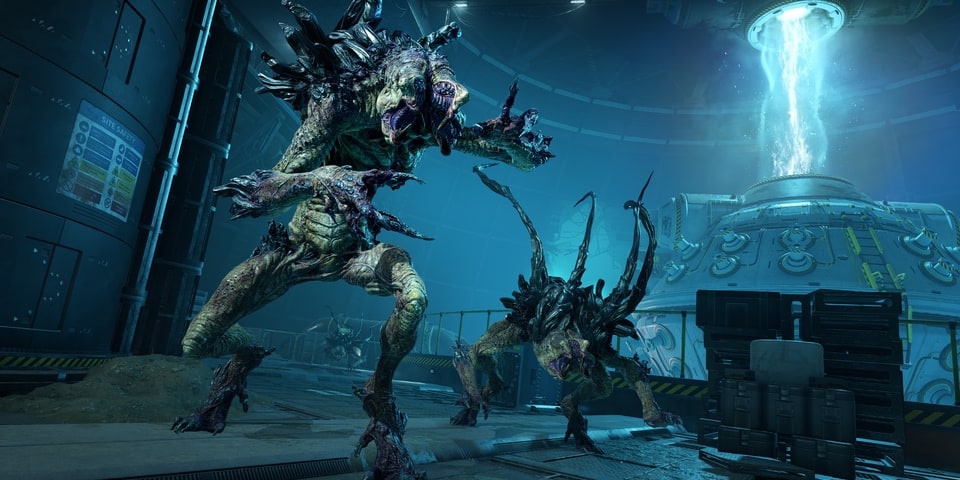
The guns here are nice and effective, the AR burning through its ammunition, but the shotgun then having plenty of oomph to take down a leaping enemy. Even so, it was frantic, and it was while I was in this complete tizzy of dealing with onrushing aliens (and not realising that the weapon wheel is on the D-pad) that I ended up triggering multiple objective points to deal with. Following the “natural” path through the level would take me off to explore the Flarestack and solve some kind of problem there, but I also managed to bring up a warning of a power routing failure in the generator Substation. That’s the route I chose to take.
He continued, “We focus primarily on the player choice, and one of the things that we were really interested in exploring, as you play, is that a significant amount of the combat that you were experiencing, the ambushes from the aliens, it’s all dynamic, it’s not scripted. We do have some scripted encounters that happen at big set piece moments. […] So you went to the Substation? So you went into the Scuttler lair, and up until that was all dynamic encounters, and then we do a more scripted moment in there, a bit more of a horror beat. We use those sparingly because, as I say, the player choice and carving out your experience in ADS is really important to us.”
Honestly, while some of the attacks did feel dynamic, the manner in which the aliens emerged as I first reached the reactor room felt like it was a scripted moment. Certainly the Scuttler lair was clearly a scripted moment, descending down into the alien ichor below the platform and following a series of cables and breaker switches. Flipping that final switch in the chain, I then had to retrace my steps, suddenly hounded by the facehugger-like scuttlers, flipping the other switches on the way. Job done, I thought, but no. Now I needed to go between the Substation units on the top and literally smash giant fuses into place, all while battling the regular aliens.
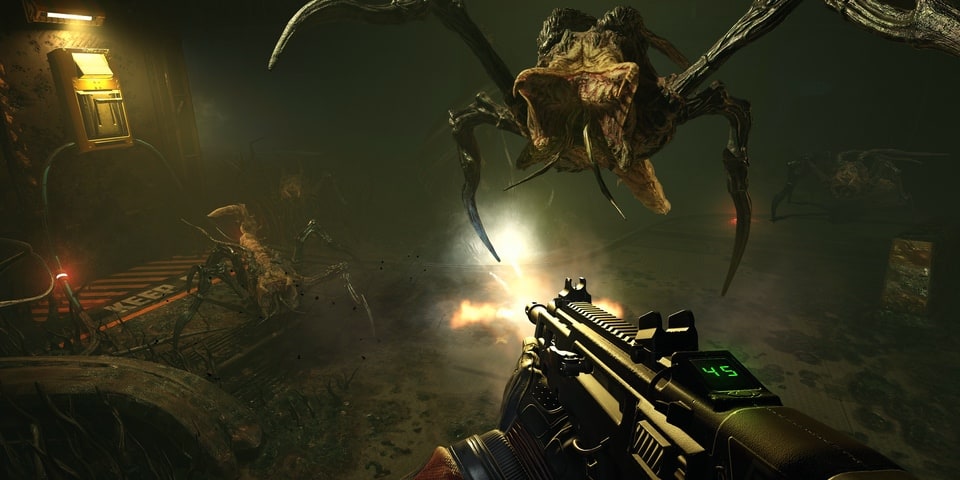
Part of this is down to how I was playing, Martin explained to me. The game director will take note if you’re making a lot of noise, stomping and running around, smashing windows and creating more disturbance, and bring more of the aliens to you.
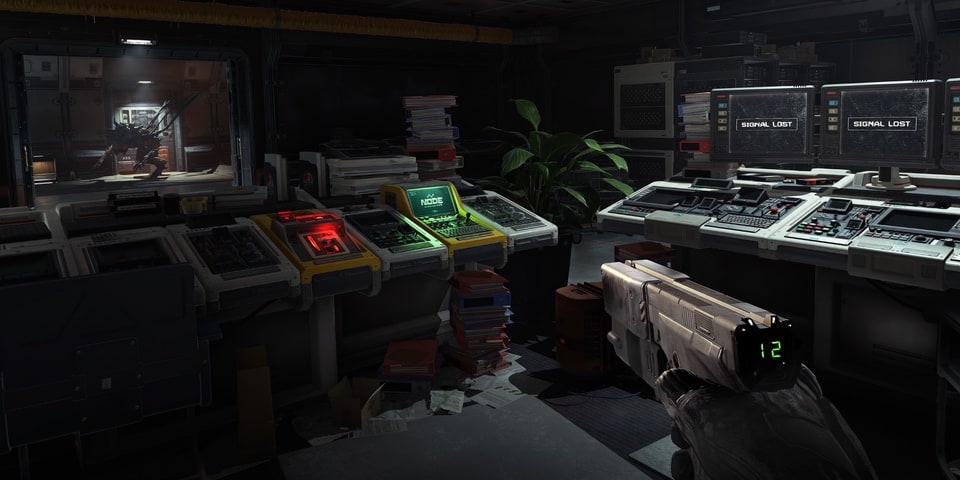
Some of my earlier confusion stems from the lack of waypoints within the HUD, though you can always check the level map and see objectives there. “The approach we’re taking with the exploration and the objective side is framed through the lens of you’re the engineer. Generally you’re trying to diagnose what the issues are and then working out what would you logically need to do. So when you went to the reactor and it’s offline, it says it can’t reboot because there’s an issue with the power network. So then you go and diagnose the power network and it’s saying there seems to be a fault in the substation. So we don’t put a waypoint on there and tell you to go to substation. It’s like you go, ‘Guess I should go and maybe explore and find out what’s gone on over there.'”
Within the Substation itself, it’s a similar story, finding terminals and visual clues – the red lights on the power line leading underground – and solving the local problem. In fact, Martin tells us that “You could have just gone to substation without even going to the control room, without even diagnosing the power network and just head there. We don’t gate it or anything like that. So the player is able to just head there and engage with the environment as they see fit.”
While this demo was very action-oriented, there are naturally peaks and troughs to this, similar to how the noise of the raging storm dies down once you get inside, allowing the horror to creep back in.
Martin told us, “The level that you played is later in the campaign, so for what we’re showing here at Gamescom this week was more about the combat, so we couldn’t really hold the aliens back. Yes, we are action, but we are still action horror. There will be scares, there will be tension and there will be horror, and some of the levels that we have into the game do lean more into that.”
Two of my favourite moments came from cheeky little bits of level design. One’s a simple joke of a jump scare, rooting around in lockers and cupboards to open a door and have a broom fall out – “We call that the horror broom,” Martin joked when I told him, before adding, “Some stuff will come out of those lockers that will be a bit scarier than a broom.” Another saw an unsettling ping on the suit’s motion sensor going off as I explored the reactor control room, only for me to realise it was an automated vacuum cleaner rolling around, doing its best amidst the disaster.
I rather enjoyed what I saw of Alien Deathstorm, from the howling weather, to the classic aesthetic, and the mixture of tension as the motion sensor pings and panic of blasting alien hordes away. There’s definitely a good bit of horror here and potential to explore different environments and tones, but if you just want to shoot aliens on a very stormy night, this will have you covered.

