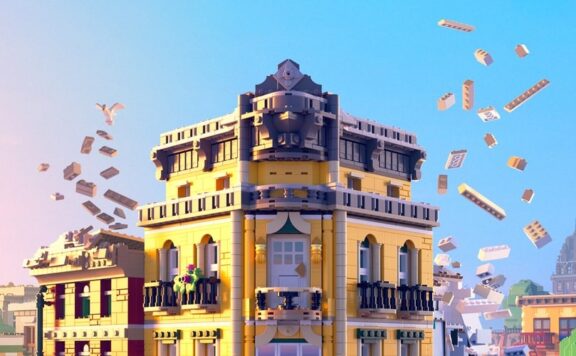


How has nobody made a LEGO city building game before now? LEGO Skylines is one of those ideas that’s so obvious in retrospect, combining the iconic construction toy with what is now the top city building game of the past decade. This isn’t just a plasticky, bricky reskin of Cities: Skylines, though, bringing a much more personal and individual control over the buildings, neighbourhood and bustling metropolis that you’ll eventually build.
It all starts with picking your avatar from a selection of modern and classic character designs, from a generic business type through to a retro knight. And then it’s straight into your very first building effort, and this is where the real differences start to make themselves apparent.
Cities: Skylines and most city builders will have you create your road network, utilities infrastructure, and then all the buildings and businesses will spring up as you create zoning for them. Lego Skylines starts with Mom & Dad asking you to build them a home. You’re not going brick-by-brick to do this, but are directly selecting the house from the build menus and placing it alongside the roads manually. And it continues when they ask you for a place to work – you can pick from an apple farm or a windmill in this opening tutorial – adding shops and restaurants, and tiling out play spaces, gardens and parkland to give a boost to the local environment.
Art Director Jonna Liikkanen revealed that “In this early preview and the late game save, you only have the basic versions of many things, the most basic looking houses in there. We are also going to have multiple collections of buildings – we have tropical paradise looking city buildings, and we also might have some medieval stuff in there. Because it’s LEGO! We can have it all, and I love it!”
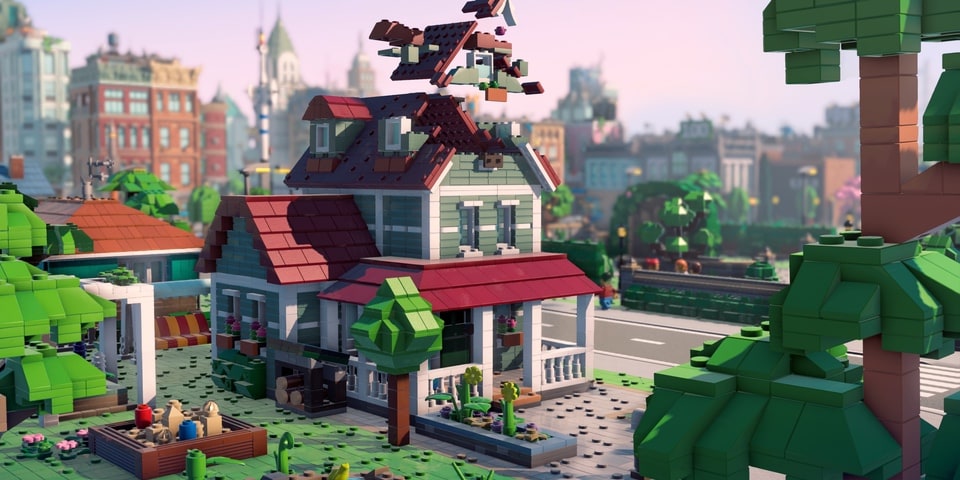
Interestingly, this game isn’t leaning on recreated sets from Lego past and present. “This is mostly our own creations,” Jonna added, “and we’re very proud of that.” Having said that, “There was, if you looked closed, a lighthouse that might have a resemblance to a Lego set, so…”
It really feels like, instead of being a city mayor in charge of the big ideas, you’re getting your hands dirty as a local neighbourhood developer. It feels like you’re actually playing with Lego, in an abstracted sort of way.
Producer Joanna Ronkanen said, “When we talk about Lego Skylines, the biggest thing for us is the customisation and the personalisation. That’s one of the reasons why we have those individual plots. You choose what to build there, whereas when you think about Cities: Skylines and the zoning, it does it automatically. On the other note, we do have the randomiser there, so if you’re not always that interested in choosing the buildings, you can always use that as well. We want to make sure that players have the options.”
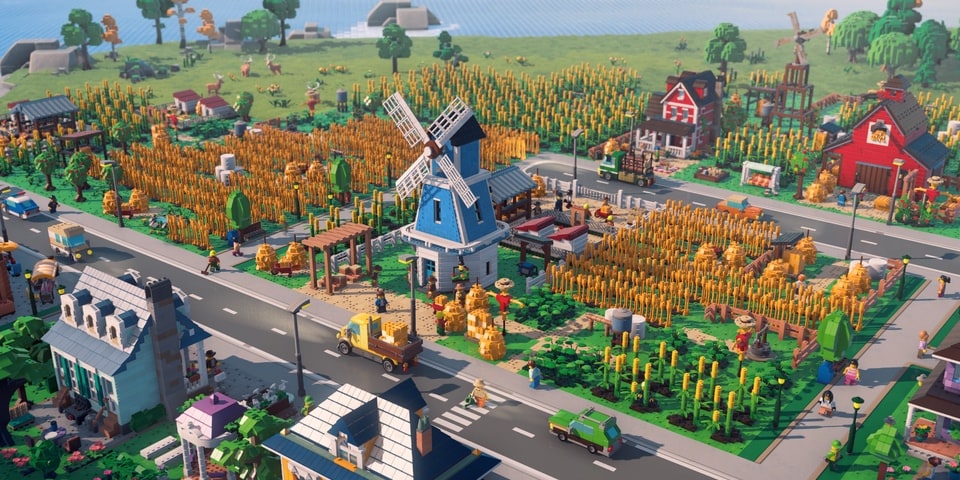
There really is a lot of customisation available to you through this. You have a suite of preset buildings created by the team at Iceflake Studios available as you place them, from rustic houses to more modern structures and city townhouses, and there’s plenty of pre-placed outdoor seating, decking and the like, but you then have much more granular control with a dedicated customisation tool you can load into.
Joanna told us, “Whenever you start changing plots, you can actually remove all the existing props as well. It’s a situation where you just have the house there and you can just remove everything else and start from scratch, so you have more of a blank slate there. Of course, the Decorations kind of bring an extra layer to that as well, but they are technically separate to the plot, so those are a separate entity essentially.”
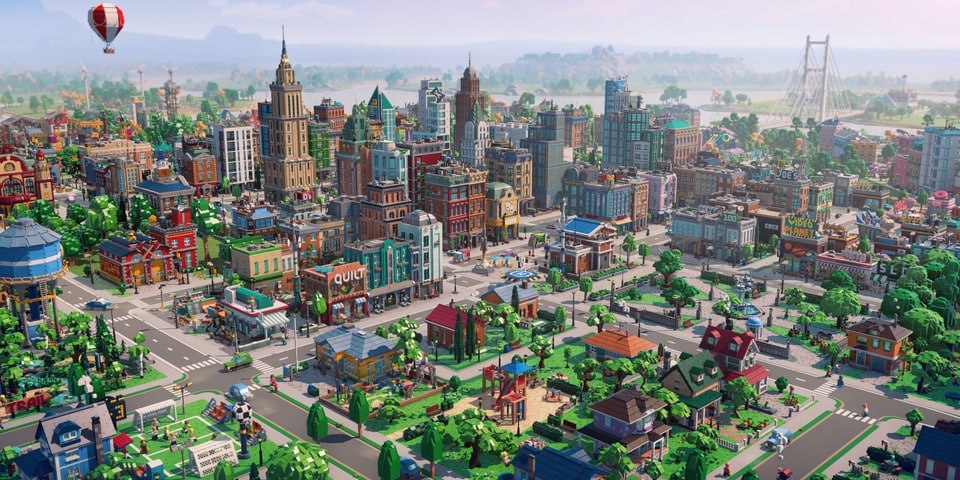
As small and granular as this can be, you’d be forgiven for thinking that this wouldn’t really scale up to a full-size city, but we were then able to load into a late-game save with the metropolitan sprawl going across multiple island plots. The underlying scenery is traditional 3D, but it’s all caked in Lego by this stage, all the various city infrastructure with police stations, garbage disposal, water treatment plants and the like.
“It’s actually pretty deep,” said CD. “Individual citizens are their own citizens. They have their own workplaces, they have their homes […] I wouldn’t necessarily say it’s completely on par [to Cities: Skylines’ simulation] but it’s pretty close to it. That’s always been the big thing, to make sure that Cities: Skylines players don’t feel it’s too easy or anything.”
There are some kinks still to work out, and some rigidity to what you can create. Roads are always straight, with just the ability to kick out to a 45º angle, but from this still early playable build of the game, that’s quite awkward to wrangle and still needs improvement – laying roads is such a fundamental part of the genre that you need to get right.
“When you think about city builders, road tools are one of the hardest things to nail,” Joanna admitted. “I’m actually really proud of where we are at this point, but we know we still have lots of work to do.”
All of the buildings here are original Iceflake creations, as opposed to there being recreations of classic sets. That’s not to rule them out in future, and there’s the world of Lego collaborations that could be explored. CD said, “We don’t really have anything to share about that at this point, but what I can say is that I think the opportunities are pretty much limitless here with Lego Skylines.”
Iceflake also couldn’t really talk about any kind of modding support at this time which has been a massive boon to the Cities: Skylines series to date, but… let’s just say this too would be a very, very natural fit for the game.
Lego Skylines is absolutely one to keep an eye on for fans of both Lego and Cities: Skylines. It skews a bit younger with some of its framing and tone, as you would absolutely expect, but there’s also reams of added possibilities for customising the buildings and world that will be so appealing to fans of cosy gaming in general, and hopefully much of the depth and simulation that this genre relies on.