
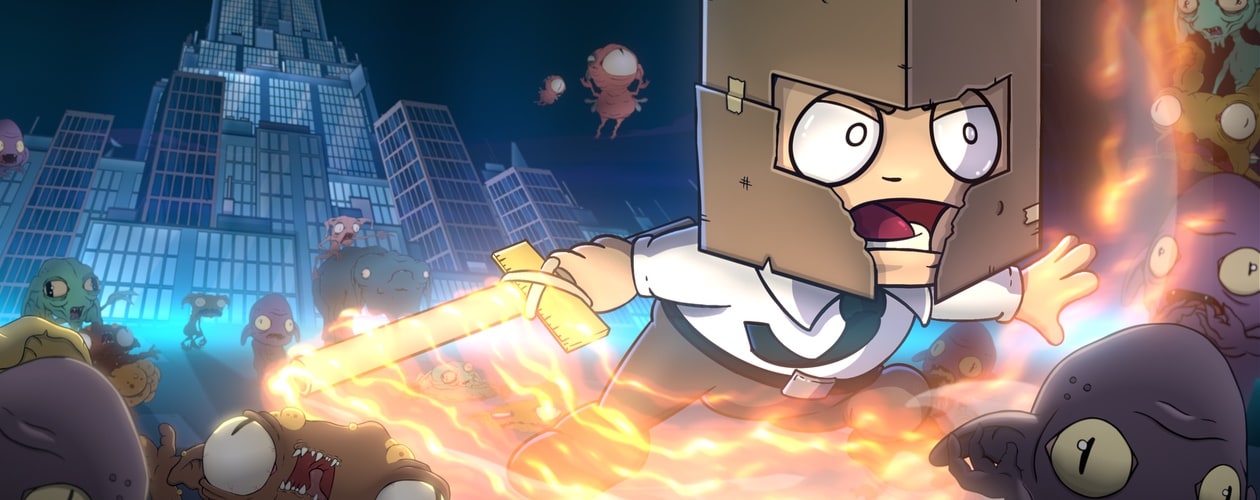
I’ve never worked in a traditional office, although my time as a lecturer has seen me do far more than my fair share of admin. The nonsense corporate speak from management, the toxic positivity and talk of KPIs and unfettered growth has actually found its way into the ivory towers of academia, so this isn’t that surprising. Given the ubiquity of offices in popular culture, however, it often feels like I know exactly what it feels like to be stranded in a faceless cubicle amongst other unenthusiastic coworkers. Box Knight takes that framing device and uses it to stage a roguelite arcade brawler in which you must take down the hordes of enemies that have taken over the offices and save your colleagues from certain doom.
You start off the game as a regular office worker, but are soon elevated to the fabled role of Box Knight – the legendary saviour of the office, but not the first in the line. The recent past appears to be littered with failed successors with the whereabouts of the original Box Knight shrouded in mystery. This relocation of traditional fantasy trappings into a corporate setting works well to explain away the obvious dissonance between melee combat and office work. Most of the wider narrative and lore is conveyed through simple text box conversations with NPCs and the occasional cutscene, but the story is mostly just an excuse for the action.
Box Knight has a simplistic but effective cartoon style that helps to keep the action clear and uncluttered most of the time. Enemies are reasonably varied, although there is a lot of reusing enemy types in different colours to indicate different powers. As the game progresses things do become very hectic, however, and later areas become a mass of damage numbers and effects where the framerate drops to a crawl as everything dies at once.
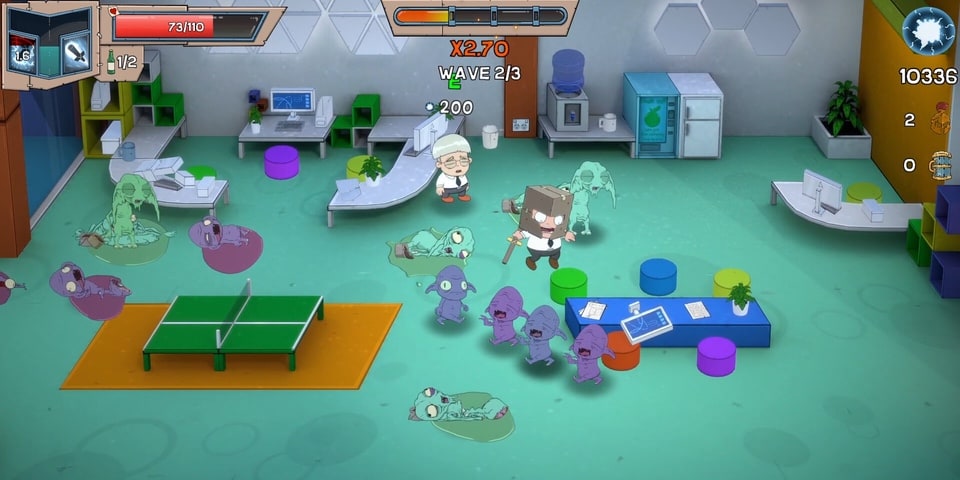
Initially you are armed with a simple cardboard tube and armour made from boxes (hence the name) but as you earn currency through combat you can purchase a range of different armour and helmets that offer passive bonuses. These range from simple stat boosts to more strategic ones that impact elemental affinities. Buying these items also increases your prestige level, a stat that unlocks powerful abilities that can do anything from alter the frequency of your execute skill to giving you an unfeasibly high jump. As well as the armour upgrades, you can also purchase a spear and a two handed claymore, with rewards for defeating 5,000 enemies with each.
In the first room of the game you can choose a free prestige power from one of three elemental groups. I went with lightning and found this to be the most overpowered choice throughout my time. Luck with RNG in the upgrades between rooms can lead to this doing ridiculous full-screen damage and wiping out entire waves in a single hit. Towards the end of my time with the game, I was waltzing through enemies without having to even think about dodging or evading attacks. By contrast, fire powers seem more localised and ice freezes enemies in place – this is particularly useful against bosses.
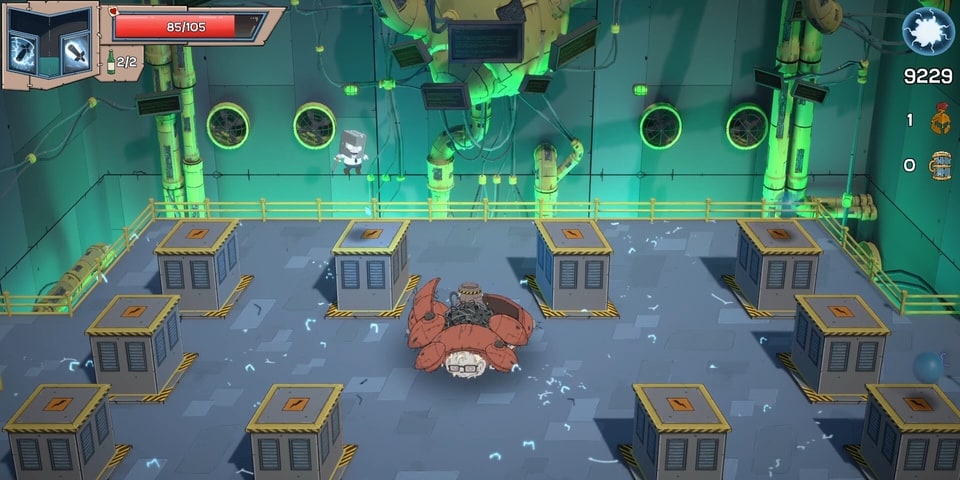
The combat is pretty simple with each weapon having a 3-hit combo of varying speed and range, unique special attacks, and a ground pound that you can unlock through the skill screen. This does mean that the main combat focus is fairly limited but there is just enough satisfaction from levelling your character up in and between runs to keep you playing. I was a little underwhelmed for the first hour or so, but once I started levelling up in earnest I found it a compulsive metagame until I had unlocked everything.
As a roguelite, repetition is built into the game’s mechanics but the speed of most runs helps to avoid being frustrating. Early runs will hit a brick wall at boss fights, but the sense of satisfaction when you set up a build that destroys theses foes is one of the game’s real selling points. Once again, in my final runs I was curb-stomping bosses before they could really get a hit in.
