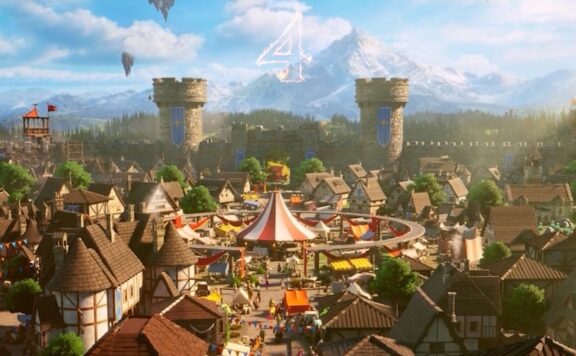


RuneScape: Dragonwilds is a survival RPG set in the world of the positively ancient MMO series, RuneScape. It features deep building systems, magic that helps you cut down and harvest trees, and a bright and colourful artstyle to lure in unsuspecting casuals. What that style hides is a competent, but gruelling survival game that is significantly more hardcore than its looks imply, though not always for the better.
The game begins with a brief introduction for how things work, running you through a few side quests. It’s mostly the standard stuff for survival games these days – how to cut down trees and slice them into logs, mine stone and ores, gather water and food, all the basics. This all works well enough, though shorter dialogues would be welcome here since there’s no voice acting.
Where things get interesting is when you start to use magic, which is probably the strongest part of the game. It allows you to cut down multiple trees at a time instead of hacking away repeatedly with your axe. It can even gather up those trees into your inventory later on. You can do the same with ores veins as well, just gathering them all up with a simple spell. This is cool, it saves you a lot of time, though it is odd that magic isn’t really a separate specialisation. Everyone in this game is one homogenous class that has everything available to it, the only difference being how much you’ve done of something.
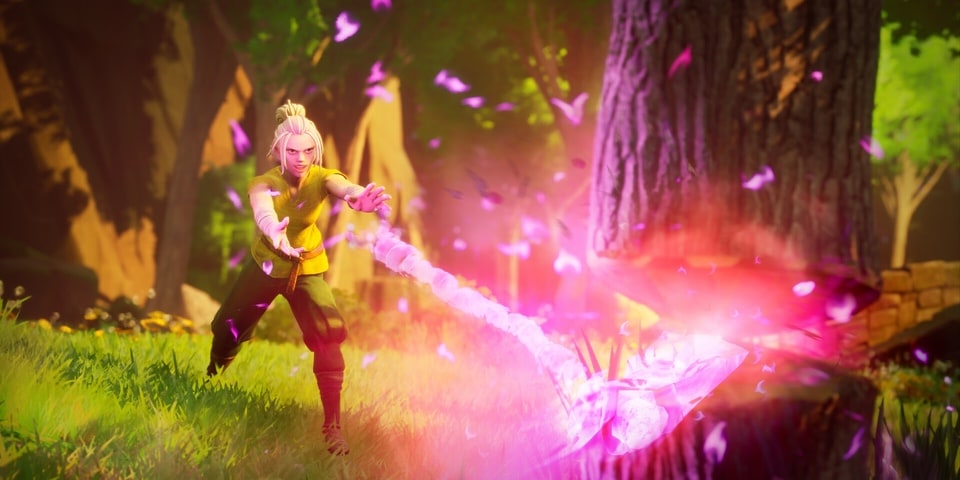
So you can’t become a mage and learn a bunch of spells to skip the woodcutting, because to get that spell requires you to have first levelled up your woodcutting. There are no real options in that regard, you’ll just have to do all of these things. It’s a series of treadmills that give a spell or ability at certain levels, with all the levels in between giving a bonus so miniscule that you might never notice the difference. In keeping with the main RuneScape series, there’s a classlessness as you become a jack of all trades. That’s fine, but you are also funnelled into playing in certain ways – some enemies can get very difficult to kill with certain damage types, forcing you into a playstyle you might not prefer to use.
I also think it’s too complex, weirdly. It takes a little while to become apparent, as the first area and level of tech is pretty straight forward, as it’s stone. But then you move onto bronze which is an alloy of tin and copper, so in the next area you have to find two different ores. Not only that, but you’ll use most of the bronze bars you get from your first few trips just building the crafting stations you need to use them. Not only that, but to build them you need a bunch of different materials and, once you’ve done that, you’ll need a bunch materials to actually craft a new piece of armour, one of which you won’t have heard of up until this point!
The sprawl of materials and requirements is constantly growing, and I found myself drawn to online guides to figure out where I should be going to get things. There’s lots of this kind of resource gathering in survival games, but this is only the second tier of technology and it’s already complex enough to get lost in all the details.
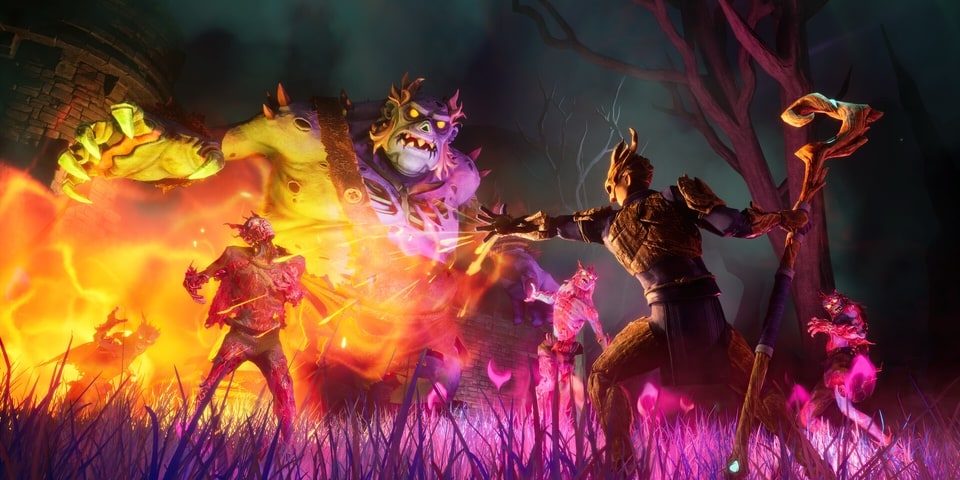
A further snag is that you will have to do a lot of this gathering in areas that are a level higher than you are, facing off against more enemies, each one of which is tougher than you. You don’t get to appreciate your power increase from gear upgrades, though, because then it’s off to another new area for the next material.You’re constantly behind the curve, trying to catch up gear-wise, battling enemies that can respawn directly around your base. Then there’s raids on your base and you randomly being hunted, which are either a minor annoyance or a life-ending moment that then means you have to retrieve your gear from where you died – there is no in between.
I joined a server and spent 30 minutes building a house. Just as I was almost finished, a band of goblins randomly raided me. i barely managed to fight off the first wave, despite them being more powerful than normal because they get tougher the more players are in the server. The second wave was about to finish me off before the host just disconnected at that moment. There was also intermittent lag that affected everything from parrying, which somehow just didn’t work anymore as attacks would damage me right through my shield as if I wasn’t even blocking, to the menus, to targeting spells.
There are ways to improve most of these issues. You can fine tune damage, health, hunger and thirst, tiredness, and so on if you make a custom game. If you do so, you’ll enjoy yourself a lot more, but you also won’t be able to earn trophies playing this way. The thing is, it really does help. After 12 hours grappling with the stock experience, I started a custom game and was caught up to the same spot after just two hours. But then I encountered the second tier of equipment that requires so many fiddly resources and so many crafting benches that I still felt fatigued by it.
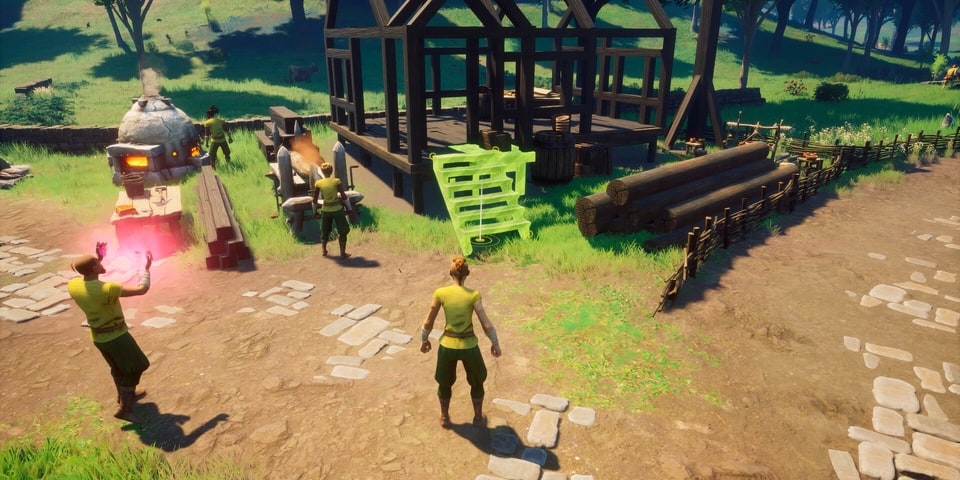
Outside of all this, it’s a good looking game with a cartoony style, though it is generally too bright during the day and too dark at night. Seriously, it’s like playing Dragon’s Dogma 2 at night, where everything is pitch black without a torch. This also extends to indoors, but you can just place torches. The building system is excellent, such that I managed to build something I was happy with, which really doesn’t happen too often. The music is also very catchy, I can hear it echoing through my mind as I type, but that might be because it’s pretty repetitive as well.
There are some bugs in this full launch, some that affect the experience and others that don’t. Grass flickering up through your constructions is just a visual annoyance (though one that shouldn’t really be happening), but I had a few issues with the UI, ranging from having to fiddle with the directional buttons before a menu would respond, to even that not working and having to close and restart the game to fix it. These are annoying, and if you’re playing online you may have to contend with lag to the host which makes all the menus feel very unresponsive as well.