
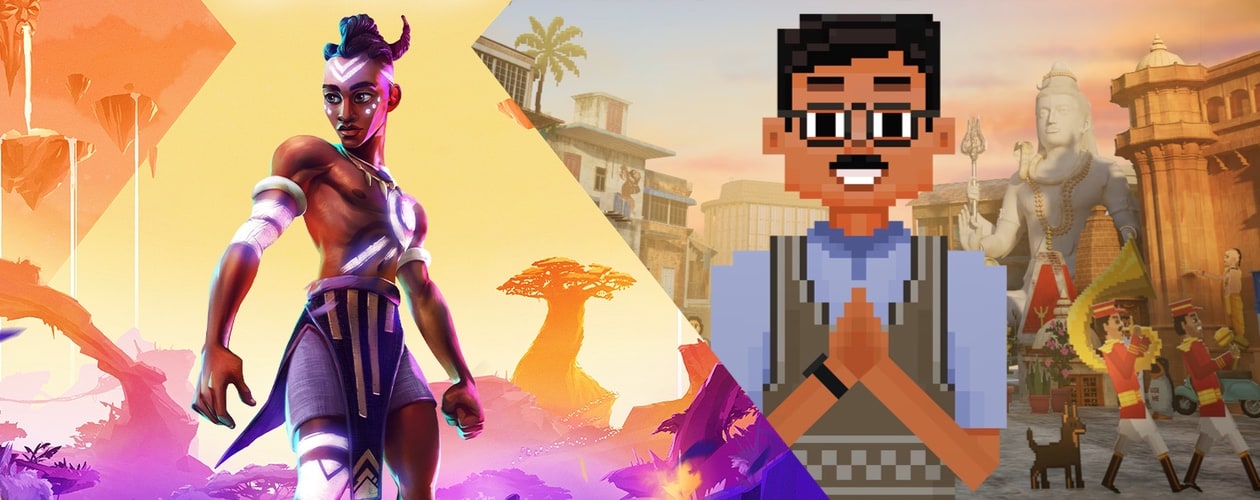

Over the last couple of weeks I have played two very different games, Tales of Kenzera: Zau and Detective Dotson. The first is a side-scrolling metroidvania drawing upon Bantu mythology, while the other is a mystery adventure game incorporating the daily life of modern India. What links them is that the main characters in each are grieving the deaths of their fathers – a surprise connection I was not aware of when choosing to play these games.
Playing these two games felt pretty poignant, as I have recently been reflecting on the loss of my own dad, who passed eleven years ago. Both approach the issue of the loss of a father in different ways, but cover the tumult of emotions and questions that race through your head.

Zau’s experience with death sees him try to barter.
The first thing both Tales of Kenzera: Zau and Detective Dotson deal with are the immediate aftermath of a loss. In Detective Dotson the cultural procedures are followed from the cremation of the body to the spreading of the ashes, given the ceremony that is expected. Dotson accepts the passing of his death, so his journey is more about finding out why his father died, while Zau rejects the death of his father and looks to barter with the god of death Kalunga to bring his baba back. Both different reactions, both familiar to anyone who has experienced a similar death.
No, I did not barter with a god for my father’s soul, but there was an initial disbelief and rejection, mixed with questions. My father passed away unexpectedly on the other side of the world, and even with family telling me what happened, there was a refusal to believe.
From that came the questions and the attempt to apply logic to what feels like an illogical situation. In Detective Dotson it’s a case that needs solving, with Dotson solving other cases to bring him closer to the truth. The core element of Detective Dotson is to use logic to solve the puzzles and pull the clues together to get answers.

Detectve Dotson turns to solving the mystery to cope with his father’s passing.
There is very little in the way of emotion expressed by Dotson, which can speak to some of the cultural issues that people from South Asian backgrounds are exposed to, and is also seen in various cultures around the world where men and boys are expected to remain in control and only show emotion when deemed appropriate. What is also noticeable here is that there is no real outright guidance given to Dotson. Instead answers are either given to him cryptically or hidden from him completely, when those answers would bring him some form of closure.
Detective Dotson has a colourful, bright, and comedic approach to death, but it is also wrapped in cultural issues which show how hiding things like emotions and information can be toxic.

Emotions are at the forefront of Zau’s journey of grief. The game does not shy away from the grief, the anger, the tears, and eventual acceptance of death. Kalunga is Zau’s guide and punchbag. Zau’s journey through Kenzera takes him to regions and into conflict with the great spirits that represent different processes of the grieving process. For example, take the region of Mount Itshoka and the Searing Sands. Here the land is barren, with a violent volcano at its centre with the great spirit of mankind raging.
This spirits rage has grown from that of a boy who failed a trial years before, and growing as the boy’s own tribe and family perished. This rage reflects what can happen to our world around us if we cannot accept the inevitable, and also acts as reflection upon how Zau felt earlier in his journey. There are other moments in the game where Zau tries to fight against being helpless in the face of death, and others where he sees the solace it can bring and how life can continue even when a prominent figure in your life is lost.

I did not set out to play two games that deal with the same subject at their cores, but I am glad I did. They show just two ways that people deal with the death of a parent, and the contrasts of those ways. Detective Dotson is embedded in logic and shows, maybe unintentionally, that some of the toxicity of not expressing the true emotions accompanied with it nor having a true support system to guide you. The ending does make things a bit more difficult as it leaves more questions to deal with, which are to be followed up in a sequel. The other puts emotions at the forefront and runs the whole gamut of them, showing how difficult it is to accept the death of a father figure, ultimately ending in a healthy acceptance. Tales of Kenzera: Zau, in my view, is a good game to play if you have experienced such loss, because no other game that I have played truly captures the feelings you have and allows you to relate so much.
What has to be said is that there is no right way to grieve, but when you find yourself in a period of grief show whatever emotion you need to in the moment. All of our grief journeys will be different, and we will all go through them in our own way. Seek support in your closest circles for guidance from those who have been there, and be prepared to be the person someone may one day come to for that same comfort and guidance.


