
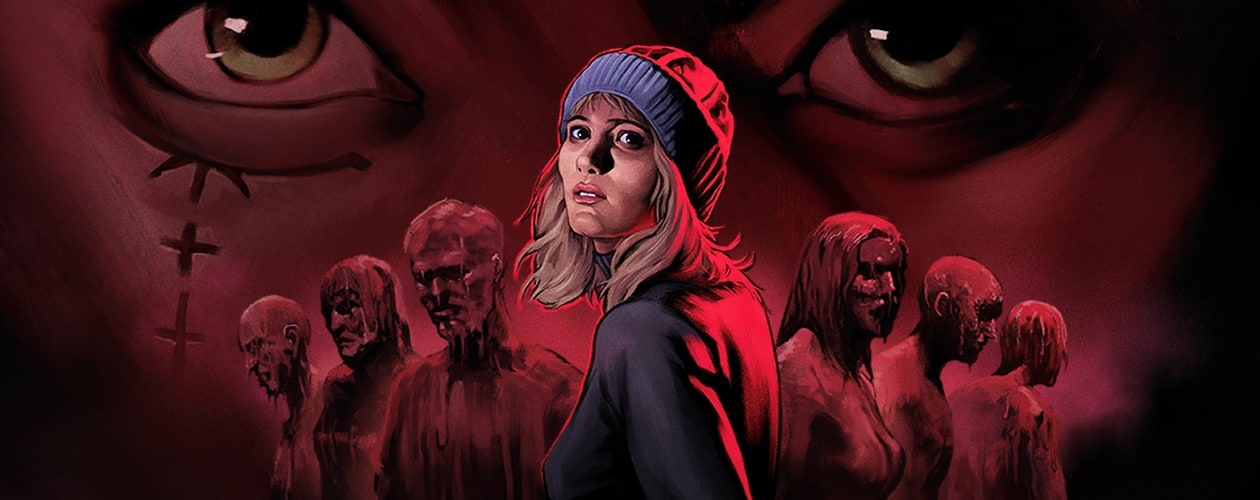
The early previews of Tenebris Somnia caught my eye for a number of reasons. The Latin name (so much more evocative than the translated Dark Dreams), the clear influence of 1970s arthouse horror, and, most obviously, the unique fusion of 2D pixel graphics with full live-action video cutscenes. The early demo piqued my interest even more, as the stripped-back survival horror gameplay laid clear the links between the original Resident Evil and point and click adventures.
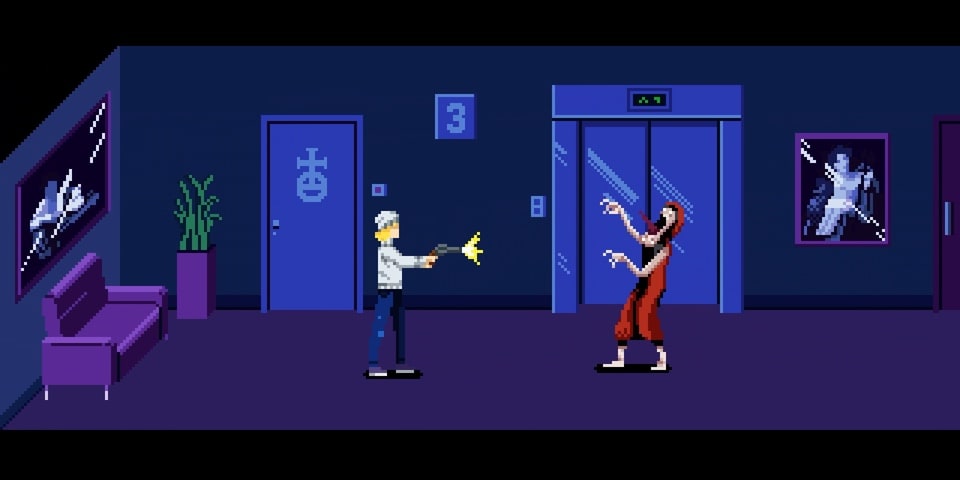
The visuals of Tenebris Somnia are the first thing to consider. The attention to detail in both the pixel gameplay and the video cutscenes is a testament to the developer’s love for classic horror. The former takes a style that is reminiscent of classic LucasArts and adds in hard-hitting combat more akin to RE or Silent Hill. The pixel backgrounds are excellently designed and it’s remarkable how many small details have been packed in. Several areas have movie posters that manage to convey their inspiration despite the limitations of fidelity.
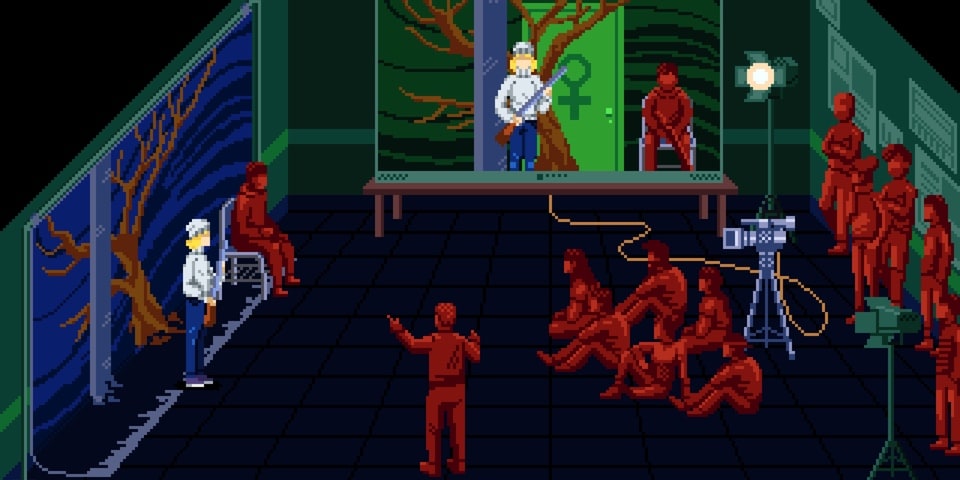
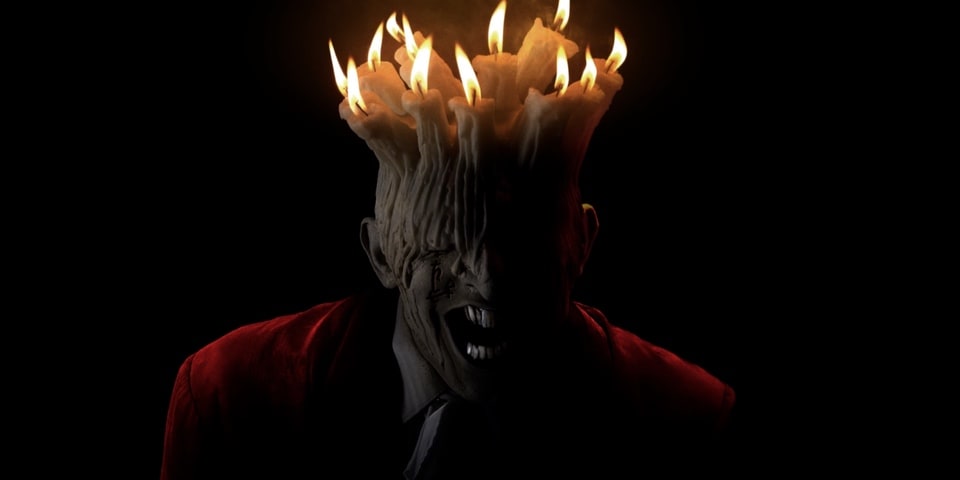
Exploring the various levels of the apartment building in which the game is set reveals a surprising range of locations and styles. The dream-like nature of the game means that normal architectural rules don’t apply, with upper levels leading directly to rainy city streets and entirely separate buildings from the protagonist’s past. Enemies are well designed, too, and the shift from incredible practical effects to primitive 2D only manages to deepen the uncanniness of their appearance.
The video cutscenes are frequent, and successfully convey key parts of the story without any dialogue (a great way of avoiding voiceover translations). The feeling of dread achieved by the sudden shifts to live action are very reminiscent of the original cutscenes in the first Resident Evil, but with better acting. These cutscenes are not just for show, however, as the narrative is intimately bound up in the world of cinema.
Our protagonist, Julia, has begun to have terrifying nightmares about her ex, Ivan, who she met at film school. At first, there are only small hints as to why they broke up, but the game reveals a darker history as it progresses. It soon becomes apparent that Ivan has taken extreme measures to try and get over his feelings for Julia, and the fallout from this has severe consequences for everyone involved. The gaps between dream and reality become blurred, and the dangers of the nightmare world seep into Julia’s waking world.
There’s a mixture of combat and puzzle solving throughout the game, an approach which boils down the core ingredients of survival horror into a retro perspective. While the environments are 2D in design you can move in multiple directions on the screen – this isn’t an old-school side-scrolling title. The confusing and ever-changing layout of the apartment is tricky to navigate at first but the world is claustrophobic enough that you can’t really get lost.
Combat is the usual mix of melee and ranged, with the former being particularly strong against most foes, but coming with greater risk. You pick up a wrench early on with two other melee weapons to unlock as you progress. Ranged attacks are limited to a revolver and a shotgun, with the latter best saved for boss fights. Ammunition is limited, as are health pickups, so it’s important to be careful with your resources. The result is a functional combat system that doesn’t particularly innovate but fits the action well.
Puzzles range from finding key objects to more elaborate combinations of items and environmental riddles. One especially memorable example involves filling a glass container to the right level to match the pitch of a nearby bell – the resultant chime shattering it. It is generally obvious when a puzzle needs to be solved for progress, but I wandered around for a while before figuring out that particular problem was the next step. Other puzzles require you to consult the notes kept in the mysterious book that you find at the very beginning of the game – a book that is impossible to read until Julia discovers what is blocking her vision late in the game.
Tenebris Somnia is a fascinating game due to its influences and unique visuals, but it also tells a great story about the complexities of relationships and what can happen to those involved when they end. I was gripped throughout the five hours it took to finish and am set to go back in for the secret endings once I’ve worked out what I need to do. There are also a challenging set of achievements that involve different ways of approaching the game’s combat to add welcome replayability – as well as several of the puzzles being randomised on each playthrough.
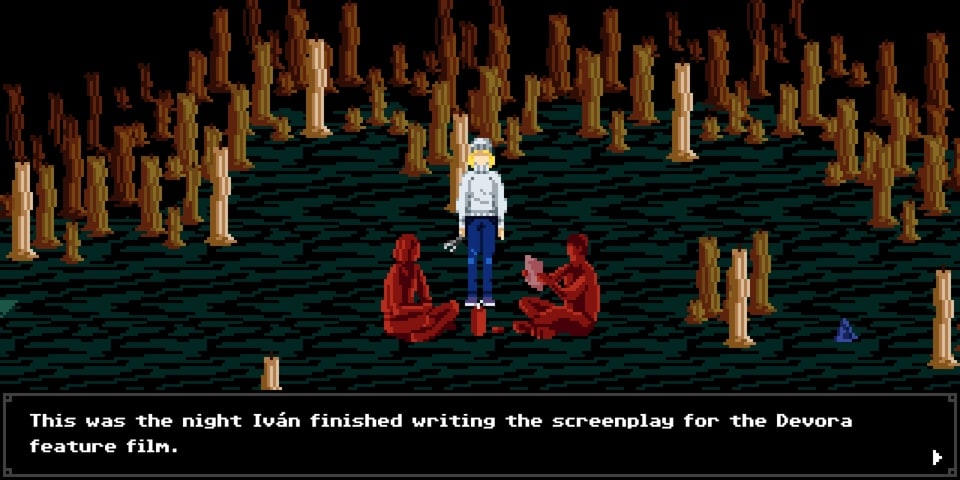
The final aspect to mention is the way in which the central theme of film making becomes integrated into the narrative and action. You’ll be looking for the parts of Ivan’s short film (a trigger point in his and Julia’s relationship) and you get to watch these to solve puzzles. Other puzzles involve developing photograph negatives and replaying video footage to reveal hidden doorways. The analogue nature of these technologies is intrinsically tied up with the overall sense of the occult and supernatural that pervades the game. This whole perspective comes to a climatic head in one of the optional end boss fights which brings the cinema screen into action in an epic fashion.

