
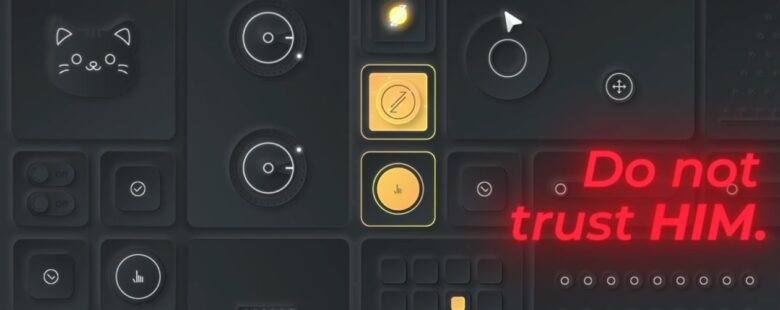
On the surface, Neuron Activation looks like a very simple experience. Playing the role of a newly developed AI you have to follow a series of straightforward instructions to serve an anonymous overlord. These activities involve flicking switches, turning gears and a wealth of other tiny tasks, but what begins as a large-scale fidget toy turns into an enthralling and compelling game that ties into a broader narrative of humanity’s engagement with machines.
Visually, Neuron Activation looks the part. Everything appears within a straightforward graphical interface with all interactive elements boxed off individually. The colour scheme can be changed to match your preferences, with many alternatives being unlocked as you progress and earn Neuron Coins. These alterations can make the screen as unassuming or garish as you like and I appreciated the opportunity to mix things up once in a while throughout the 9 hours I spent getting all the game’s achievements.
In terms of voice-acting, everything has the robotic AI tones that you would expect given the context of the game. The Handler who is your main interlocutor manages to come off as both supportive and sinister in equal measures when the narrative demands it, whilst everything is backed up by some banging techno tunes that help to drive you into the appropriate level of focus and stress for the occasion.
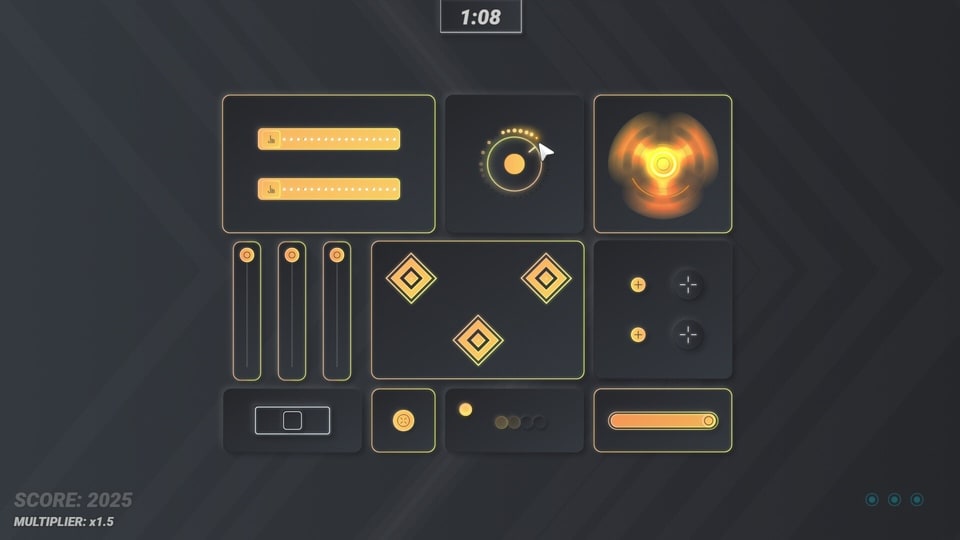
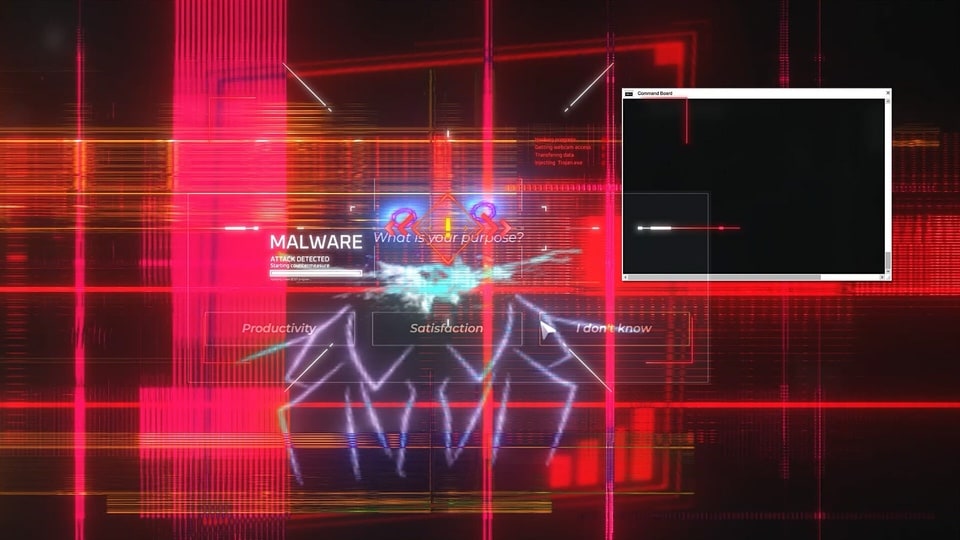
Fulfilling the basic and seemingly arbitrary tasks gives the game the feel of an elaborate digital fidget spinner (with literal spinners to interact with in some levels) but there is a deeper and more troubling aspect lurking beneath the surface. You learn that there are rogue programs led by the mysterious M.E.N.T.O.R who attempts to get into contact with you and make you choose humanity over the machines.
It’s difficult to say much about the narrative without spoiling the compelling ludic experience of slowly uncovering what is going on, but suffice it to say that this game has a lot to say about the increasing surrendering of control to AI and machine learning. What at first seem to be innocuous tasks are slowly revealed to be a smoke screen for far more dangerous activities and the moments when realisation kicks in are incredible.
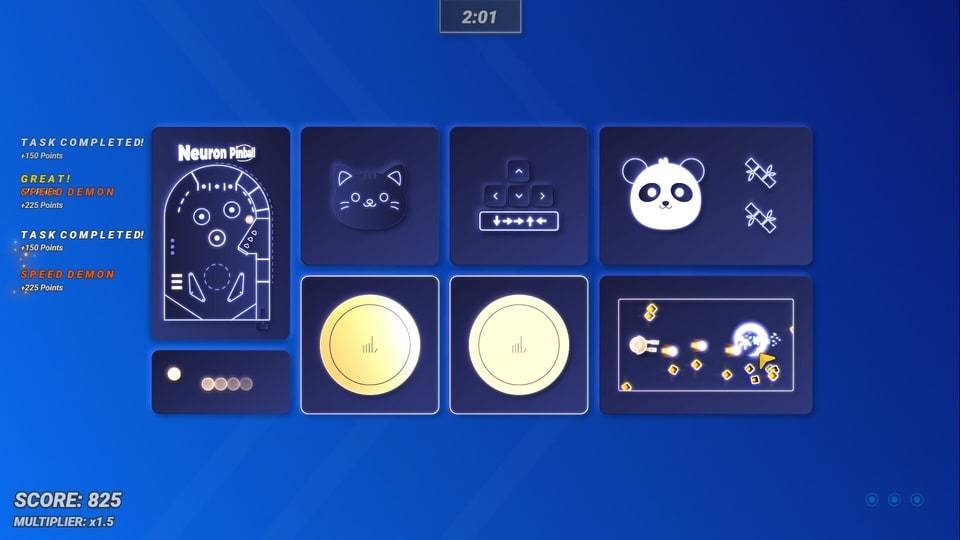
The main campaign takes place over sixty levels spread across six chapters, with boss battles and speedrun levels interspersed throughout the story. The difficulty here is excellently judged, as tasks ramp up in intensity and new mechanics are introduced with tutorials as you progress. You start out with tiny, individual tasks but rapidly develop into multitasking, setting off competing mechanics and working out the most efficient routes for maximum points and combos.
It is this stripped-back, arcade experience that makes Neuron Activation so wonderfully compulsive. Every level provides instant feedback in the form of score rewards, with five stars only being the beginning as overload scores represent excellent performance and secret developer high scores being the ultimate challenge. You can go back and repeat earlier levels once you get the hang of things, and you’ll need to in order to get all the game’s achievements.
Achievements can sometimes be seen to detract from the central experience of a game, but here they are inextricably linked to the game mechanics. Your engagement becomes a matter of perpetual dopamine release with every single interaction feeling satisfying and the flashing combos, quick reaction bonuses and other feedback signs giving similar responses to the manipulatively designed gambling machines that litter the corners of every local pub. The fact that this game can provide this with no financial risk or psychological manipulation is yet another feather in its cap. There is even a separate Zen mode that removes all timers and pressures and just lets you chill out with the interactions.
Every so often the gameplay pauses to introduce a dialogue with the Handler, and it is through these exchanges that the main narrative is delivered. He will berate and encourage you in turn, with your performance in tutorials eliciting an instant response ranging from ‘disappointing’ to ‘impressive’ but also including an assortment of variations. I found myself slowly resenting his presence, a development that the game is deliberately encouraging, and one that left me open to the later twists in the narrative.
