
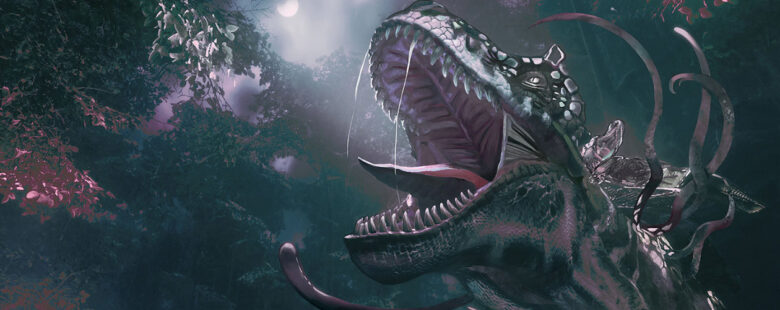
Dinosaurs are cool. I was a massive dino nerd as a kid and never really grew out of it. Now that I work in museums, I can even claim that this is legitimate research too, which is always a bonus. With this interest in mind, dinosaurs in video games have always fascinated me, from the early Jurassic Park tie-ins to more modern takes such as the recent Terrible Lizards.
Wilderdark is not just another dinosaur survival game, however, even if it may appear to be that at first glance. What we have here is almost two different games co-existing, with the other side being a fascinating ecological sim where you have to monitor the dinosaurs to complete research missions. While this dual identity sounds great, my experience was hampered due to a pretty major bug.
Wilderdark sees you playing as the sole survivor of a team sent in to discover what happened to the main research outpost on a mysterious island. To make matters more personal, you are the son of the two principal scientists and therefore have a strong interest in finding them. This island is inhabited by dinosaurs, but ones that are infested with a weird parasitic growth that may just be the secret to eliminating all illnesses. This background sets the scene for a science-fiction horror about the limits of humanity and the ways that corporations seek to exploit natural resources, but this story itself is largely absent – unless you count the text scrawl at the game’s ending, that is.
Aesthetically, Wilderdark is very distinctive. Everything is very dark (as might be expected given the name of the game) with the island seemingly in a state of perpetual night. This darkness is heightened by an almost monochrome palette that gives the scenery an uncanny, discomforting feel. It does, though, also mean that interactable objects and dangers stand out in contrast as they use vivid, almost unnaturally bright colours, with pinks and reds being visible from afar. Sound design is also highly effective, with each dinosaur having unique roars and weighted footsteps, although the alarm music that plays when you get spotted gets old very quickly.
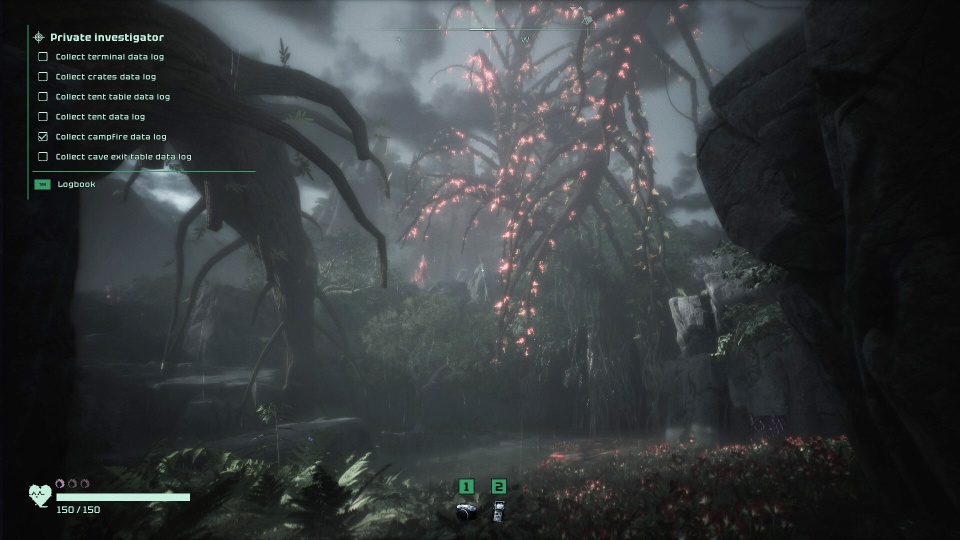
As mentioned above, gameplay mechanics sit in two distinct styles. The first is a standard horror survival game where you scavenge for resources, craft remedies, and explore the island in search of your missing parents and their team. The second aspect is more interesting and unique, and sees you use your scanner equipment to record dinosaur and plant details and behaviours whilst completing a checklist of requests from your corporate overlords.
The survival part works well and is thankfully not as arduous as can sometimes be the case. There are no hunger, thirst, or tiredness bars to manage but you do have to be careful with limited stamina for running and jumping. Perhaps most importantly there is an infection mechanic which is affected by dying on the island. Given the miraculous regenerative properties of the parasite infesting the land you are brought back after death (even if you are eaten by a T-Rex) but acquire one level of infection. After 3 deaths you are fully taken over and the island starts to react differently to you. This is a neat effect and can actually make navigating some areas easier but will lock you out of some achievements. Fortunately, if you fully explore and engage with the notes and messages you find you’ll be able to craft palliative inhalers and even a full antidote eventually.
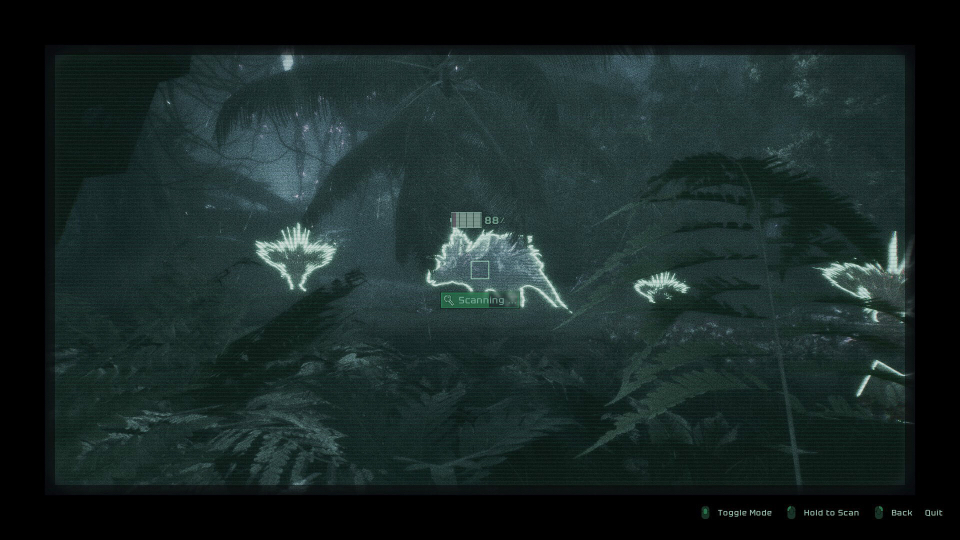
Dinosaurs are super aggressive and your main approach is to stay hidden or run away. Again, as you get later in the game you can craft sleep grenades or repellents to offer some protection – or allow you to get close enough to gather samples. This is the second part of the game, but one that I was unable to engage with in my main playthrough, as the missions bugged out very early on and a resource that I had collected and scanned didn’t trigger the completion and so no later ones unlocked. This was a major issue in terms of the game as a whole, but it did mean that I could focus on the central story and work to find my parents without getting sidetracked by research tasks.
Exploring the island requires you to find several key items to access the different biomes and areas, with a rebreather and climbing gear being the most important. There are clear clues on the in-game map to help find these, but you do need to explore in order to uncover the details. Speedrunning the game just to complete the central story path could be done very quickly, but this would be missing much of the atmosphere and point in a first playthrough.
