Few peripheral makers are able to instantly grab have my attention, but when it comes to Nacon, you have to take notice. Whether it’s the RIG lineup of headsets, the Daija range of fightsticks or the steadily growing array of gaming controllers, Nacon can be relied on for quality gear. That is, once again, apparent in the new Revolution 5 Unlimited pro controller, arriving in all its PS5-edition glory. If you’re looking for one of the best pro controllers you can buy, you’re in the right place.
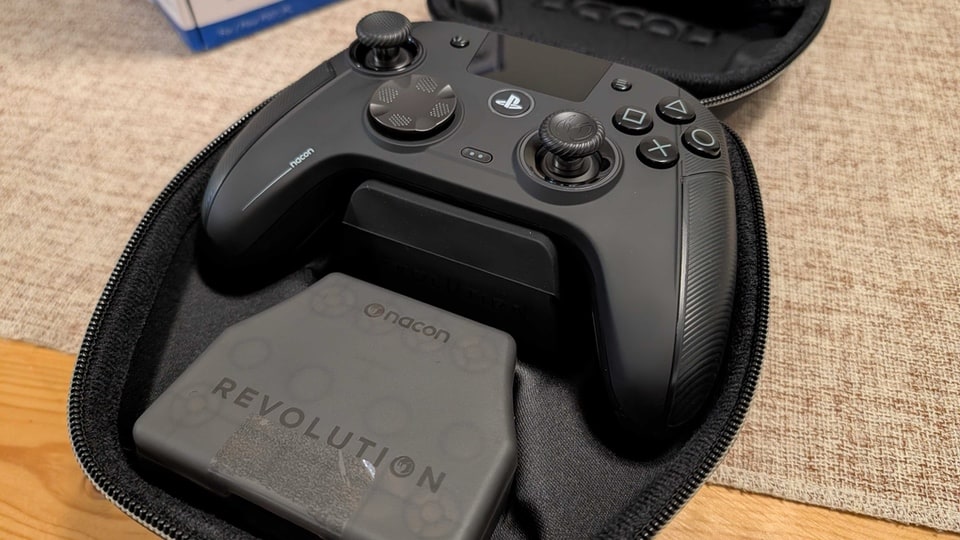
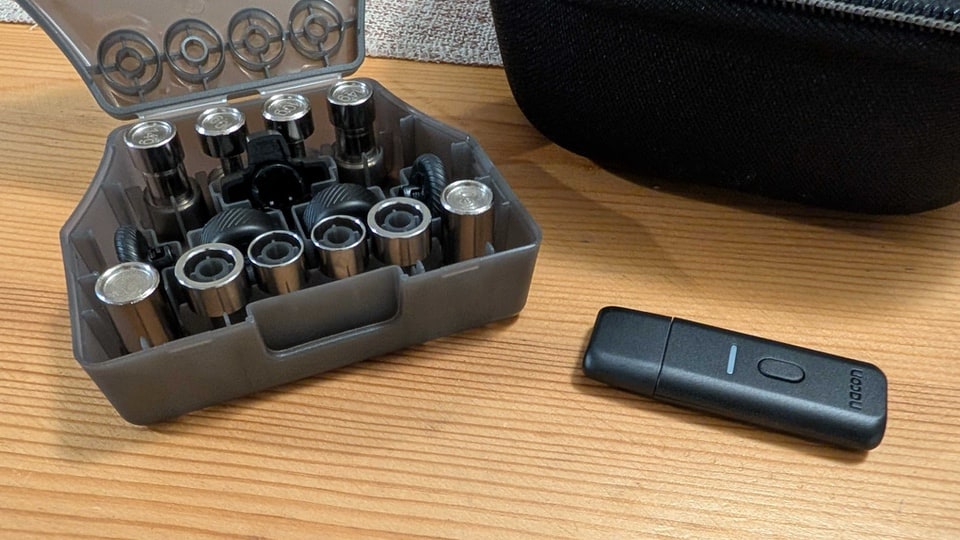
As feature lists go, the Revolution 5 Unlimited boasts arguably everything you could want from a pro controller. There’s a wireless connection via its 2.4 Ghz dongle, or a wired mode that boasts a mere 1ms latency when playing on PC, an OLED information screen for on-the-fly tuning, ultra-precise TMR analogue sticks, gyro controls, micro-switched inputs, trigger lockouts, six additional programmable inputs, and a bevy of customisable elements including stick toppers, alternate D-pad and switchable weights. Oh, and a hard case and a charging dock are also included for your £180.
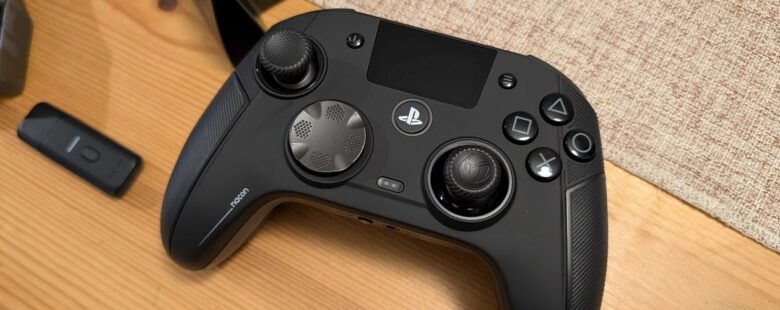
Visually, the Revolution 5 Unlimited initially keeps things subdued, with an all-black colour scheme, mixing soft-touch plastics with grippy rubberised textures around the controller arms. It’s the kind of controller that feels powerful and premium from the moment you pick it up, though you can tailor the weight with the tiny dumbbells that fit into the hidden slots in the arms. Without them, it’s surprisingly light, without losing any solidity, and that level of customisation should please the most ardent competitive player.
Bringing some visual pizzazz are the OLED information screen in the centre of the body, and RGB lighting around the PlayStation logo and the right thumbstick. It makes for a controller that certainly looks striking, but it still feels clean, refined and serious where some of its competitors certainly aren’t.
The dock does a relatively good job of displaying that visual appeal when it’s not in use, though when it comes to grabbing your controller, the weight of the dock doesn’t match up with the strength of the magnets that attach it, meaning you have to pry it away. It’s one of the only minor niggles with the entire package.
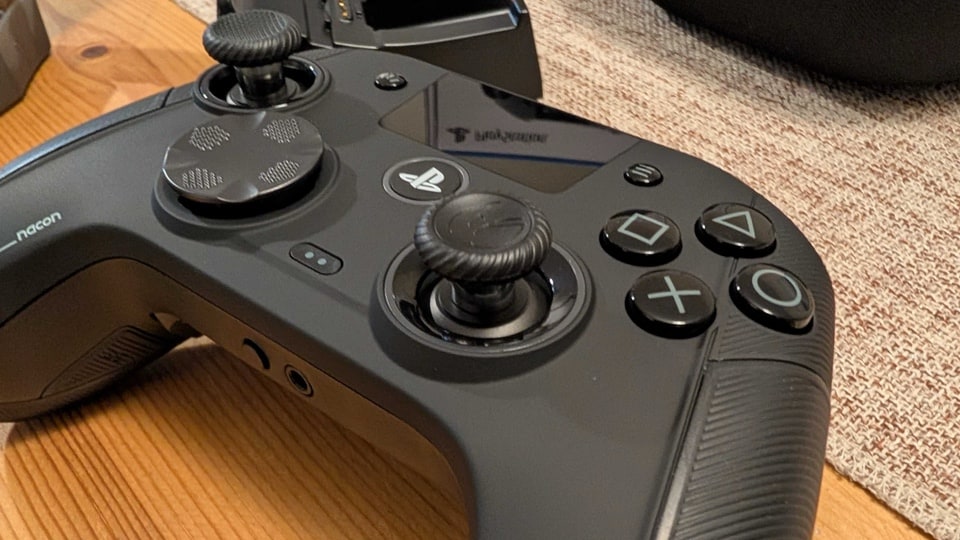
The key addition in the R5U over its Xbox-centric predecessor, the Revolution X Unlimited, is the upgrade to TMR sticks from Hall Effect. This means that the R5U is even more precise, while retaining the Hall Effect’s frictionless longevity while gaining what’s touted as being a more ‘potentiometer-like’ feel. Whatever the case, these analogue sticks feel fantastic to use.
There is still a potential dealbreaker with the sticks, as the Revolution 5 Unlimited features an asymmetrical stick orientation. While that’s my much preferred layout and I can jump back and forth quite happily, you might recoil in revulsion at the prospect. There’s also a fairly standard face button configuration, though there’s no touchpad, simply an extra face button to replace its clickable function. I can’t remember the last time I used the touch surface of a DualSense as one, but again, it’s worth noting and might make accessing a map or inventory a bit of a fuss in Sony’s first party games.
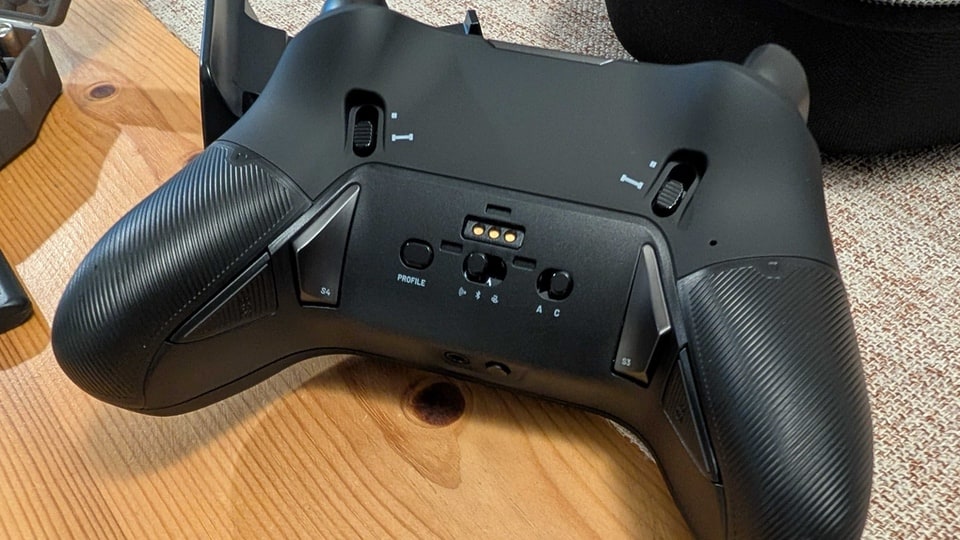
Every face button input on the R5U is micro-switched. They feel unbelievable in use, with a gloriously fast responsiveness and low travel distance, and there’s also micro-switches available in the trigger lockouts, making the R5U ideal for competitive FPS play. The trigger toggles are also easy to operate, which isn’t always the case, and you can hop back and forth between full trigger travel and reduced in seconds.
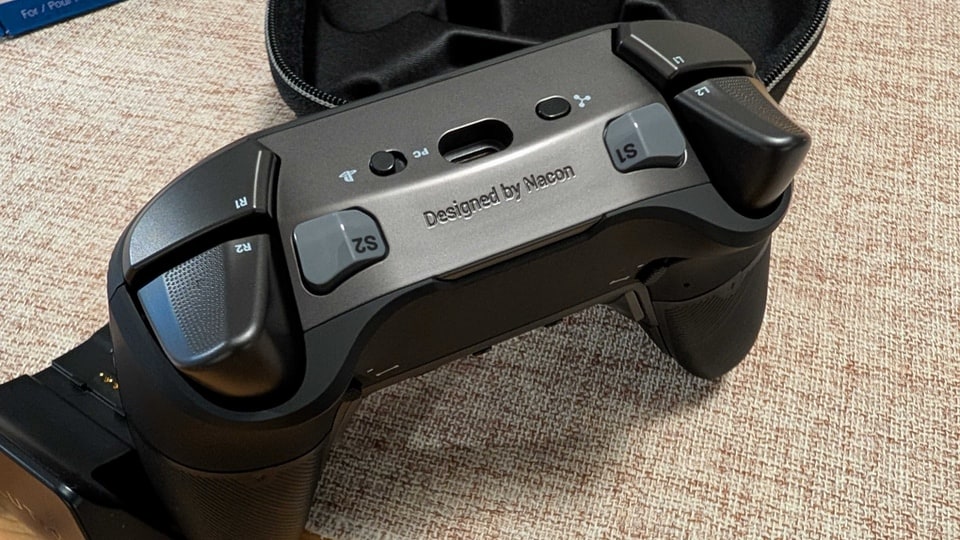
On top of everything else, the triggers are Hall Effect, utilising the magnetised tech to reduce wear, and provide excellent levels of precision. They’re flared in just the right way to ensure comfort, and that your fingers won’t simply slide off at the wrong moment, and as with everything else in the R5U package, there’s a clear sense of design precision and intention in them.
It’s a little disappointing that not every single button houses mechanical micro-switches – what do peripheral manufacturers have against L1 and R1? – but the standard buttons still feel plenty responsive when called upon, with a lovely firmness and balanced response across the length of the shoulder buttons. In terms of overall button feel, I don’t think you can beat the Nacon R5U, and the pro buttons on the underside sit very naturally beneath my fingers, where some don’t.
The OLED screen gives you instant access to the R5U’s internal workings, via the button on the top of the controller body. From here you can alter your audio setup, whether utilising a paired Bluetooth device and funnelling it through the R5U, or using the 3.5mm wired connection. You can then mess around with both TMR sticks, altering deadzones, response curves or amping up the sensitivity if you want, as well as sort out all your button mapping. It’s wholly intuitive and clear, making changing settings a doddle, and avoiding the need for the separate app, keeping you in the game for longer.
Sony really do like to make it harder for everyone else when it comes to PS5 controllers, and the key limitation is the lack of rumble or haptics. Now, the R5U has rumble, like any good controller should, but it only functions when you’re playing on PC. It doesn’t work when you’ve got it attached to a PS5, thanks to Sony’s mean streak with proprietary controller tech, and that could well be the dealbreaker. If you’re a PC player, then you won’t care at all, and you’ll never know the difference.
Now, I’d argue that the R5U is good enough in pretty much every other area, that I can live without rumble, not least when I’m concentrating on a round of Overwatch, but it’s something you need to go into with eyes wide open. In fairness, the only way you can get a ‘pro’ experience while retaining the haptics is to upgrade and customise a standard DualSense, or opt for Sony’s own DualSense Edge Pro Controller.
While there’s plenty of competition in this premium price bracket on PC, there’s very little that truly comes close on PS5. I do think the real question does lie in whether you need haptics or not, and if so, you can’t go any further than the DualSense Edge. Personally, I think the Revolution 5 Unlimited has it beat for ergonomics, build quality and features, but it has that one Sony exclusive feature that some players won’t be able to do without. If you’re on PC, I’d definitely weigh this against the Steelseries Aeon Plus, especially if you like the ergonomics of the standard Xbox controller, but for me, the R5U beats it with the inclusion of TMR sticks.