
It’s been just over a year since Inkulinati first went into Early Access, and the time since has been well spent with continual improvements and additions to make the full release a real strategy treat. The main concept – turn based strategy taking place on medieval manuscripts – remains as fun as it is distinctive and the depth of approaches and options elevate it even more. While it is the iconic manuscript characters that take centre stage, it is the balancing and challenge that will have you coming back for more.
Inkulinati is clearly more than just an aesthetic attached to a game, but that aesthetic is so perfectly pitched at my special interests that it feels more targeted than a Facebook advert strapped to a crossbow bolt fired by a particularly accurate dog person. The myriad units and characters of Inkulinati almost all come from actual medieval manuscripts and offer a bestiary of weird and wonderful delights. The main exception is the utterly inspired tie-in with Obsidian’s Pentiment, which sees that game’s main character, Andreas, becoming a playable choice. This visual approach is complemented by a soundtrack of medieval-inspired music that matches the vibe without ever really standing out.
The visuals are clearly authentic to their medieval sources, but they also work well in a modern context. As well as being suitably odd, each unit has a distinctive visual appearance that is combined with team colours to make the battlefield easy to read. Environments are also well designed, and the flat plane means that there is never any issue with visibility. That being said, the UI does feel a little cluttered on console, but that is mostly a personal preference, as I didn’t notice it as much when playing the PC version. Much of the game is centred around menus and icons so a certain amount of visual clutter is inevitable.
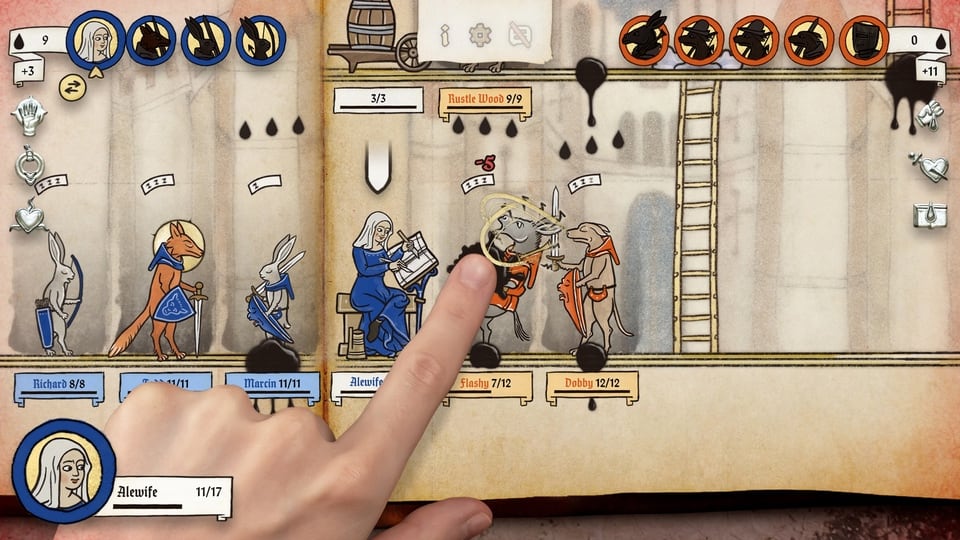
Having played the earlier release on PC (albeit on Steam Deck), I was intrigued to see how well the gameplay held up on console, and I’m pleased to report that everything is solid in this regard, even if analogue sticks lack the immediacy and accuracy of mouse or touch controls. Shortcuts make switching between units and abilities quick and easy, while occasional mistakes were almost entirely my own fault. I did encounter a black screen bug when trying to repeat one particularly challenging level in the training academy but performance was stable apart from that.
Alongside a main campaign, or Journey mode, Inkulinati offers up multiplayer and the aforementioned Academy. While not essential to progress, the Academy is well worth exploring as it explains a host of features from the basic to the more involved. It is nice that it doesn’t force you to play through this but I’d recommend doing so even if you played the demo as there have been a lot of extra additions.
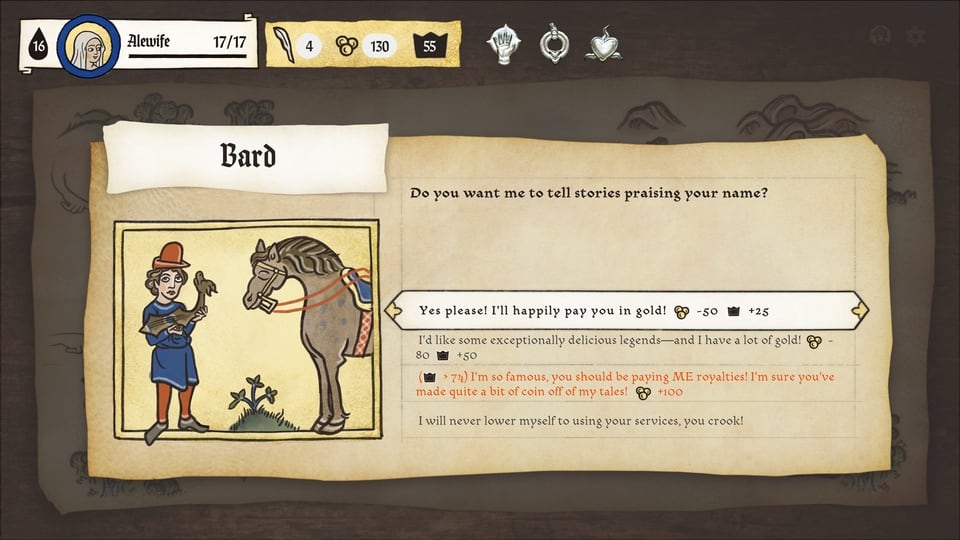
The main meat of the game is the Journey, a campaign that sees your Tiny (the scribe character you control) set out to confront Death in an effort to bring his Master back to life. This seemingly serious storyline is presented in a spectacularly irreverent fashion with echoes of Monty Python and lots of silliness. These influences can be seen through the characters themselves, but also through the commentary scribed onto the manuscript as you play through a main battle. Progressing through the campaign involves fights against other Tinies across a range of levels but also battles with beasts and narrative choices that affect your character development.
Battles take place on a flat plane representing the manuscript and all actions are depicted through a visible hand and quill. This is a small factor, perhaps, but just makes the whole game feel more cohesive. As you progress you’ll encounter battlefields with multiple levels and must manoeuvre around ladders, gates, and other obstacles. Such positional awareness goes hand in hand with choosing the best units to deploy and then actually succeeding in combat to produce a complex but accessible strategy game that has a deceptive amount of depth.

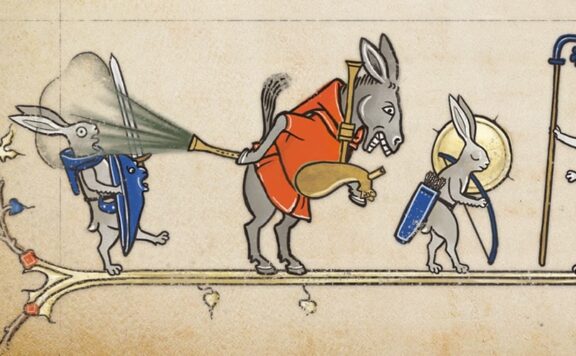
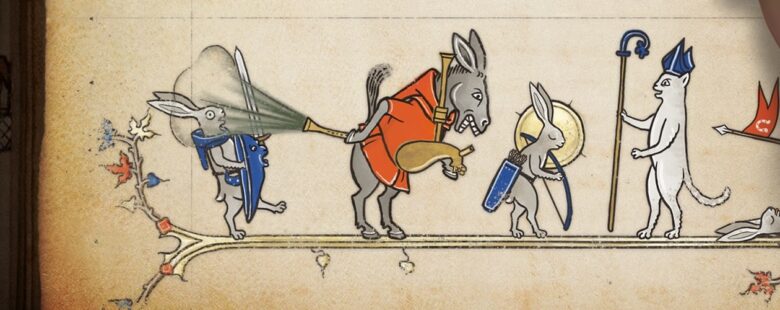
The units are the obvious stars of the show here, with the infamous farting donkey bards being the most celebrated. Even common troops have plenty of character, with different animal races ranging from foxes and dogs to devils and rabbits. Most races have basic melee, spear, and bow variants with more powerful special units available for extra ink (the resource used to summon units). Unlike many strategy games where it can become easy to stick with a set of units and not experiment, Inkulinati has a boredom mechanic whereby frequently summoned units become more expensive. This is an effective way to encourage more variety, and fortunately you’ll unlock extra units as you work through the campaign.
Alongside your chosen units, each Tiny has their own set of skills and abilities, with these being the main focus of main story battles against them. As an example, epic poet Dante brings his experience of the Inferno to bear with immunity from fire and an army made up of devils and demons. This sense of character makes fighting against different foes feel fresh and also offers up different strategic challenges.