

The Division: Resurgence feels like a thoroughly appropriate title for where this series is right now. Having marked its 10th anniversary this month, with new DLC and events coming to The Division 2, and with The Division 3 still quietly in development, I’ve found myself thinking about tumbling back into this tactical looter shooter series once more. What I hadn’t really considered (prior to Resurgence review access dropping into my inbox) was doing so on mobile.
Resurgence plants itself in an enticing position for lapsed fans of The Division. The game is for smartphone and tablet, but it promises a full-fat take on The Division’s cover shooting and looting, with a lengthy campaign on day one and the allure of the Dark Zone awaiting you too. There’s also the fact that it’s returning to a snowy New York City. Resurgence casts you as a first-wave Division agent who’s fighting the good fight in the early days of the city’s descent into chaos, only to be knocked into a coma and miss the turning point when the rest of the first wave turns bad, and the second wave is called in. So yes, you’re a first-wave agent, but after the prologue, you wake up with the story of the first game having run its course, and new threats emerging.
The first thing that The Division: Resurgence gets right is matching the gameplay of the console and PC series. There’s generally intuitive tap and swiping controls if you’re playing with touchscreen, with movement on the left side, aiming and shooting combined on the right, and then defined touch buttons for ability use, hurdling scenery, and more. There’s just enough automation and assistance here for taking and moving between cover, which can be customised to your tastes, and while automatic weapons are a bit of spray and pray as they start shooting as soon as you aim, I really liked the way that sniper rifles worked by first aiming down sights and then firing as you release.
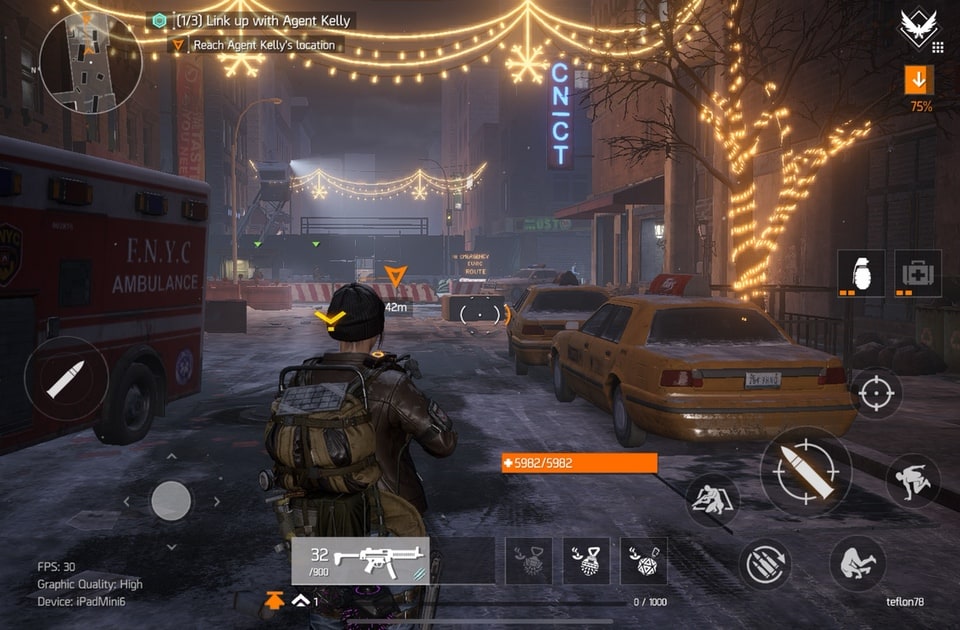
It wasn’t long, though, before I grabbed a gamepad to play instead. This is just more natural and fluid to me, much more closely aligned with the console experience in how it plays, though there are some awkward rough edges associated with it. The moment-to-moment gameplay feels good, but menu navigation with a gamepad relies on a Destiny-like cursor, there’s an inability to D-pad between dialogue buttons, and further edge cases that aren’t catered to. In general, you can just revert to tapping for these rough patches, and this does truthfully make the convoluted inventory management and menu navigation much quicker
The core loop of The Division is… well, it’s resurgent in this game. After the linear prologue, you’re presented with an open world slice of Manhattan to explore (basically the western half of the map you had in the original game), and are led to different areas by a string of main missions. Side missions also crop up as you find and unlock safe houses, and there’s further dynamic events and missions littering the map to let you take on the gangs and goons that still run rampant.
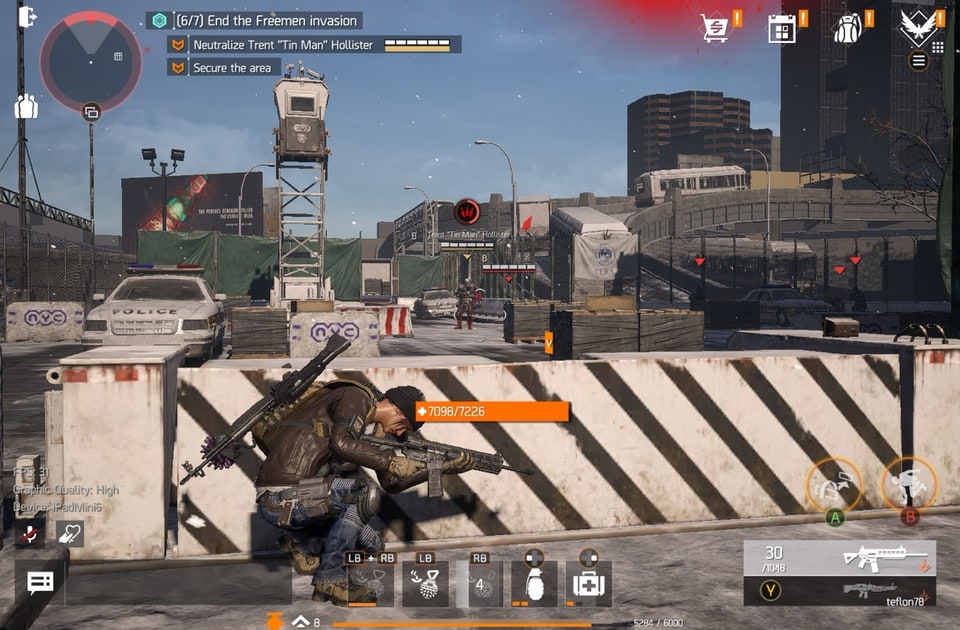
In typical looter shooter fashion, enemies are tougher or easier depending on their level, as opposed to how they look, so a basic level 17 gang member in the streets will take full clips of fully automatic AR fire to take down unless you’re several levels higher than them. On top of that, there’s then purple health bar enemies, and gold for bosses and elite enemies. The Raiders, Rikers and Cleaners all return, but with the Last Man Battalion no longer a thing, the Freemen are a new faction, turning up with thick metal plates of armour like a bunch of second-rate Iron Man cosplayers.
The problem is that the story never really gets out of first gear. You help a fledgling community project find its footing, you help them build a civilian militia, and stave off these local gangs and groups who just love to constantly kidnap people… and that’s about it for the game at launch. It’s all so small, and yet the back half of the story drags this out too much by level gating each mission, meaning that you need to then grind through daily missions, re-run previous missions and take on world events and faction nests (in the same three rotating maps) to level up – at least you can matchmake and sometimes get lucky to skip half a mission. And then that next story mission? It might just be to go and scrounge some pharmacies for bandages, or to complete a couple of world event fights. Heck, at one point, you’re gathering fireworks for a party, which feels more like a seasonal side event than a serious mission from a serious tactical shooter.
You have five classes to choose from, each with two ability sets and roles for playing in co-op. You’re going through the same routine of grabbing better guns and gear, going through green, blue, purple and higher colour tiers. Within that, you need to regularly upgrade or trade up to new items to increase your overall power rating to match the task you face.
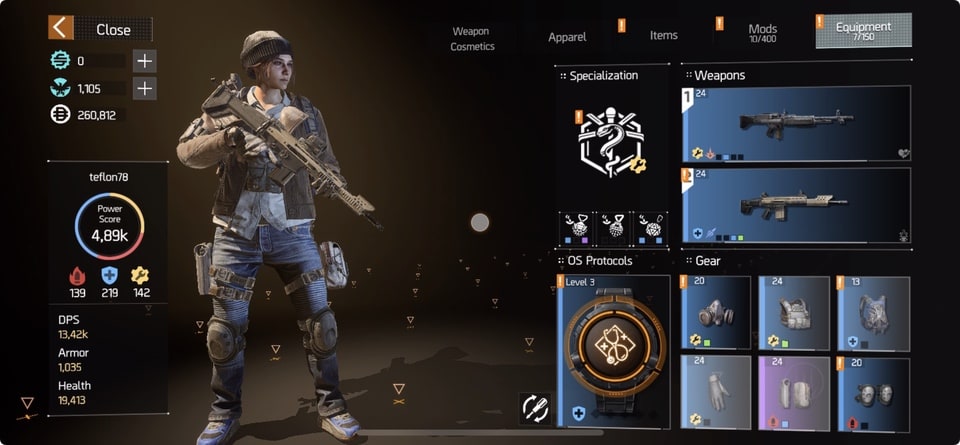
On the surface level, there’s two guns and six gear items that determine this, but you then have to attach tiered mods to your equipment, level those up as well, unlock ability boosters and your SHD rank as well. The progression systems are just all over the place, and it becomes a fog of frustratingly tapping around different places to find what you’re looking for. This is tedious well before the endgame, where you’ll by trying to find the grouped gear to give specific buffs and find the synergies between class, role and everything you’re carrying.
That all makes it feel like a stereotypical mobile game, and so too can the technical cuts made to squish this down to mobile. Ubisoft has recreated roughly half the original game’s version of New York, right down to the placement of abandoned cars, buses, trucks, and other road detritus. You’ve still got the Dark Zone, there’s a new PvP mode, a solo dungeon experience, and all of the missions are bookended by cutscenes. All of this has been rebuilt within Unreal Engine and with an impressively small install size that’s under 10GB.
However, I would say that a little something is lost in the shift from Massive’s in-house Snowdrop engine to Unreal, compounded by needing to scale to older phones and tablets that often have very little RAM. Many parts of the game are nicely detailed, but lighting comes off as fairly flat, there’s a lot of more generic-looking buildings, there’s canned animations and dialogue only where it’s really necessary, and there’s just so much noticeable pop-in, obvious enemy spawns, and distant buildings being shrouded in mist. It’s a decent counterpart to the original game, but as the fidelity has been pared back, it’s lost some of the atmosphere, and there’s some rather uncharitable comparisons that could be made.

Some of that will be on the devices I’ve been using. I’ve been mostly playing on an iPad Mini 6, with a little less on my more cramped iPhone 13 Mini – both using variants of the A15 Bionic SOC – and while these would have been towards the pointy end of mobile performance around The Division: Resurgence’s 2022 announcement, they’re now almost half a decade old. Both of them are able to play with the High preset (just Very High is above it), Medium resolution, and have a very steady 30fps performance. Pushing for the 45fps target drops graphics quality and resolution down a tier, while the highest settings are locked off from use for me.