If I had a pound for each Mega Drive shmup released in the past year I’d have two pounds, which isn’t a lot but it’s funny that it’s happened twice. Last year saw the release of Earthion, a much anticipated side-scrolling shooter originally designed for 16-bit systems and then ported to modern formats, and now we have ZPF following the same path.
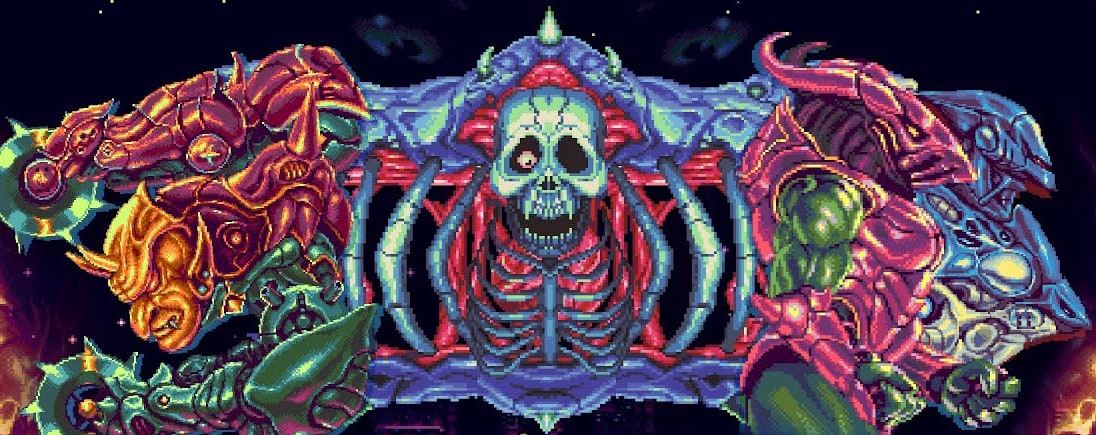
ZPF initially sounds like a new file compression format or file system rather than a video game, though there doesn’t seem to be an acronym at play here. Naming aside, the game promises a mixture of heavy metal aesthetics and classic side-scrolling shooting with a bright and colourful aesthetic and a range of environments. I’ll be honest, I didn’t really “get” the heavy metal part, as the soundtrack is authentic Mega Drive rather than guitars, and a lot of the levels are more pastel than grimdark.
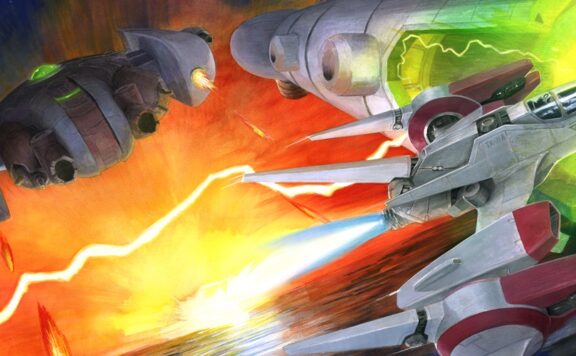
There are three sets of two levels, with a final one locked behind completing these in any order. Each set is based around a different environment and the three ships you can choose from that match these themes. A powerful but large knight class, a flexible Gladius and a futuristic Golden match up with fantasy, urban, and science fiction themed levels with lots of enemies and larger mid and end of level bosses. Finishing the first unlocks the next, but losing all your lives resets all progress with no continues unless you buy them from the in-game shop.
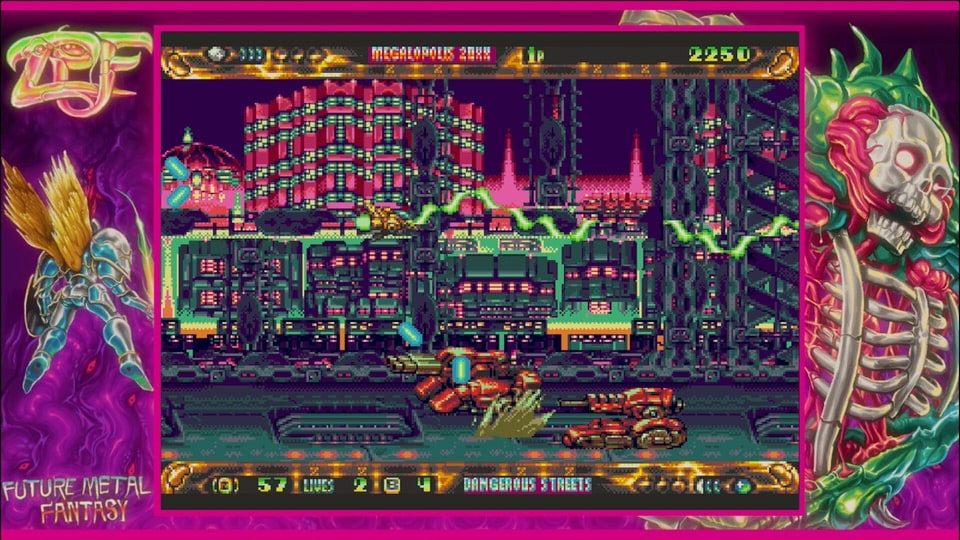
The shop is available before each level, allowing you to purchase weapon upgrades, extra lives, expensive continues and even hints on how to best defeat the bosses. The latter is pretty pointless outside of a related achievement, however, as bosses are one of the weakest parts of the game. There is little in the way of tactics or strategy required other than avoiding enemy fire and shooting weakpoints on larger foes.
Each ship variety has a different ranged and melee attack, with the latter being powerful but risky as you need to get up close with enemies. The Knight has a narrow beam, the Gladius a triple split shot, and the Golden a powerful laser. These can all be upgraded as you progress through the levels but switching ships will reset the upgrades – a slightly frustrating option as seeing the game’s true ending requires you to match the ship to the correct environment and progress without taking damage to unlock secret bosses and paths.
Not to put too fine a point on it, ZPF is hard. The very limited lives and lack of continues make for a real challenge, and one that is exacerbated by the slightly unwieldy controls and unclear hit box of the player ships. I made decent progress once I swapped to an arcade stick rather than keys or controller, but even then there were a lot of deaths that felt unfair rather than due to my own mistakes (of which there were plenty more!). This is obviously par for the course in this genre and with no difficulty options or practice modes there will inevitably be a lot of repetition involved in making significant progress. That being said, the fact that you can choose freely between the three sets of two stages does give some variation.
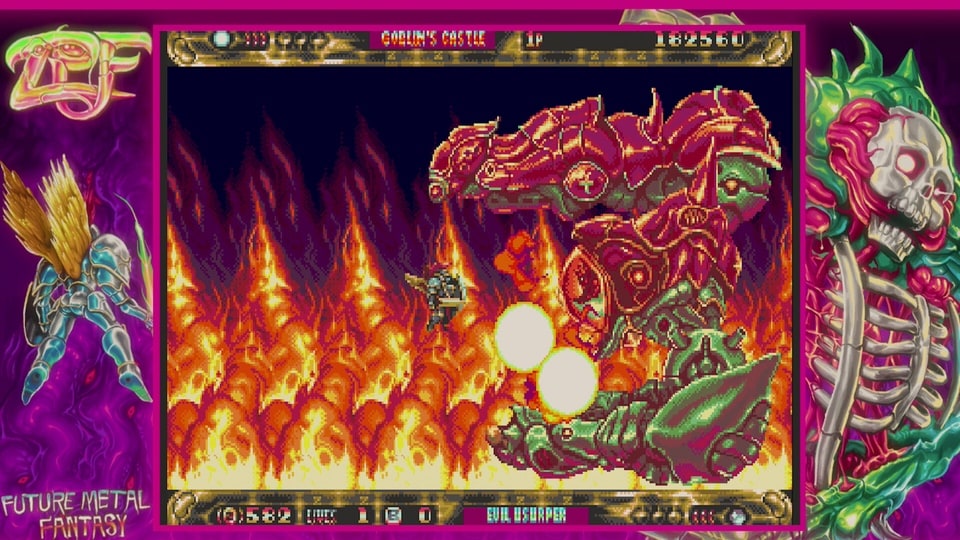
Most enemies are simple to defeat with very little in the way of complex challenges aside from the occasional bullet hell section if you don’t defeat foes quickly enough. The garish colour scheme does sometimes result in small bullets being difficult to spot and there are some trial and error parts where enemy ships come from the left of the screen. Boss attacks are larger in scale but pattern recognition is still the name of the game.
Unlike the best games in the genre, there is relatively little variety on offer here, and there are limited upgrades available for the weapons. Compared to the strategic aspects of many other titles this makes ZPF feel dated in ways aside from the 16-bit development. The limited lives and clunky controls make the difficulty seem artificially increased at times too.