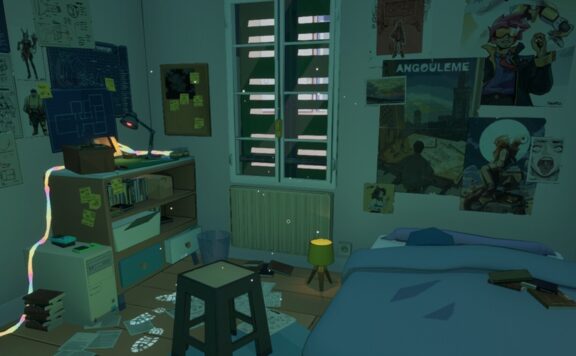
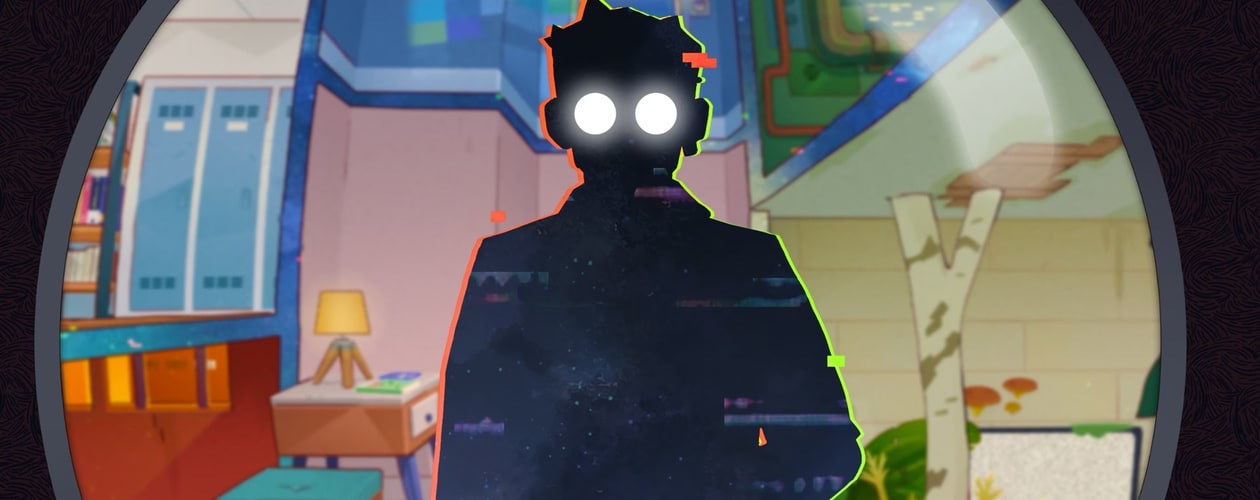

For those of us of a certain age, the doorway effect is a far too familiar feeling. This is the phenomenon of going into a room and immediately forgetting why we are there. The explanation for this is to do with the brain seeing the doorway as a threshold to effectively clear the cache of short term and unnecessary thoughts. Imagine that concept taken to a whole new level, though, as you find your flatmate has lost themselves entirely in your apartment. What starts out as a weird and frankly unfeasible situation quickly escalates into a quantum journey that takes you through alternate universes, timelines, and more as you solve increasingly complex puzzles to finally find Fael.
My initial reaction to Looking for Fael was that it was going to be a very similar experience to last year’s sleeper hit, Blue Prince. However, although there are some shared themes in terms of exploring a mysterious building, Fael is far more focused on the puzzle side of things and doesn’t share the randomised, run-based aspects that make Blue Prince so uniquely addictive. This isn’t to say that Fael isn’t good, but more a case of managing expectations. In terms of progression Fael is closer to Portal, as your understanding of mechanics and the possibilities of traversal become expanded as you go along.
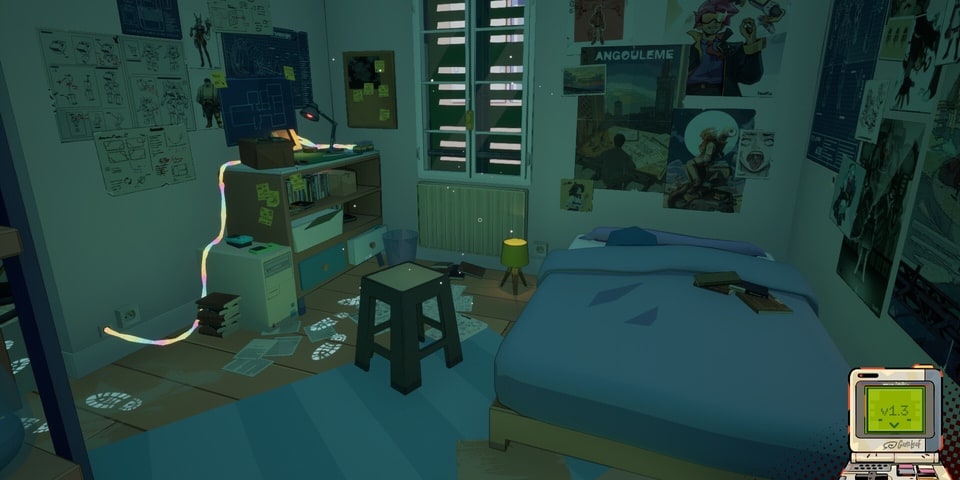
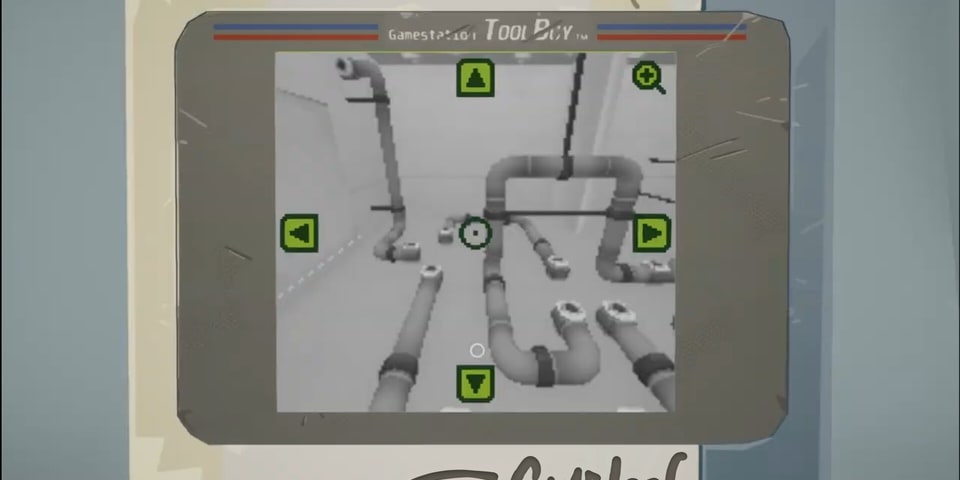
Your journey begins with a mysterious voicemail pleading for you to find Fael in your apartment. This isn’t some game of hide and seek gone wrong, however, as you soon discover that Fael has been messing with quantum experiments that he couldn’t control. Your investigations move from relatively simple code breaking to unlock doors to more extensive puzzles that transcend time and space. To help you succeed you are provided with a handheld device somewhere between a Game Boy and a PDA which you upgrade and improve to take on more challenging puzzles and open up new areas.
Interacting with a lock begins a Tetris-inspired minigame in which you have to use a limited choice of pieces to solve various problems, with early ones merely requiring you to fit them together and later ones adding colour and positioning restrictions to complicate matters. There are even a selection of optional puzzles for achievements if you want to really challenge yourself with these. I wouldn’t say that this minigame was substantial enough to stand alone but it does offer a nice distraction between the more elaborate environmental puzzles.
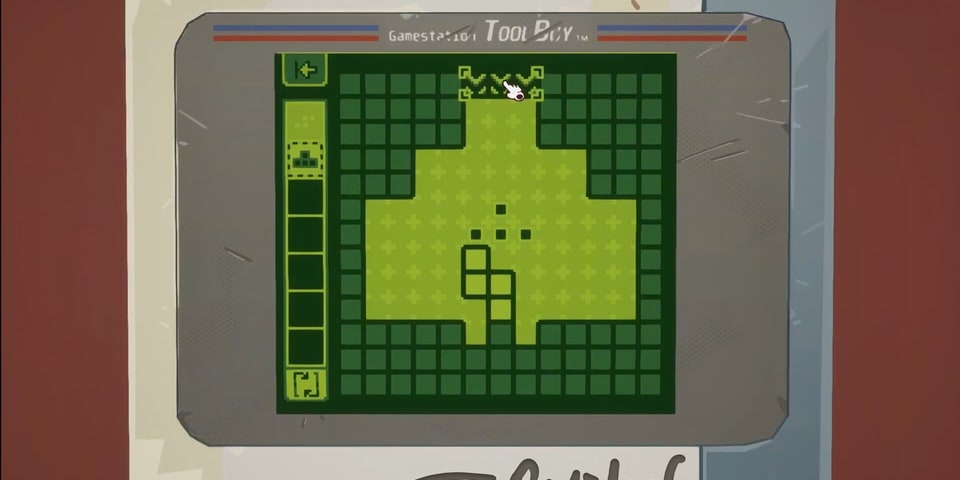
As you get further into the complex layer of mazes and alternative versions of the flat, you’ll pick up that the tetromino shapes in the minigame have a significance in the main narrative too. Indeed the very final puzzle section in the game was incredibly satisfying in the way that it tied together various threads from what had transpired before. That being said, there were some uneven parts throughout the game which led my Blue Prince obsessed 14-year-old to opine that Looking for Fael was ‘more puzzles than fun’.
Perhaps the clearest example of this unevenness was a late-game puzzle involving piloting a drone around a maze and activating switches. I had initially missed the singular panel hidden away in a corner that unlocked the ability to control these drones so spent longer than I’d like to admit wandering around aimlessly which perhaps coloured my experience more negatively but the puzzle itself felt far too drawn out and unintuitive with lots of potential to mess things up.
This might sound like I didn’t enjoy the game but that isn’t the case. Looking for Fael is a really well designed puzzle experience that offers lots of brain-scratching moments. It is the sort of game that is far better suited to having on the back burner alongside more action-orientated titles, allowing you the time to reflect on a puzzle before going back and trying it again. Rushing through for a review deadline is often the worst way to play a game that requires thought and contemplation and so I always make sure I contextualise my own experience through the lens of a normal player.