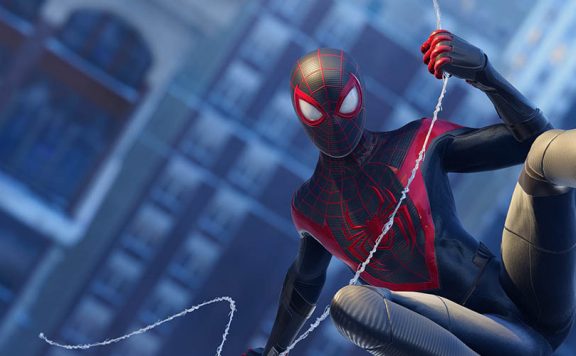

With the release of Batman: Arkham Origins rapidly approaching, we were able to get some insight into where the game is taking Batman’s story and how it is expanding upon the gameplay from the first two Arkham games.
As part of this, I sat down to chat with Ben Mattes, Senior Producer at WB Games Montreal, about the game, from origin stories to helping people learn to best use Batman’s varied skills and even the multiplayer side of the title.
TSA: As a prequel to the first two Arkham games, when have you set Arkham Origins and why did you pick that time period?
Ben Mattes: Arkham Origins is set in Year Two, so it’s an early career Batman story. We chose his early career and Year Two in particular because we feel that it gives us an opportunity to tell the story of Batman changing, of Batman growing as a result of the events that are taking place on the night of this game.
Over the course of this growth, it gives us an opportunity to drive that through the establishing and building of some of the key relationships in Batman canon, which could be argued are then key relationships in pop culture as well. So we feel like we’ve created a story that is simple to grasp, with lost of twists yet to be exposed, which we hope will be remembered and stand the test of time as an early Batman story you must experience. Because we felt we had a story to tell in that space, we were absolutely drawn to the early years.
TSA: Have you found whilst developing this that you’re living in the shadow of what Rocksteady have done?
Ben: Yes, and I wouldn’t have expected otherwise! Arkham Asylum and Arkham City are two of the top rated games of all time, and our goal isn’t to create a situation where it’s like, “Rocksteady who?” by any stretch of the imagination. Our goal is to create a game that is worthy of the Arkham franchise, that is worthy of the name Arkham, and that stands on its own two feet as a great Batman: Arkham action adventure game that will appeal to hopefully millions of players.
Rocksteady has been a great partner for us, in terms of giving us access to all of their source code and toolsets and data, even helping us debug stuff. They’ve given us the space to create a game that was our own vision, that was our ideas and our story for what an early career Batman game should be.
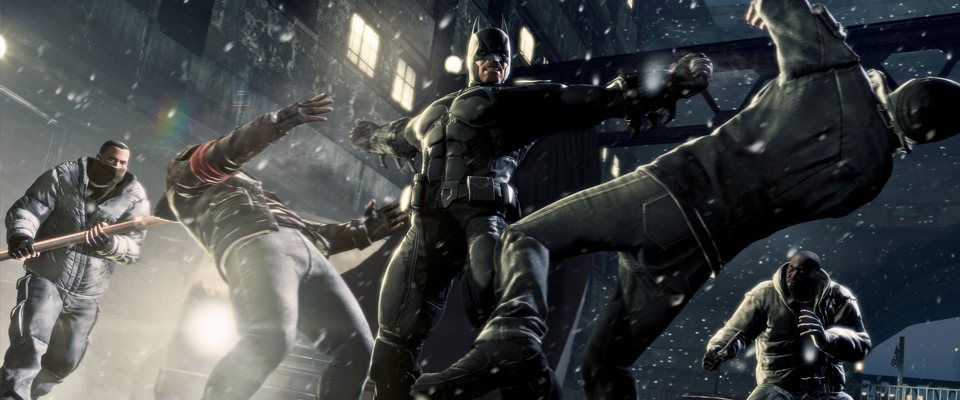
TSA: Coming to the core gameplay, what efforts have you made to expand or improve on what is, in many ways, still a best in class combat system?
Ben: Starting over was never on the cards, but iterating was and helping to expose how deep the combat system is was definitely one of our core objectives. It’s amazing to us, to this day, to see how many people finished Arkham City with only a surface layer understanding of the depths of the free flow combat system.
Hits and counters. They’d get through 90% of the game with hits and counters. They wouldn’t quick fire, they wouldn’t get into focus mode or use quick takedowns, disarm and destroys, or any of these more advanced tactics. They would be proud when they manage a 10 hit combo!
Eric Holmes, our Creative Director, has – and I think I’ve got this on my phone – a 130 hit combo, and he’s not even our best player! That’s our combat designer, who routinely hits 150 or 160!
TSA: You would kind of expect the combat designer to be good at the game!
Ben: Yes, you would wouldn’t you?
The rabbit hole goes really deep, and we want more people to understand that so they can appreciate not just the content that we’ve added onto this, but also the fantastic job that Rocksteady did and we’ve inherited. We are very happy to take any praise that we get for this and just redirected and say we couldn’t have done it if we weren’t standing on the shoulders of giants.
TSA: How do you, with regard to teaching people the depths to the combat, balance forcing people to play and encouraging them to do so?
Ben: Yeah, that’s a great question. I think the solution we’ve chosen here, and I’m not saying it’s the only solution, just the one that we’ve chosen, is to wrap that gate up in something with spectacle and entertainment value, so that people will be engaged enough that when it’s completed they don’t feel like they just did a test. Instead they feel like they just kicked Deathstroke’s ass basically. “I just defeated Deathstroke. I’m awesome! Oh, I also feel like suddenly I’m better at this game.”
The fine line between forcing and encouraging, at least for us, is how we wrap up these lessons, and we wrap them constantly in the fantasy of being Batman so you don’t feel like you’re breaking that fourth wall and are suddenly playing a connect 3 Bejeweled clone in order to upgrade your character. You are constantly, if we’ve succeeded, immersed in that fantasy of being that character and doing the things that character can do.
We have the slogan ‘What Would Batman Do?’ deeply imprinted on all of our psyches, because it drove so much of our decision making processes on this game. If we’ve done it right then the player will learn by being awesome and carry that over into the rest of the game, rather than feeling forced to do ten boring tutorials before they got the opportunity to go out and be cool.
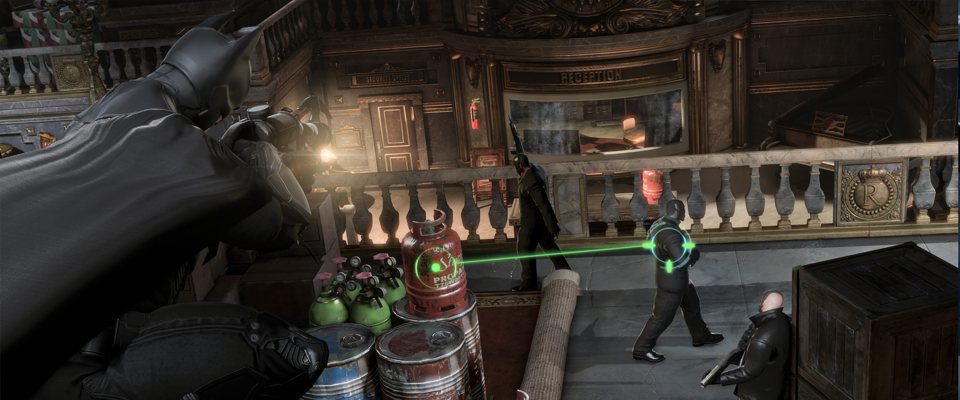
TSA: Speaking of which, Batman is touted as the world’s greatest detective. How have you tried to evolve this side of the game from where it was in Arkham City?
Ben: That fantasy is one we believe very strongly in, as another opportunity for pace breaking in a franchise that already has wonderful pacing and diversity of experiences and opportunities. So in our crime-ridden city, on a night unlike any the city has ever seen in terms of the crime wave that’s hitting it, there are crimes that have taken place that Batman could not get to in time. People died and he couldn’t get there in time to save them, but he arrives in these situations and can try and get justice by finding the perpetrator.
So we’ve created this Case Files system, where Batman can scan all of the information in a crime scene, and the example in what you’ve played today is a crashed helicopter. He can then upload this data to the Batcomputer, which will create a digital recreation of the events as they took place. It’s a supercomputer, so it’s running all these simulations and analysing all of the data and spitting back this recreation which Batman will then have displayed on his visor in an augmented reality style.
You can fast-forward and rewind through the various sequences and events of this crime scene, positioning the camera at any angle that you want and looking for those key pieces of evidence that’ll allow you to piece this puzzle together. What happened, how did it happen and ultimately who committed the crime, with that being the last thing that you’ll figure out.
So the helicopter crashed because its tail rotor hit the sign, and its tail rotor hit the sign because a bullet sheared the rear rotor off the tail. The bullet was fired from this trajectory and the only person who could fire a person from there and still manage to hit a moving helicopter is Deadshot, and Deadshot probably fired from this location, so I’m going to go and find him later
It’s a wonderful opportunity to marry interactive narrative and core Batman gameplay – navigation, fighting, gadgets, predator, etc. – into a single experience, all the while wrapped up in this fantasy of not just fighting, but being Batman and using his detective skills as well.
TSA: Do these Case Files always lead to supervillains?
Ben: No, no definitely not. There’s a variety of them; some of them intertwine with the core assassin narrative, some of them intertwine on the main gameplay path, others are related to the people coming out of the woodwork on this night, and some of them are just people in the wrong place and the wrong time. A subset of them are core path, but the vast majority of them are optional; out in the open world.
Like the crimes in progress or collectables or puzzles, or any of that other stuff. All of the Most Wanted missions are optional, and are really just there for players who want to further their fantasy.
TSA: So does this open the door to explore some more of the wide cast of supervillains which Batman meets during his career?
Ben: You’ll have to play to figure that one out. It’s hard to answer that while being careful enough!
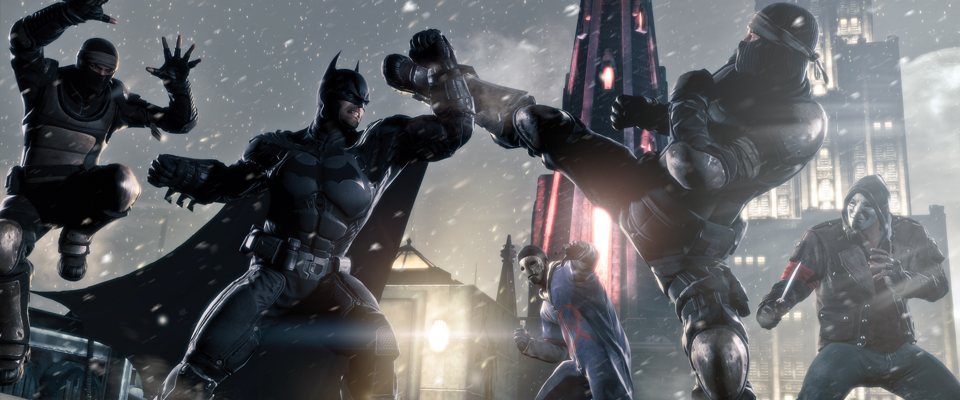
TSA: The most contentious point is the introduction of multiplayer to the game, coming from Splash Damage. How much has this affected the game, and has the Montreal team had much input in its development?
Ben: We’ve seen it from day one, and I would say that, in the same way Rocksteady gave us the freedom to do our job, we were careful to give Splash Damage the freedom to do theirs. They really own that experience.
We definitely collaborated with them for asset coordination, to make sure we could provide the Batman model or Bane model if they wanted it. We’d give them feedback on the environments to make sure there’s an allignment for that sort of thing, but what we were not doing was saying weapons need to do twice as much damage or getting in their way with that level of granularity.
It was really important for the organisation and us that the fans understand the decision to have Splash Damage do the multiplayer and Montreal do the single player was taken for them, in a lot of ways. So if they like online then here’s a bonus, but we promise that we didn’t sacrifice a single iota of bandwidth on the single player game in order to make that experience possible. If you’re the kind of person who doesn’t even have their console connected to the internet and is never going to go online regardless of what the experience is, there’s no need to worry about whether or not you’re getting a watered down single player because of this.
That said, I think people who did participate in the beta test for this have spoken quite favourably of their experience with it. Taking the invisible predator gameplay experience online in a co-operative environment, where Batman and Robin are against Joker with his minions and Bane with his minions, in a my enemy of my enemy is my enemy kind of situation. It actually works really well, and when you’re playing that with friends, the stories that you tell afterwards are wonderful.
I’ve been in rooms where people have been absolutely absorbed in it, the match ends, and they could talk for 15 minutes about like, “Remember when I was Batman, and I jumped out of the grate and broke your arm, but then the guy shot me in the back, so I turned and Bane came and… that was crazy!”
TSA: So it’s a 15 minute wait in the lobby between matches? [laughs]
Ben: Exactly, it’s just group chat for 15 minutes!
So yeah, I’m really anxious to see how people react to that when it launches. I think there’ll be some happy faces.
Thanks to Ben Mattes for taking the time to sit and talk to us about Batman: Arkham Origins. The game will hit the PS3, Xbox 360, Wii U and PC on October 25th.