

Dress it up all you like, but there’s no escaping the fact that for more than a decade developer Omega Force has continued to rehash the same blueprint used in 2000’s Dynasty Warriors 2. It goes a little like this: take one sprawling battlefield, populate it with hundreds (sometimes thousands) of troops, then drop players directly into the fray. What often ensues is hours of hacking and slashing that, despite its monotony, still has a certain appeal after all these years.
Where some games in the franchise have been regressive and lazily slapped together, last year’s Samurai Warriors 4 was a genuine step forward. Although it may not have ticked all the boxes, it did enough to revamp certain parts of the series that had become overly stale. Battles each came tagged with a shopping list of side missions and other diversions; character-swapping allowed for more diversity and quicker navigation; all playable heroes were given a secondary moveset.
All of these best bits have been clustered together once more in Samurai Warriors Chronicles 3. Available exclusively on PlayStation Vita and Nintendo 3DS, its the third in a series of handheld spin-offs, stripping elements from the latest numbered instalment and repackaging them with new systems and game modes. Before going into more depth, we’ll say this: if you’ve been eyeing up Samurai Warriors 4 on Vita, do yourself a favour and grab Chronicles 3 instead.
At its core, it’s practically the same game. From base mechanics to the selection of characters and maps, you’re getting all the same content in Samurai Warriors 4. The big difference here is how Chronicle’s story mode presents itself, allowing players to create and develop their own general. From small beginnings, you’ll bounce between factions as the Warring States period consumes feudal Japan.
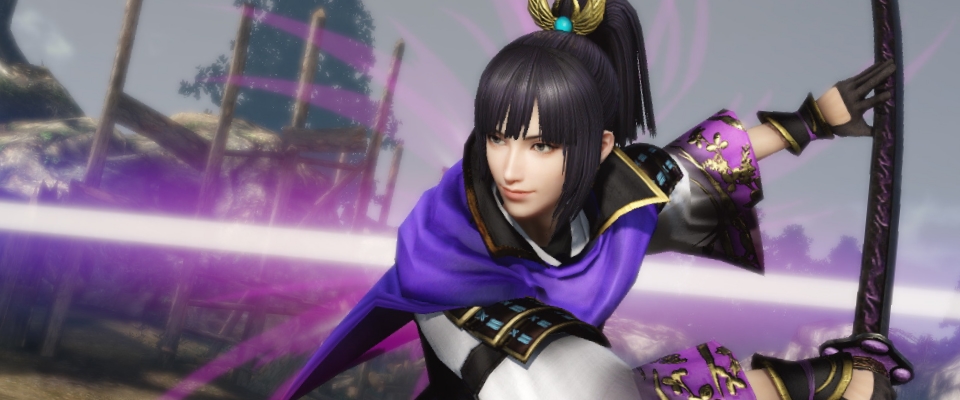
The story is much more personal than previous Samurai Warriors games, this time around. It’s conveniently structured too, allowing players to rub shoulders with some of the brighest and bravest icons from the era including Shingen Takeda, Nobunaga Oda, and the Sanada twins. Overall, it’s a much gentler way of being eased into the Samurai Warriors timeline, guided by an easy-to-follow chronology. It also helps that narrative also exists outside the cutscenes that play before and after battles, with plenty of opportunities to interact with character one on one.
The only other big change in Chronicles 3 is how the game allows you to take four characters into battle. This feature is an expansion of the two character system used in Samurai Warriors 4, letting you switch between generals in an instant, no matter where they are on the battlefield. The command menu has also been carried over, meaning that players can prompt idle allies to attack, defend, and scout any point on the map.
One of the only issues we ran into while playing Samurai Warriors 4 was the sheer scope of certain missions. Many of these set piece battles would have us traversing from one side of the map to the other and then back again. Having twice the number of generals on call certainly helps this time around, as does the inclusion of side objectives. These small quests will crop up from time to time, tasking players with taking down certain enemies, escorting allies etc. They were a nice distraction in Samurai Warriors 4 and are even more enjoyable here, giving players more to do than simply making a beeline for the enemy headquarters.
Challenge mode is yet another one of Chronicles’ innovations. Where Warriors has often featured a slew of throwaway bonus modes, this one hits the spot, putting the player under pressure as they try scrape together enough points before a timer runs down.
Although the lack of English audio is something that continues to disappoint us as we revisit the Warriors franchise, this is easily offset by just how great Chronicles 3 looks. It’s easily one of the prettiest titles currently available on PlayStation Vita and doesn’t feel like much of a downgrade from the PS4 version. Character models are finely detailed and the framerate only chugs when there’s an insane amount of action on the screen.
What’s Good:
- Refined approach to story-telling.
- Looks amazing on Vita.
- Being able to switch between four characters.
- Takes the best bits from SW 4.
What’s Bad:
- No English audio.
- Arguably a rehash of its predecessor.
Having played literally dozens of Warriors spin-offs, sequels, expansions, and ports, Samurai Warriors Chronicles 3 has perhaps been one of the most surprising. By dramatically altering its story-telling method and making a few welcome refinements, it stands out as the franchise’s best handheld instalment to date.