

The Need for Speed series has had many different forms since it first burst onto the scene more than two decades ago, but its many highs have been muddied by some very notable lows and a seemingly endless treadmill of releases. However, the rebooted, subtitle-less Need for Speed looks to put that to one side, bringing the series back after a two year break with a lot more vim and vigour.
A little while back, we spoke to Marcus Nilsson, Producer at Ghost Games, about their work on rebooting and refining what the modern Need for Speed game is all about.
TSA: With such a long history to the Need for Speed franchise, why did you feel the need to reboot the series in this fashion? Why was having just “Need for Speed” without the subtitle the right way to go?
Marcus Nilsson: Let me rephrase that and put it back to you. In the last couple of years, what would you say Need for Speed is?
TSA: Um, well it’s an arcade racer with a very open world focus that’s brought in elements from what Criterion had started to do. It’s been evolving in that direction.
Marcus: Yeah, and I could ask another guy over here and he’d give slightly different answers. You’ll get those slightly different answers when you talk about a game franchise, sure, but in Need for Speed, that was just too wide.
Some people talk about the Shift franchise, some people talk about Black Box games, some people talk about the Criterion games. When Ghost was kind of given the keys to the franchise, one of the objectives was to solidify the vision behind Need for Speed and build that from the ground up.
Rivals was the first attempt, but that was really a way for us to build up a team, get out on next gen consoles and basically prove that we were worthy, if you want. Then when we were done with that, we went to the company and we said that we recommended we take a break, because we wanted to find the core of the experience, we want to work with our teams, EA, with the fans – we started this game changer program, so we got a lot of responses back from people wanting the game – and we established the pillars.
We’ve basically started with a strategy of how we wanted to go forward, and we built the game we have today.
TSA: How big a factor was the ability to take that break for a year? We’ve seen similar concessions being made elsewhere in the industry as well, with Activision giving each team three years to make Call of Duty games now, so how important was that for you to stop and start from scratch?
Marcus: Yeah, for us that was pretty massive. It means we have the credibility within EA to actually make those decisions, and that obviously has a financial impact to the company, but even more so, I think it’s that it was just the right choice.
You know, two years ago when I was at Gamescom, we were kind of towards the end of the press conference, in the middle somewhere. Yeah, that’s great, but we had a lukewarm interest, whereas this time around at E3 and Gamescom, we were first out of the gate. It shows the company’s really behind Need for Speed, we have a much more interesting concept and there’s more depth to that concept for sure, and there’s a lot more playability to the game than what we had in the past, because we’ve known from the beginning what we’ve been building.
I think that is really what gave us the strength to sell this game to the company.
TSA: In terms of the gameplay, you do still cover a lot of bases, with five ways to play. So even though you say you’re starting with the core of what the game is, there’s still a lot of variation in there.
Marcus: Yeah, but for me Need for Speed’s about irresponsible driving on the the edge of your seat, the emotion of doing that – it’s not a sim experience – but also it’s about cars. That world of car culture is so super visceral and interesting. When you start going into it, you go, “Oh my god! There’s so much!”
A stock Porsche or a Ferrari is one thing, but then you go down to the grass roots of that, there’s so much energy and passion, and that’s what you can drag out. You talk about the Risky Devil, the Crew icon, they’re the shit when it comes to understanding what brings joy into a person’s world because of the passion for their car.
Need for Speed should be about the passion and the cars and these five different ways of playing, these five icons carry such an enormous amount of passion towards what they do, but it all revolves around the car.
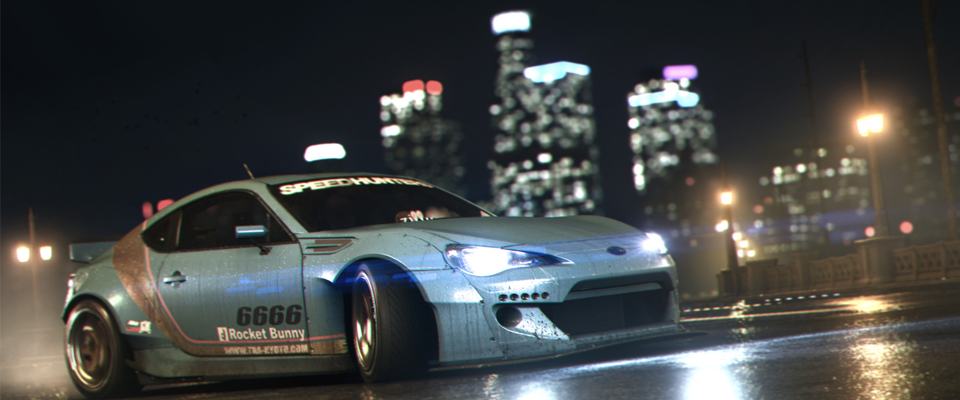
TSA: One thing that you’ve been keen to push is the blending of the real world and the game world, and I’ve seen threads of sheer astonishment at how realistic your game engine looks in certain locations. Have you been taking techniques like photogrammetry, as we’re seeing in Star Wars Battlefront, for what you’re doing?
Marcus: So, first of all, Frostbite is the thing that helps us to accomplish this, but this is the Need for Speed engine, if you want, on top of that. And the way that this came to life, I’ll be honest, was that I was called into a room one day and these magicians, as I call them, showed me a movie about some guy who was just walking around a car, and I was like, “So?” Then they pressed a button and the car disappeared, and then they put it back again, and I’m like, “What’s going on?”
There was a total disconnection in my head, because looked like it was a real car that had just disappeared and I understood that this wasn’t just swapping to a different movie. So that showed us that we can do something that is truly photorealistic, but then it was how we could best use that in the game.
That’s when we started to test it on different people and we got this jaw dropping from many of them, like we saw at E3 as well. That innovation in and of itself was what led us to having real actors and going after the real characters within this car scene.
TSA: I was a big fan of them, but the FMV cutscenes from classic games like Red Alert 2 were so incredibly cheesy, so how wary are you to avoid falling into that kind of trap?
Marcus: Well, I’ll be honest with you, that’s always a fear, right? Because we’ve all seen those and we go a bit… [faux retching]
TSA: [laughs] Oh, but they’re so good in Red Alert, just very cheesy!
Marcus: No, no, I hear you!
I think we’ve done an astonishing job with this, but that’s because we work with the best production companies, we went really detailed on the staffing… but when the first movie came back, I’m telling myself, “I need to press play, I need to press play.”
By that point, we’re all invested in it, we’d seen the tests that had kind of worked. I pressed play and I was like, “Oh, it’s not that bad,” but you start showing it to people and it actually comes together and it’s really good. The characters are strong, they all play different parts, different roles and try to pull in you directions by different means.
Spike, one of the guys in the Speed races, is kind of more goofy a little bit annoying, but you grow closer to him…
TSA: So you do have an undercurrent of humour, and it’s not all straight laced and serious?
Marcus: No, no. There’s a lot of subdued stuff in there as well, for sure.
I actually think we have the vibe and tone of this world right, and I think that if we didn’t, we’d have heard that from a lot of people asking, “What was that?” Whereas I’ve got a lot of positive feedback from the start.
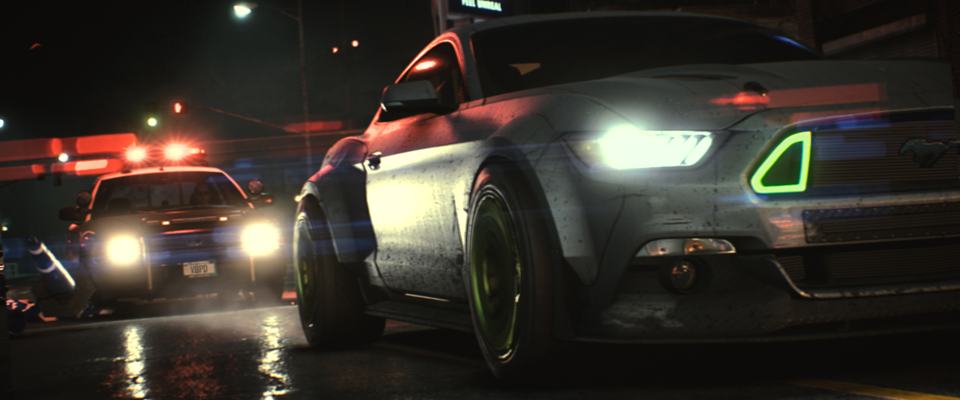
I think it’s especially exciting that within the world of car culture, these guys are pretty significant, and we will let you go all the way from talking about rumours that one person is in the city, to getting his phone number and he’ll start calling you, and eventually you’ll meet up with him, shake his hand and start driving with the guy in the car that he’s famous for. So we take you on this journey to actually meet this real guy.
TSA: I guess that’s important so they’re not just a voice that’s talking to you over the radio.
Marcus: It could have been done that way, but the narrative is not that way. People think the narrative as being cutscenes, but the narrative goes through the entire game. When you’re driving, you’ll get a message from someone or a voicemail from someone, to choosing to go see Manu instead of Spike, and having Ken Block react positively to that. So there’s a lot of choices to be made in this world which are really going to affect how people respond to you.
TSA: You have got these five different ways to play, but do you need people to play in each way, or are you completely free to just hone in on one?
Marcus: You are free to hone in and play through the Speed thread if you want to, but there’s a lot of design that has gone into the game to try to pull you in different directions. Really enticing messages and moments so that its going to be pretty tough to just stay on one.
But, again, you can choose!
TSA: The last few Need for Speed games had you heading down an ever more online and interconnected experience, like a faux MMO at times. Does this game go down the same path?
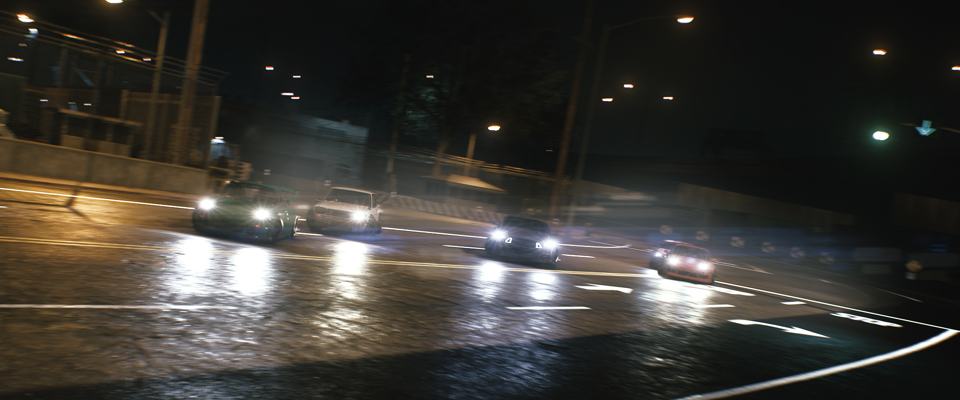
Marcus: We have, and actually Rivals was the first game where we had that; we call it the AllDrive system. Basically, you play in a seamlessly integrated game with single player, co-op, multiplayer, so you’ll be playing through the narrative, but I can come in and help you in that narrative. In Rivals I could, if you were racing and had a cop after you, try to take the cop out for you.
This time around, we’re all racers, but we’ve learnt a lot from that experience in Rivals, which was not the perfect one. We’re probably closer to a really good AllDrive execution here, so you can form groups in the menu, go in and race together, but still be playing through the single player progression.
TSA: I think one of the problems in Rivals was that when matched up with people you didn’t know, a lot of them could be kind of dicks! Have you tried to design around that?
Marcus: You can set it so you only play with people on your friends list, you can customise that quite deeply, or you can also play alone, where you’re on the dedicated servers but you’re playing alone with AI.
TSA: Do you still have the app where you can hinder or help people? That was another setting I know a lot of people turned off in Rivals, to stop being bothered by people on the app.
Marcus: So, there’s not going to be another version of that, no. Sometimes we try things out to see, you know, can we make it? Does it make the game experience better?
In that case, I don’t think it actually did. It was an interesting way of bringing cross platform play into the console, but it’s not going to feature in this game.
Thanks to Marcus for talking to us about the game. Need for Speed is heading for launch on PS4 and Xbox One on November 5th, with a PC release early next year.


Amphlett
Nice interview. I played the demo/beta over the weekend and was very impressed. I’ll be waiting for the reviews to be released and then make a purchase.
camdaz
I found the “blending of the real world and the game world” worked really well while playing the beta, certainly adds to the experience.
Good interview.
Amphlett
One thing I didn’t see in the demo was the ability to add under-car LEDs. Maybe it was the car I selected but some under-car lighting would be nice.
bigchrissyc
I managed to play about an hours worth of the Beta before the issues with the patch on the PS4 stopped it logging into the EA servers, but what i played seemed promising, i didnt even play around with handling set-ups or anything much in the way of customising, just a few races. As in a sucker for NFS this will be a day one pick up for me anyway. I already like it 100 times more than Rivals!