

This past week has been another tumultuous period for the public perception of videogames media and the people who work within it.
I realise that I’m in very real danger of writing yet another article about what I think is wrong with videogames media. I’ve been here before. Several times. I realise that I’m in peril of writing something that isn’t really for my audience but for my peers and those I aspire to be peers with but I find the ethical debate around journalism fascinating. I want to write about it and talk about it and generally foist my opinions upon everyone.
I also think you should all be aware of these issues in order to better understand where your videogames coverage comes from, and what might colour the tone of that coverage. I think knowing about this stuff is important but I don’t really know if our readers like that or if it’s just of interest to those already embroiled in the industry to some degree – which is why I’ve held off until our traditionally off-topic Sunday opinion piece.
Those of you who pay particularly close attention to UK games media will be aware of the furore that sprang up around an article written by Rab Florence and posted by Eurogamer on Wednesday. For those who have been blissfully unaware, I’ll try to summarize it as briefly and as fairly as possible.
In its most basic terms, that article, which began by referencing the image of Geoff Keighley surrounded by Halo 4 merchandising products, pointed out the often very public friendships between our games media and publishers’ PR staff. We should be clear about this: it is our games media. They might get their pay packets from a big publishing company, a specialist media company or even their own business endeavours but they are our media. News and critical media is, has to be, for the people who consume it.
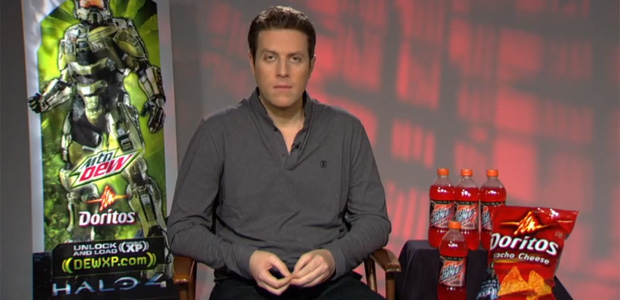
PR representatives are not ours. They work for a company which has products to sell us and their job is to sell those products, regardless of their quality or suitability for sale.
Now, the cliquey, over friendly, PR led party scene in UK games media is heavily partaken in by the staff of Eurogamer, the employees of sites they have financial stakes in and their small circle of favoured freelancing friends. The article even explicitly mentioned Dave Cook, who works for VG247 – a site half-owned by Eurogamer. The mention of Cook was quite negatively referencing him in relation to his partaking in a very thinly veiled promotional twitter campaign managed by the PR representatives of Trion at this year’s GMAs.
So, I was slightly surprised and very impressed that they posted an article which was, intentionally or not, calling them out for their perhaps overzealous participation in the PR campaigns and party scene that are such a pervasive part of covering videogames. I thought it was brave of them.
But Florence’s article also made reference to Intent Media’s Lauren Wainwright. She’s currently a staff writer for MCV and has done freelance writing work for IGN, VG247 and The Sun. She’s also done consultancy work for, among others, Square Enix.
There are certainly ethical concerns with journalists using their personal twitter accounts to promote products in exchange for the chance to win a prize. Wainwright was upset by the assertion that her inability to recognise those ethical issues might lead her audience to assume that her enthusiasm for Tomb Raider was the result of some undisclosed deal with the publisher. Intent Media made a request to someone at Eurogamer (I assume it was their editor, Tom Bramwell) to remove the reference to Wainwright. Eurogamer capitulated on Thursday and soon after the paragraphs referencing Wainwright (and those referencing Cook, who has not been alleged to have officially complained) were cut, Florence announced that he would no longer be contributing to Eurogamer.
Some have said that Florence’s inclusion of Wainwright and Cook by name, including quotes gleaned from their twitter accounts, was unnecessarily specific or even vicious. Others have said that if Wainwright and Cook had wished to be kept out of discussions on ethics then they shouldn’t have publicly engaged in debate on the subject.
Florence has seemingly blamed Wainwright for him feeling the need to remove himself from his role as columnist at Eurogamer. He has accused Intent Media of making legal threats, though several employees of Intent Media have explicitly denied that those threats were ever made. Meanwhile, Eurogamer has remained publicly silent. It’s unclear whether Florence heard those threats himself or is repeating what he was told by his editors at Eurogamer.
As far as I can ascertain (and I’ve asked several others to check for me prior to publishing), and keep in mind that not even the principles in this drama are in possession of the entire script, what’s above is a fair and accurate representation of events.
Firstly, let me say that I agreed with much of what Rab Florence said in his original piece. I agree that PR and media are often too close, although I also think that a healthy and friendly relationship between the two is a positive thing for the coverage we can all offer our readers. I agree that there’s a strange circle of friends, a clique of press employees and freelancers that attend every PR party they can and have the appearance of being too friendly, too reliant on each other and too excluding. I think Florence was brave to write about that on Eurogamer and I think Eurogamer’s editors deserve a lot of credit for allowing it to be published.
Where Florence said that PR and journalists were too cozy, I would have said that the balance of power is too far in favour of the PR fraternity. There’s no problem with journalists and PR people being friendly but it should be the PR people who are trying to keep professional favour, not the press. The friendship isn’t necessarily an issue but the balance of power certainly is.
I can understand why Lauren Wainwright was annoyed at the inference made by Florence, although I believe he did enough to make clear that he wasn’t inferring any corruption on her part – merely pointing out that the assumption wouldn’t be difficult for her audience to make. From the resulting uproar, it appears that many others did see enough of an inference of corruption and perhaps Florence could have done more to ensure that his point was clear.
The appearance of corruption is often as powerful as corruption itself. If you want to be a journalist, it becomes necessary to insulate yourself from that danger by being careful with how you act in front of your audience. Wainwright wasn’t careful – she was, I believe, very publicly misguided in her assessment of an ethical situation. Unfortunately, for Wainwright, she was also very enthusiastic about Tomb Raider.
I am as sure as I can be in my own mind that her enthusiasm for Tomb Raider is genuine and not influenced by any friendship she may have with the publisher’s PR team or by the consultancy work she has performed for Square Enix in the past. I’ve made that assumption based on the little I know of Lauren Wainwright but the opposite assumption isn’t difficult to make, for anyone with a mind to do so. I think that’s what Florence was pointing out.
What happened next was an error of judgement. Whether it was requested by Wainwright herself, suggested by an editor who was upset at the potential for a member of his team losing credibility or decided by the boss at Intent Media, asking for amendments wasn’t the way to handle the issue.
Requesting accurate quotes, and analysis based upon those quotes, be removed from a published article is a mistake. Especially when that article is on the internet. The fact is, Lauren Wainwright said those things and Rab Florence’s assessment of how they might be perceived was perfectly valid. So requesting that they be removed gives the appearance of having something to hide and that’s powerful enough for internet commenters to attack and dig deeper. And so it was.

The way Eurogamer reacted to that request, whether the threat of legal action existed or not, was another mistake. They threw Rab Florence under the bus and that’s what made Florence feel that his continuing employment with Eurogamer was untenable. Florence didn’t walk away from his column at Eurogamer because Lauren Wainwright objected, complained or even threatened. He left because someone at Eurogamer (and from his latest blog, it seems that this was Tom Bramwell) betrayed the relationship between columnist and editor.
They told him it was okay to publish that article in its original form. They approved it. They published it. It was theirs to defend. Yet within 24 hours, they capitulated to a request to censor it. They even removed the references to Dave Cook, who works for an outlet part owned by Eurogamer, without any request being made (as far as we know).
Whether Florence sympathises with their reasons for doing so and forgives them is up to him but that doesn’t absolve them of professional responsibility. When the phone call from Intent Media came in, it was their job to say no. It was their job to fight that battle – legal, ethical, moral – should it be required. Eurogamer is certainly large enough and wealthy enough to engage in legal disputes with Intent Media if it were ever to come to that. If the editor at Eurogamer thought the column was legally acceptable to run in its original form, and they must if they published it, then it’s their obligation to stand behind that decision and support the author, editor and their own press freedoms of the future.
I believe that there were errors of judgement from both tents on this well-trodden campsite. I believe that Wainwright should have sought advice before criticising the original article. I believe that she probably should have been given different advice from her bosses, friends and colleagues. I believe that the Eurogamer editors and bosses made the wrong judgement in capitulating and cutting Florence’s column. I believe that all of these decisions are immeasurably easier to make from without the situation than from within.
The inadvisable actions weren’t finished for Lauren Wainwright though. Since this debacle blew up, she’s locked down her twitter account so that it’s private. Perhaps understandable given the abuse and the degree of, quite frankly, disgusting bullying she was being subjected to by the internet lynch mob who blamed her for Florence’s departure but still not wise, given that she’s fighting the appearance of impropriety.
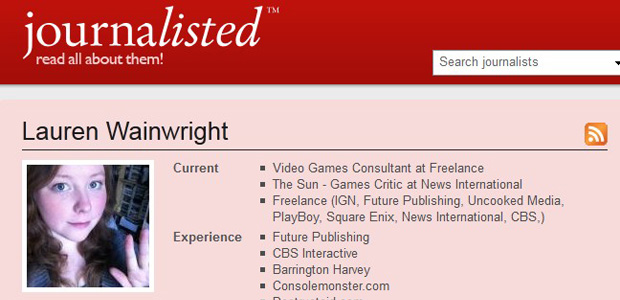
Her Journalisted entry (a kind of online curriculum vitae that many journalists keep) has also been edited to remove the fact that she has worked for Square Enix. That doesn’t help to combat the appearance of impropriety either. And her assertion that she never reviewed Square Enix products has been counteracted with the photographic evidence of her Deus Ex review appearing in The Sun, as well as glowing previews for Square Enix products in various other outlets. Both these actions could appear to some (or many) as the attempt to cover up a trail of corruption. I don’t believe that’s what they are, I think Wainwright is panicked at how big the situation has become and is taking bad advice and making the wrong decisions. She also later clarified that she only meant she hadn’t reviewed products she consulted on, which appears to only have been Final Fantasy XIII-2.
So what’s the right advice? Well, my advice to her would be to correct her Journalisted profile, make her twitter account public again and issue a full and frank statement which clearly defines her periods of employment as a consultant with any games publishers and her work as a journalist or critic during those periods. That statement should contain an apology for the fuss she made – and the fuss made on her behalf – over her quotes being used. Apologise unreservedly to Rab Florence for any inconvenience that her complaints might have caused between him and his editors at Eurogamer. Be open, be honest and be humble.
The next couple of weeks are going to be very difficult. She’s going to take a lot of flak and there will probably be accusations of impropriety aimed at her for several years to come. She should let her future actions as a member of the games press be her rebuttal. Lauren Wainwright is young and she’s made a mistake. That’s not the end of the world.
Making mistakes is perfectly normal and the way we deal with them is what makes us better writers, better journalists and better people. That process is going to be long and difficult for Lauren Wainwright but she’ll come out the other side of all this much stronger, much smarter and much more able to cope with the next mistake she makes. And there will be more mistakes. There will always be more mistakes, for everyone.
Meanwhile, there’s a band of Florence supporters (and he certainly deserves some degree of support) who are very vocally critical of every mistake Lauren Wainwright has made. Florence is clearly and understandably aggrieved at feeling that he had no option but to walk away from his popular column and his assertions that his supporters shouldn’t blame Eurogamer has left them with nobody else to blame but Wainwright. That witch hunt needs to stop and until it does, it should be ignored.
Eurogamer has been silent on the matter ever since the edits were made to Florence’s original article. This is the most sensible course of action for them. I think they know they were wrong to capitulate without a serious fight (at least, I really hope they do) and I think that they know Florence is wrong to relieve them of all blame. There’s no benefit for them in speaking up at this point. The apology I believe they need to make is a private one, to Florence, and has probably already been made.
As for Intent Media, well, I think they need to make progressive steps to emerge from the cloud of accusations and ill feeling that is surrounding them too. The original article and their handling of the situation that ensued has left several people calling for an end to the GMAs altogether. PR people awarding games media for the work they do reporting on products those PR people are promoting is a situation that lends itself to the appearance of impropriety. I think that Intent Media should acknowledge that and begin the process of changing how the awards are managed.
I don’t believe that the GMAs need to be scrapped. I think that the more methods of recognising good work in games media we have, the more encouraged to do good work the games media will be. That encouragement isn’t necessarily imperative to the process of regeneration and renewal that I believe the UK games media (and the wider games media) needs to undertake but I think it always helps to recognise good work. Let’s be clear about that, too, while we’re here – the GMA winners are all very deserving of recognition for the great work they’ve done.
The GMAs could be refitted to have a leading role in recognising the best of games media, rather than existing under the current accusations that they perpetuate some of the worst aspects of the industry. They could be reborn from the embers of this discussion with a new selection process and a clearer method of separating the leading lights of UK games media from the appearance of impropriety. And that’s the real purpose of what Florence said in the first place. Let’s not lose sight of that sensible, noble goal.
Jim Hargreaves
Great read Peter,
Completely missed the whole Wainwright/Florence debacle. Brilliant summary.
The Lone Steven
Excellent article Big P!
In my opinion, the hashtag advertising and win a free prize is no different then get paid to advertise our game on your site. And the free PS3 could help some smaller sites to branch out as not everyone can afford two consoles. It’s just a PR stunt. Had they said, get this game, it’s fecking excellent and win a PS3, then it would be dodgy.
I read the EG article and couldn’t tell if they were against it or for it. It seemed that they were a bit jealous.
Anyway, there is nothing wrong with getting close to a publisher as long as you can remain neutral when it comes to writing the review. I remeber a few years back, Gamespot sacked the person who review Kane and Lych 2 for being honest due to them advertising it. Thus Giant Bomb was born.
TSA does have a good relationship with a few small development studios and the reviews were honest(unless Peter got bribed with pizza and didn’t share the damn pizza with us! The selfish barsteward!) so it shows that having a good relationship with the PR won’t cause a site to become corrupt. Although, if Tuffcub gives a positive review to Doritos and Mountain Dew he will be corrupt. :p In fact, i suspect he may baised now as he was seen advertising it for them.(read:in his twitter avatar).
See that is just silly but some people seem to have the same reaction if a journalist is seen with a product. Also, are Doritios banned now in the gaming media? :O
Gamoc
That was the original Kane and Lynch, not the sequel.
Kaminari
Excellent article, Peter.
I have to say that, every single time I watched or participated in E3, I have always been striken and rather sickened by the publisher demos. Those events, that should be targeted at enthusiast gamers/consumers, are clearly built in presentation and tone for shareholder consumption.
That the main public of those corporate events are always journalists (both professional and amateur) is all the more disturbing. Game journalists should NEVER play the role of publisher PRs.
Peter Chapman
eeehhh, kind of. Worth noting that E3 is a press event, and those presentations are for journalists, that’s why journalists fill the room. The more worrying thing is that this means it’s supposed journalists that are cheering and applauding a company’s announcements and successes. That’s weird.
cc_star
“…supposed journalists that are cheering and applauding a company’s announcements and successes. That’s weird”
Yes, very.
Been trying to think if this situation is unique to gaming and wider consumer tech as a whole.
Alex C
Apple.
Tuffcub
I think there needs to be a clear distinction between the various types of media events.
There are events where you get to play the game, talk to developers and have quality time to make an opinion on the product. An example would be when I nipped down to Rockstar and played Max Payne 3 for a preview
Then there are all out parties in which the game is pretty much shoved in the corner and it’s all about the drinks and entertainment. The yearly COD party would be an example of this. I’m quite happy (heh) to go to this kind of thing, and tbh it’s good that we someone to keep the TSA name about, but this kind of event should never be written up as a preview or hands of the game, which is why I never do. There is far too much alcohol and partying going to make any kind of informed opinion on the game, and even if you did there is no way in hell it’s going to be unbiased.
If you are pre/re/viewing a game then you really shouldn’t be in a bar at 2am quoffing champers paid for by the publisher at an event to promote the game and accepting a free Xbox from them.