

As with every major console announcement, there’s a buzz of excitement in the air. With Nintendo’s official unveiling of the Nintendo Switch it’s confirmed a few things, whilst creating a whole new range of questions that we’re itching to find the answers to. It being Nintendo, it’s clear once again that they’re not following in anyone else’s footsteps, nor remotely engaging with the console battle that Sony and Microsoft are embroiled in. Instead they’re offering new ways to play their games, with a console quite unlike anything that’s gone before. Whether that’s a good thing or not is open to debate.
Some fans were probably hoping for Nintendo to get right back into the fray by releasing a console with similar specifications to the PS4 and Xbox One, one that would enable multiplatform releases to appear easily and see Nintendo’s output on the technological cutting edge. However, they’ve clearly set that path aside a number of years ago, and though the Wii U will always be seen as a commercial failure, it seems likely that their success with the unequivocally different Wii continues to fuel their aspirations.
So, let’s put the Switch into focus. This is a home console/handheld hybrid that allows you to play your games on a television or on it’s own screen. It connects to the TV by sitting in an unassuming dock that will likely also charge the unit. The controllers either clip onto a frame to form a semi-regular controller – it looks like a dog – attach to either side of the screen when you’re out and about, can be played with separately a bit like a Wii remote and nunchuck, or can be utilised as teeny tiny controllers for multiplayer gaming on the fly. As with both of Nintendo’s previous consoles there’s also a more standardised Pro controller, though they’ve now adopted the Xbox thumbstick layout rather than sticking with the Wii U’s top-heavy one.
Simply put, it’s the kind of technological free-thinking that we’ve come to expect from Nintendo, and one that’ll be buoyed by their in-house developers, as well as a pleasing number of confirmed third party publishers. If the commercial is to be believed, it’s a console you’ll take out to walk the dog, play in the car, or take to roof-top parties with your friends, before snuggling down into your sofa at home for a continued bash at Skyrim. There are at least a couple of elephants in the room though, and at least one of them has to be the Wii U.
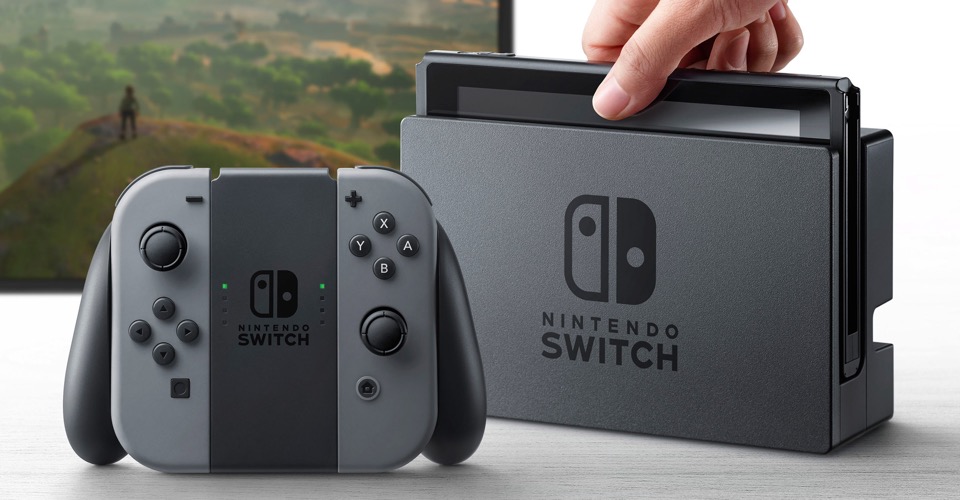
There are a number of shared design characteristics between the Switch and Nintendo’s most recent home console, and the Switch reveal trailer appeared to show both Mario Kart 8 and Splatoon running on it, though this was merely representative as opposed to a tacit confirmation of these games making their way to the system. Firstly, the poor uptake for the Wii U has to have some kind of knock-on effect for consumer confidence, and for those that did buy one and found its third party software support distinctly lacklustre, it’s going to be an uphill battle to bring them back into the fold.
One of the questions we don’t really know the answer to is how the Switch fits Nintendo’s home and handheld hardware strategy. If it’s the successor to both the Wii U and the 3DS, the more focussed approach could pay dividends, and given that Nintendo brought all of their hardware designers under one roof a couple of years ago it would seem that it’s likely. With the handheld sector completely changed by the ubiquity and growing power of mobile phones and tablets, a console that works at home and beyond is an elegant solution to tackling a dwindling slice of the market.
The other side of that argument is that it’s a machine that simply doesn’t need to exist. The relative failure of the PlayStation Vita and the reduced sales of the 3DS over the DS point to the fact that dedicated handheld hardware is on the decline – that said, the 3DS is now at a very respectable 60 million units sold. The combination of tablets and bluetooth controllers – which the Switch riffs on in one of its configurations – are already capable of some pretty impressive gaming experiences.
Growth in the mobile sector could see games appear with ever-increasing production budgets and could in turn eventually rival those for home console AAA releases. You can then stream them to your television as well, or in some cases even connect directly via HDMI, but then is this an example where Nintendo are actually emulating somebody else rather than the innovation we expect to see? Sure, boasting Nintendo software and true home-console releases – portable Skyrim anybody? – sets the Switch at the head of the pack, but will it have the added functionality that people are used to from a tablet?
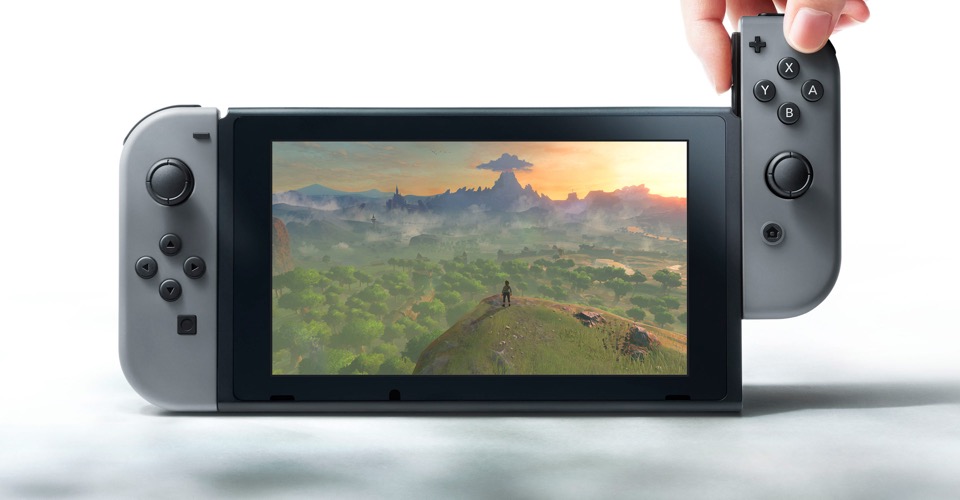
But Nintendo hardware isn’t bought with the head, it’s bought with the heart, and I love what I’ve seen of the Switch so far. I’ve owned every single home and handheld console Nintendo have ever released – bar the Virtual Boy – and their franchises and their commitment to quality have never failed to capture my attention.
Mario, Zelda, Metroid, F-Zero, Fire Emblem, Donkey Kong, Kirby, Star Fox; they’re all simply integral to my very idea of gaming, and if Nintendo can bring compelling games to the Switch from those franchises it’ll be on the right path – for me at least. It’s everything I wished the Wii U was, and as much as I loved the gamepad and its host console’s often odd dual-screen philosophy, there were a great many times I wished that I could just carry it out of the house. This time though, here’s a portable console that is truly staking a claim on home console quality gaming.
They do however have to ensure that those third party games don’t dry up, and that developers and publishers see the value in bringing their best games to Nintendo’s unique platform, which might be tricky with the associated costs of releasing games on cartridge as opposed to disc. Seeing Skyrim and NBA 2K17 in the Switch trailer certainly sets the right tone, but it has to build on that. The other elephant-shaped question is simply whether the average consumer is going to get it.
Thankfully they’ve done away with the Wii moniker, and it seems that dual-screen functionality and even touch screen technology are on the way out – there wasn’t any sign of screen prodding in that trailer – but this amalgamation might not work on either front. Potentially too expensive for a dedicated handheld, and not powerful enough to compete as a home console, the Nintendo Switch has a lot to prove, but then there’s a lot left to discover between now and March.


Andrewww
Personally, I’m not in their target group, and I find the looks of the Switch exceptionally awful.
But I think they need to take an alternative approach, as they cannot compete with Sony/MS, and they know it.
Their past successes in my view relied on a) casual gamers, b) children, and c) the Nintendo fan crowd. The Wii U didn’t win over a) and b) and proved that group c) is not enough. I currently doubt the Switch will fare much better.
But of course, it’s very difficult to judge chances and risks for the console. As I’d like Nintendo to survive to enrich the gaming market, I can only wish them luck (and some better designers…).
Foxhound_Solid
Hybrid console. I get the idea. As a PlayStationist I still would love to see Ninty titles being available on PS Platforms with their console concentration being on handheld.
It’s a cool idea, simalar to Remote Play which I do occasionally use.
I don’t see this effecting the PS4 dominance with first party titles, third party partial exclusives or VR. But as a secondary console where you jump into the world of Ninty. It looks pretty cool. I’ll definitely keep an eye on it :-)