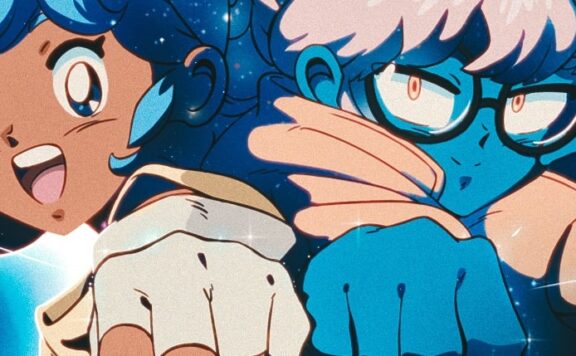


There are some things that just work well together, despite sounding a little odd. Much like milkshakes and french fries, Zoe and Mio really shouldn’t work together, but are somehow more than the sum of their parts.
These, of course, are Split Fiction’s dual protagonists. In a nutshell, Zoe and Mio are aspiring writers who are struggling to get published. They meet one fateful day at a new prospective publisher, only to be pushed into a machine that steals their ideas from them. What ensues is unlikely duo — complete opposites in their tastes and world view — chaotically bouncing between each other’s narratives, working together to write one of this year’s best video game stories.
For those of you who missed our review back in March, Split Fiction is the latest game from Hazelight – the minds behind It Takes Two. This game follows a very similar pattern in terms of gameplay and, despite its flaws, winds up being a similarly stellar experience. In our review, Tef wrote “It takes a little while to get going, both in terms of gameplay and narrative, but once it hits its stride, there’s just so many moments that will fill you with joy and delight”, before giving it a highly respectable 8/10.
Everything we said in March holds true today, so this won’t be a traditional review. Instead, given the shortness of time between releases and the new version being priced very similarly to the ‘old’, we’re simply going to address how well Split Fiction shakes up Nintendo’s new console.
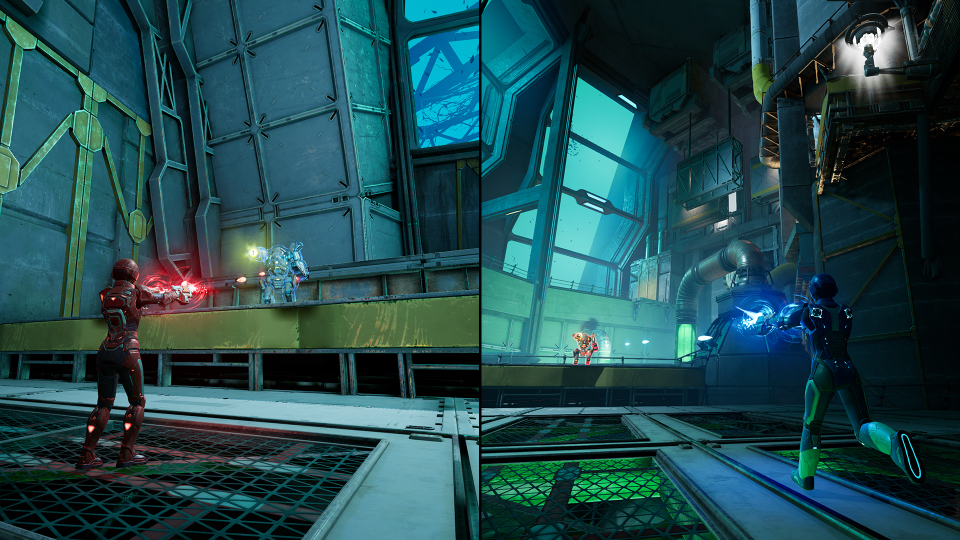
Right off the bat, my biggest gripe was that I put the Switch 2 in the dock, plucked the JoyCon 2s off and sat down with my wife to give the game a crack. I clicked A to start the game, handed her a JoyCon and was met with the realisation that this was not going to work. You either need a second set of JoyCons or a pro controller to go with your box JoyCons. Either way, you can’t play two-player local co-op out of the box, which may not be immediately obvious given how Switch games often share JoyCons.
Fortunately, I already had a pro controller in the post, so we went back to Mario Kart World and waited 24 hours.
Initial frustrations aside, we can happily report that Split Fiction feels pretty good on the Switch 2. Both the JoyCons and pro controller feel natural, with the haptics working as well as you’d hope. Obviously there’s no mouse support for this game (pro controller-compatibility and all), but frankly we’d rather they didn’t shoehorn things in just because they have new tech to play with. When these are added to rereleases, they often feel a little gimmicky.
The graphics are where you’ll find the biggest difference between the two releases. If you come into the game blissfully unaware of the ‘original’ on more powerful consoles, you’ll find that the game looks fantastic. We’re looking at 1440p at 30fps in docked mode, which is perfectly reasonable. A few levels in you’ll wind up jumping through traffic on an aerial highway as a neon city melts into the distance. It looks beautiful, but it’s noticeably less sparkly than the 4K 60fps PS5 version. Handheld looks pretty excellent too — you obviously just have to contend with a smaller screen and the odd frame rate jitter.
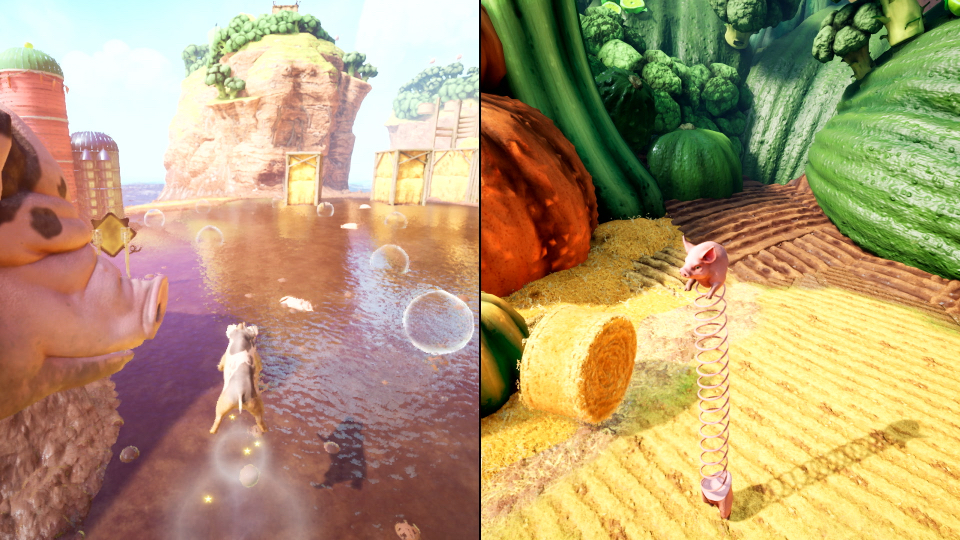
This graphical downgrade was always going to be the case, given that the Switch 2’s infrastructure doesn’t hold a candle to the PS5’s, but it highlights the point nicely — expectation management is vital. Yes, it’s less sparkly this time around, but it’s night and day compared with from The Outer Worlds and Hogwarts Legacy on the original Switch; I didn’t feel like I was missing out by playing Split Fiction on the Switch 2.
Next we have the cross-play feature. This was part of the original release, so it’s nothing new here. We tested how the games looked and played between the Switch 2 and the PS5 and we have absolutely no complaints. The game holds up very well and you don’t need to worry about low-res graphics if you’re on a PS5 and your friend is on a Switch 2 — you get the graphics of whichever console you’re using.