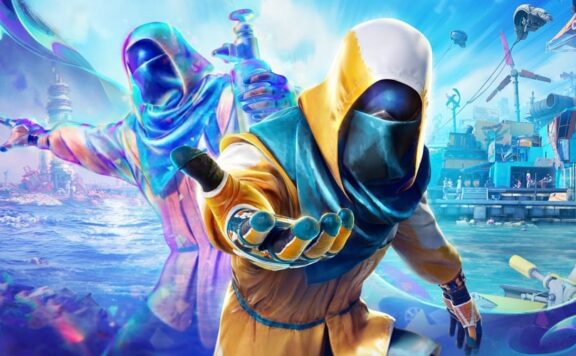


Tides of Tomorrow is one of those gaming concepts that is both eye-opening in its breadth and ambitions, and mind boggling with all the possibilities it needs to account for. It’s both a game about time loops, and yet not one where you loop in time; a game where you are beholden to the actions of other players online, and yet one where you are playing solo and can play offline.
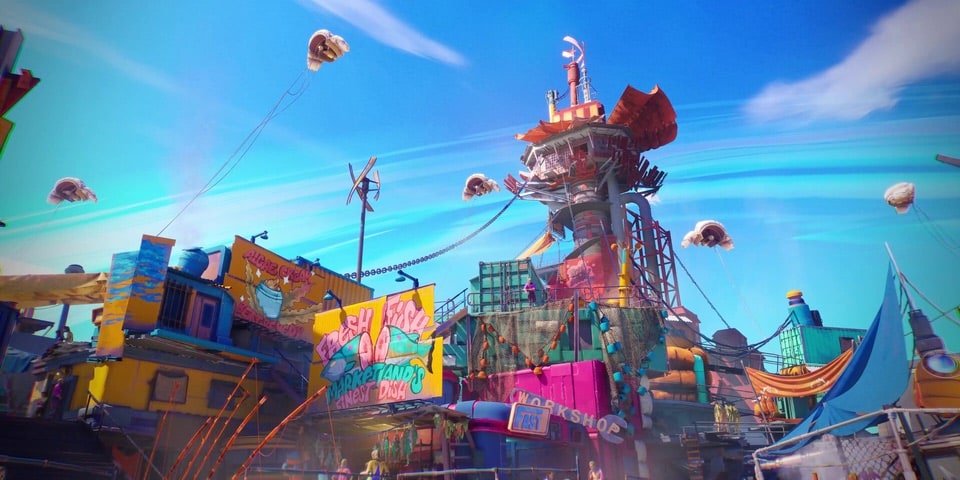
Coming from the makers of Road 96, Tides of Tomorrow looks in many ways like it could be a high octane action game, but is much more a narrative adventure with action fed into it. The world of Elynd has been consumed by water and plastic waste, lending it an appearance that’s one part Waterworld and yet a little reminiscent of Splash Damage’s parkour shooter Brink – though looking at screenshots from 2011, I must be misremembering just how bright and colourful that game was!
You start your story first by choosing who to follow, someone whose prior playthrough and choices are used as part of the basis of your own. This can be someone that’s been suggested by the game, from your friends list, or even using a specific game seed that’s shared online. All you’ll really know are some general traits for their playstyle and their completion percentage. You can also play this game without an internet connection, drawing from a pool of developer-created playthroughs baked into the game.
As you’re fished out of the water and resuscitated by Nahe, you have no memory of who you are and how you got there, but are quickly introduced to the ills that plague this world. Plastemia is a thoroughly fictionalised disease caused by microplastic pollution – a fictionalise ailment from a real world problem that we have yet to fully grasp the magnitude of – and in this world’s case, it’s a universal plague that’s lead to people with glowing plastic lesions spreading across their bodies. There’s a possible cure, though, and as a Tidewalker, you’re uniquely capable of bringing hope to this world.
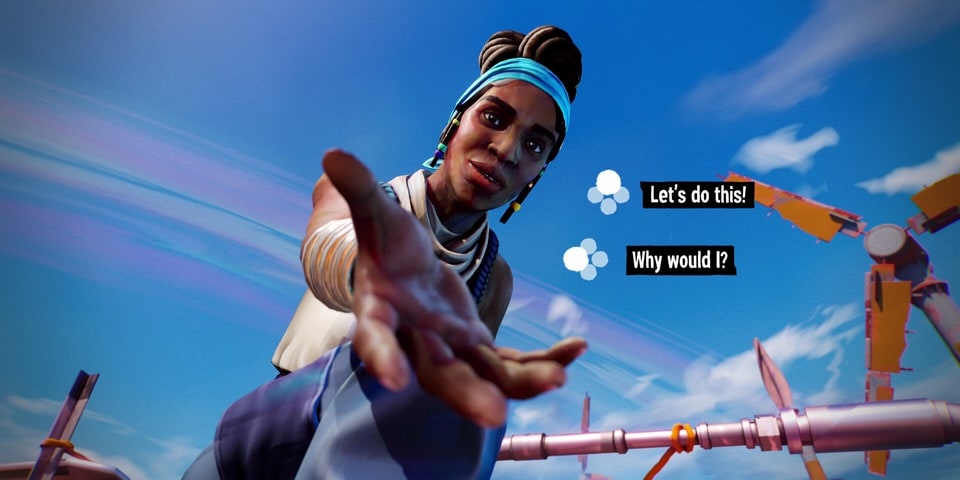
Well, not quite uniquely. You’re not the first Tidewalker that has been dredged up, and you might not be the last – narratively there’s only been one Tidewalker before you, though there could have been millions. You and your people are connected, able to see glimmers of the past and events that went before you. Tides of Tomorrow takes this asynchronous multiplayer idea and wraps narrative, setting and so much more around it in truly fascinating ways. While some parts of the trailers might make it look like a PvPvE heist ’em up, you won’t actually encounter other players, just the consequences of their actions from potentially just a couple hours previously.
This works on both the micro and the macro level. Even in the opening dialogue with Nahe, you can see the dialogue choices made by the player you’re following, choosing whether to take the same path or to diverge to your own morality and feelings. Offered a dose of the Ozen that is able to stave off Plastemia, it’s up to you whether you take it or leave it for the next person. Alternatively, there might not be an Ozen dose for you if the previous player was a little selfish.
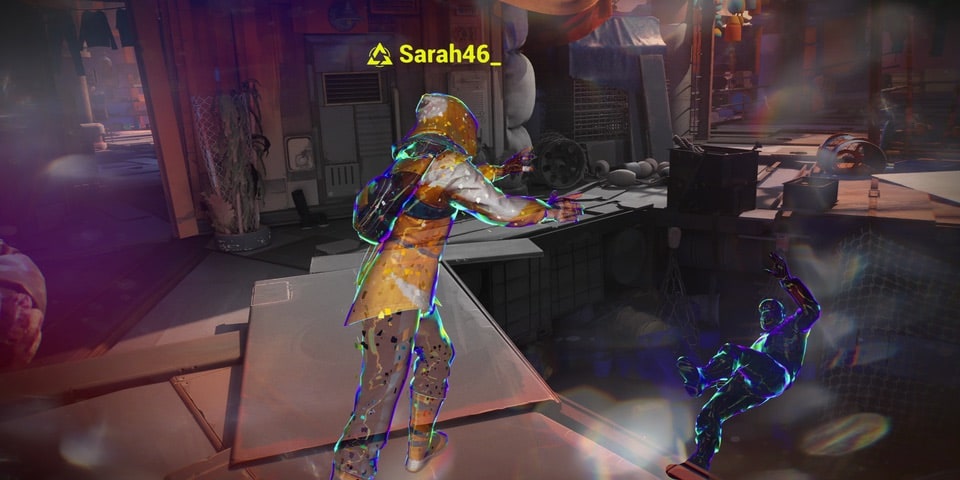
Later, coming to an NPC by a broken bridge and talking to them, they might accuse you of having broken it – your Tidewalker garb makes you all look largely the same – and you can switch to the Tides of Time vision to see the echoes of the previous player’s actions, just as you can leave actions behind for the next player to view. Turning that around and using it as a new conversation point, you can defuse the situation and potentially get the bridge repaired, not for yourself, but for the next Tidewalker coming through.
But, these choices can completely change the state of the world as you arrive. If the previous person caused a great big ruckus, the mayor could announce a general clamp down, blocking off the marketplace with barbed wire and guards, forcing you to try and stealth your way through, and hoping that the locals are still on your side. The time of day can change, the tone of the environment completely shift, and depending on how generous the other person was, you could find your own progress hampered by a lack of resources.

Thankfully you are given an off-ramp from that initial choice of followed player. Between missions, you float on the open, trash-filled water and are given a choice of who to follow for the next stage of the story and the next location. Additionally, you might be following a friend who’s only completed the first few missions, and so need to switch to another player as you overhaul their progress.
Tides of Tomorrow is a truly fascinating game, DigixArt blending player choice into the narrative that they’ve constructed, potentially giving dramatically different experiences for every player far beyond gaming’s traditional good and evil playthroughs. I’m truly fascinated to see how it all comes together when Tides of Tomorrow launches in February 2026.