

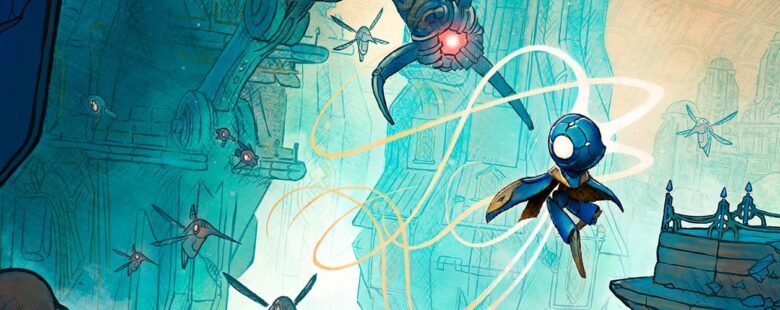
MIO: Memories In Orbit can be described in four words: beautiful, engaging, challenging, and frustrating. It is a game that will be those who really like a tough as nails platforming and boss fights, but it will frustrate those who do not like getting stuck on sections because your reaction times come up short. I fall somewhere in the middle of the two camps, with the game’s story taking me nearly 50 hours to complete, and there are still some sections of The Vessel I have yet to see.
MIO: Memories of Orbit is set on a ship called The Vessel, a generational ship that was taking humans, called The Travellers by the robots of the ship, on a journey to find a new home. Some kind of disaster sees all of the Travellers disappear, leaving The Vessel to sail onward while it deteriorates. MIO finds that The Vessel is on its last legs because the Pearls – the different AIs that kept the ship going – have seemingly abandoned their duties which in turn has allowed some kind of corruption spread amongst some of the robots on the ship. MIO goes on a journey to discover what has happened to the Pearls, having to navigate a ship falling apart and rogue robots attacking anything in sight.
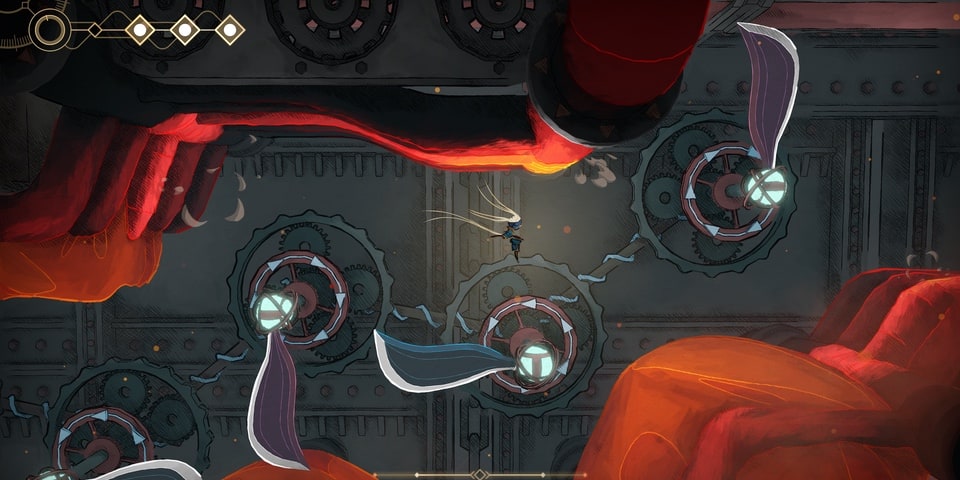
The Vessel is huge. MIO: Memories In Orbit’s map has such a variety of locations with each having their own distinct looks. You start in Nexus at its centre and from there you can explore the garden and promenade of the Haven, or head in the other direction to the Metropolis. Eventually, you will also be able to delve deeper into The Vessel towards the Vaults or head upward to the Celestial Bay. The only issue is that none of these locations are easily accessible through the deteriorating ship structure, and the platforming is far from forgiving.
MIO slowly gains new ways to traverse the ship, so you will need to go back and forth a fair few times between districts to see all of the platforming puzzles and bosses they have hidden within them. The platforming in MIO: Memories of Orbit does require precision and quick reflexes, with these sections getting more difficult as you unlock more traversal options. That’s because you will need to quickly switch between using each one to get to new locations, while also managing MIO’s energy bar. While most of the platforming is tough but fair, there were a few that felt way too tricky. There is a fine line between making something challenging and making something tedious or overly contrived, forcing you to repeat the same section over and over again. These moments always took away from the experience.

Combat in MIO: Memories of Orbit seems like a simple affair at first, with just a single attack button and a dodge, but there is a lot of depth around that. You have to understand and learn the patterns of your opponents, and while fights against regular enemies become easier as you get stronger, but each boss has its own unique attacks and arenas with their own hazards to deal with too. The battles are incredibly tough but, unlike some the platforming, they do not get to a point where they become too frustrating. It all comes down to knowing when to hit and knowing when to back off and move out the way for all of them. I liked each design of the bosses with each one having memorable hooks to them, with some appearing out of nowhere as you move through The Vessel.
Helping you get stronger are the Modifiers you can install, some of which allow for combos where the final hit deals additional damage, and others can increase the number of slots so you can equip more. However, there is a cost with increasing modifier slots, which could see Nacre Basins remaining empty. These are stopping points that allow you to replenish your health, which is useful especially before tough platforming sections and bosses, while nacre also acts as the game currency to buy upgrades for MIO.
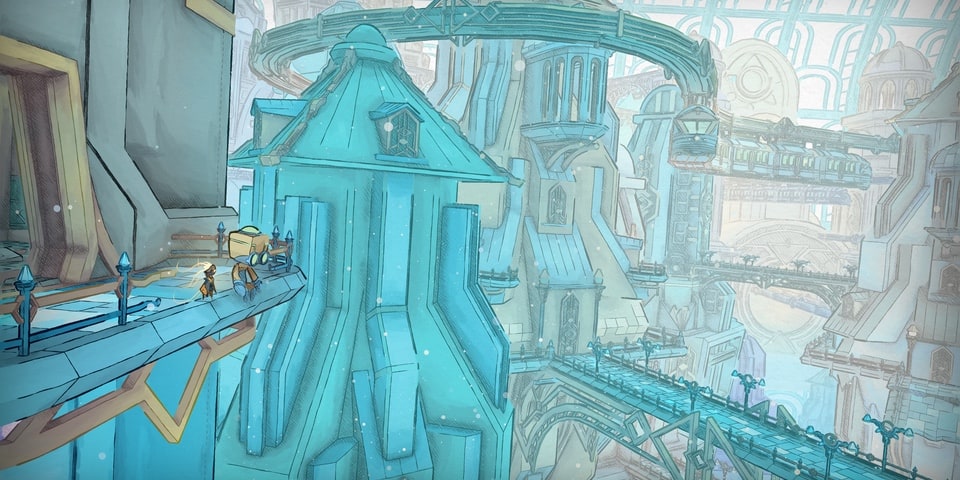
MIO: Memories In Orbit is certainly going to compete to be one of the best-looking games of the year, with hand drawn environments and movements. Every district in The Vessel has such a unique look, with my personal favourite being the Aviaries and the Bell Tower. The designs of the characters look great and even though some characters don’t have faces the way they are drawn and posed communicate their emotions very well. The visual design is one of the main factors that kept me pushing through the game, because I wanted to see what the designers had come up with. This is paired well with the music and soundtrack, with haunting melodies in some areas really selling that this is a ship on its final voyage.


