
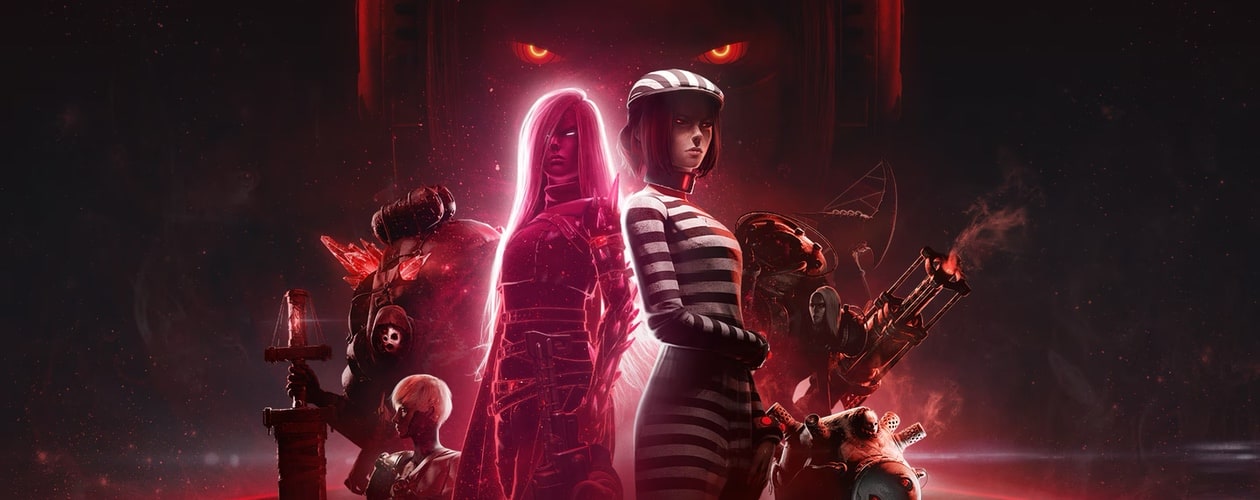
Luna Abyss immediately declares what kind of game it’s going to be through the opening scene. Haunting music gets louder and louder while a camera pans slowly to show the curvature of the Earth. And then, in an instant, it’s not just the Earth. A blood-red moon appears above it, corrupted static-filled messages flood the screen. The appearance of that red orb triggered some massive, undisclosed change in the world, but you’re thrown right into a grey and dreary civilisation that has already lived through whatever that change was.
Luna Abyss, like a lot of my favourite games, is an oppressive blend of sci-fi story and bullet hell action. I’ve loved the way that games like Nier Automata and Saros mix the overwhelming tension of bullet-hell projectile barrages with slick, fluid action combat or third-person shooting. An FPS with that same kind of blend feels right up my alley, but Luna Abyss takes its sweet time building up to that. In the first hour or so of the game, I was pretty underwhelmed by just how basic the combat and gameplay felt. Instead of aiming down the scope or having an alternate weapon-fire, Luna Abyss gives you a magnetic lock-on to the nearest enemy that feels very Metroid Prime in function. It doesn’t affect your damage or movement speed at all, you can just choose to abandon aiming and auto-fire at enemies if you please. The aim here was likely to create a way for gunplay to feel manageable or, at worst, secondary to the moments of dodging bullets – in fairness, Saros excels thanks in part to the heavy auto-aim many weapons give you.
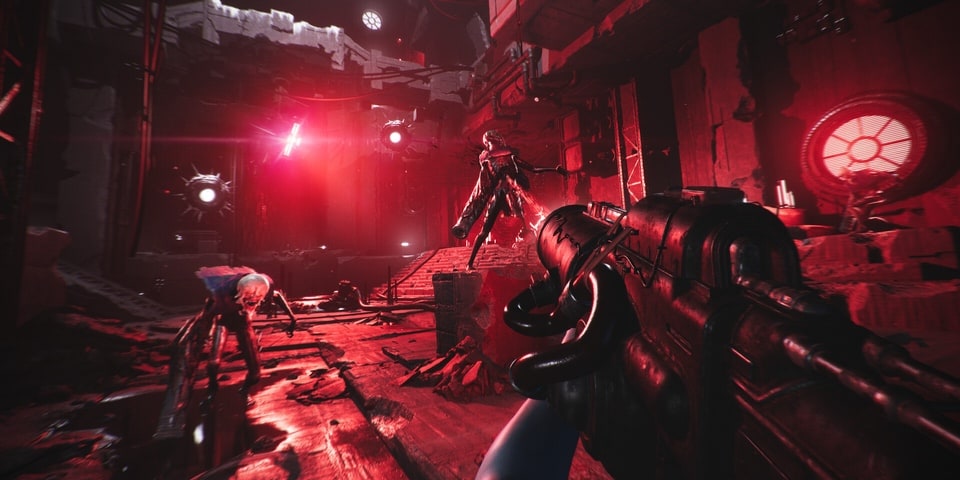
Eventually, you unlock a second weapon that destroy glowing shields, and enemies begin to appear with those shields, adding a challenge of mid-battle weapon swapping. Further into the game, different colored shields matched to additional weapon types appear and you gain additional combat abilities like a health restoring finisher move. Even then, though, the lock-on system feels like a crutch in Luna Abyss. I don’t feel rewarded by using it so much as I feel bored, because other games like Doom Eternal trust me to handle the aiming and the dodging and the resource management by myself.
Dodging in this game doesn’t feel too great, either. It’s a little slow and sluggish most of the time. Combat encounters with regular enemies end up feeling more like puzzles as you match weapons to combat specific shield colours. Rather than the freeform jazz of using whichever weapons you have access to, you’re slotted into very specific patterns that end up feeling more like tedium.
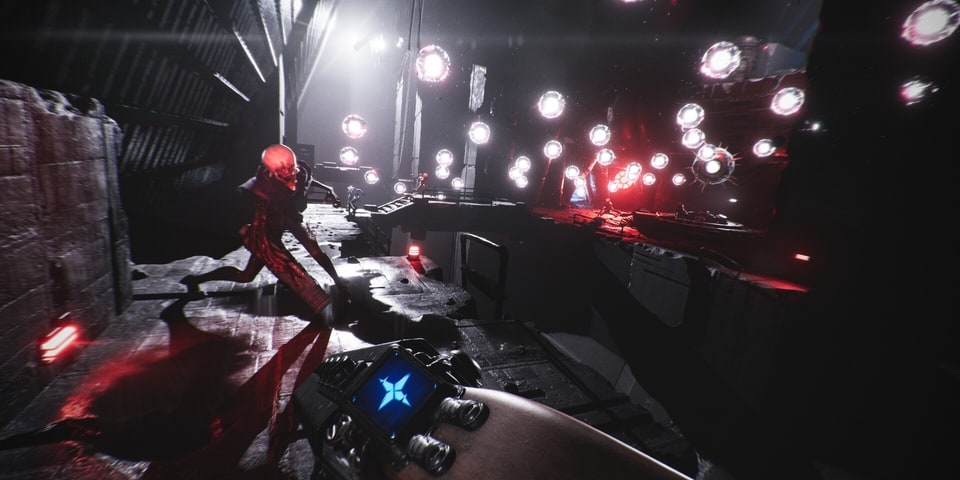
Combat has more glimmer during boss battles. For one, the scale of these encounters is incredible. Luna Abyss has a gorgeous art style carried heavily by the use of inky, dark shadows and moody lighting that adds a horror game twinge to some of the environments and enemies you discover. Boss fights also frequently lean further into the projectile-pattern dodging that I was expecting this game to present. You’re free to use whichever weapons feel best, but you better be able to duck and weave between walls of multicoloured energy beams and fireballs. They’re incredibly fun and massively challenging, and easily the highlights of the game.
Despite the moment-to-moment combat not always being a thrill, I was happy to trudge through those encounters for the reward of uncovering the story of the game and inching closer to the next weird, wild cutscene. There’s a strange, poetic energy to the way characters speak in Luna Abyss, and the game keeps you on your toes with narrative moments that hint at things but only slowly dripfeed direct answers. It makes the journey to reach the ending so exciting, and so nerve-wracking. Much like how the art direction sometimes mimics the feel of a horror game, the slow descent into certain uncertainty that plays out in the narrative mirrors some of my favourite recent releases like Signalis.

Luna Abyss isn’t a perfectly polished action shooter. In some cases, it even goes out of its way to make the action and the shooting as hands-off as possible unless you’re fighting a massive boss. Despite that, though, there’s so much charm and personality in the way the game is presented and its story is told. It has a mix of grand visuals and a strange, intimate indie game story that kept me engaged until the very end.